▶ Listen to this episode · 1h 1m
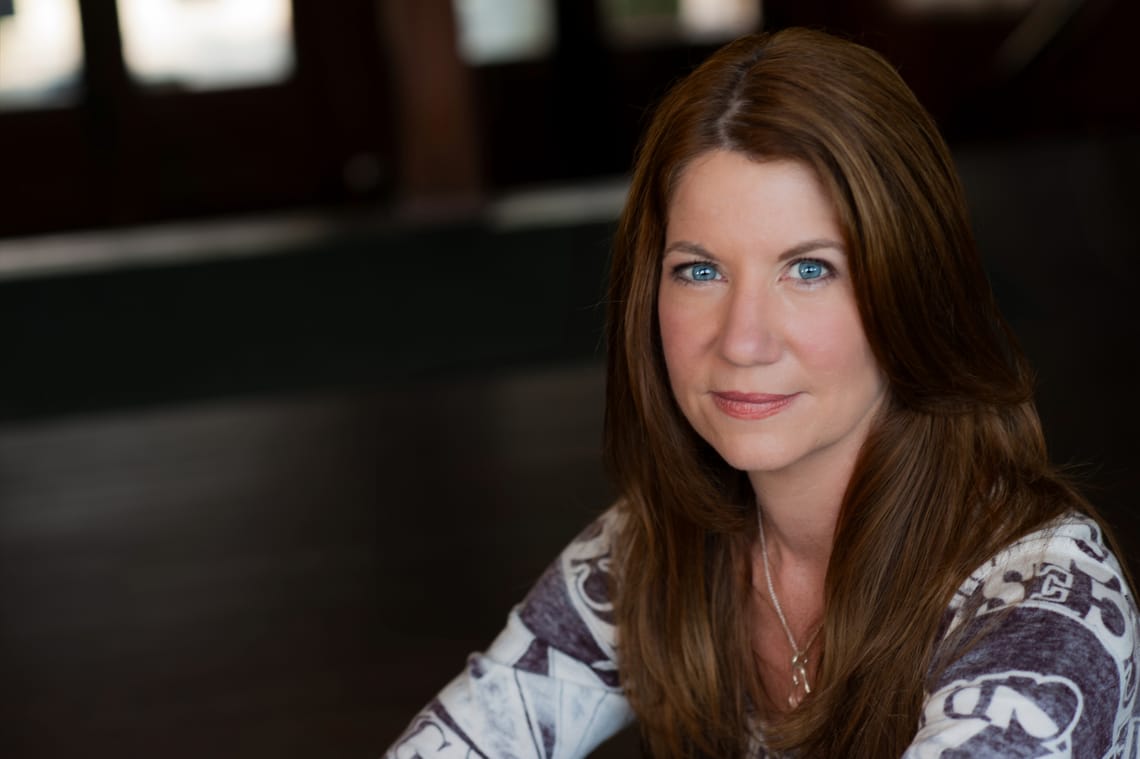
Susan Wiggs sold her first book in 1986 while teaching full-time with a one-year-old at home. She's since written more than 60 novels, won three RITAs, and hit the New York Times, USA Today, and Publishers Weekly bestseller lists. We talk about what that life has cost — a decade of television, some friendships, the steadiness of a predictable paycheck — and what it's given back. Also: the insecurity that never leaves, the bicycle wreck that nearly stopped her, and why she says you have to be ready when your luck comes around.
Topics & Timestamps
- What she peeled away to make room for book after book
- Why she told almost no one she was writing a novel
- "Writers are one of the most insecure populations I can think of"
- Wayward Girls, the Good Shepherd homes, and New York's look-back law
- Why she'd rather be called a writer than an author
- Operation Baby Lift, and the book she's researching now
- The 2025 bicycle accident and a year of recovery
- Book signings where nobody came
02:03 A decade of TV, and the friendships that went
03:30 Uncertainty, anxiety, and the stress of being a sole proprietor
05:30 Creative gratification, and writing first drafts by hand
06:20 A stranger in foreign sales who sold her books around the world
07:34 What it cost her family — and her daughter's honest verdict
09:38 Texas in the eighties, and a first husband who wasn't a patron of the arts
10:15 Why she kept the novel to herself until she could point to a publisher
12:14 Confidence, insecurity, and never quite dropping the backup plan
14:19 Where the next book comes from — and Operation Baby Lift
16:47 On the term "women's fiction," and why she says commercial novels
18:18 Writer vs. author, and why the distinction matters to her
19:19 What she'd be doing if the writing hadn't taken
20:56 What she gave up: a predictable schedule, and health coverage
22:25 A typical writing day, and the four-hour limit
24:40 Admin, social media, and the other hats
27:14 "You don't want to be just a life support system for an imagination"
28:44 Stephen King, James Lee Burke, and why envy isn't the word
29:50 The Carrot Seed, the first book she ever read alone
30:53 What she'd tell her younger self — and what she wouldn't
33:15 The advice she got, and where to find the straight story
35:24 The imprint that closed, and the launch slot that opened
37:35 When paperbacks came out like magazines
40:30 A million words of apprenticeship, and avoiding writing programs
42:10 Whether it's harder to start now
43:28 The bicycle wreck, the airlift, and the year after
46:02 Beach-read covers with unplanned pregnancies inside
49:39 Her process: the pitch, the synopsis, and leaving room to be surprised
52:32 What people get wrong about writers' income and hours
54:29 The most unglamorous thing she did this week
55:59 The signings where nobody came
59:27 What's next: an eclipse in the North Sea
Transcript
Susan Wiggs: somebody had missed a deadline and they had, you know, the public screen slot. They're like, we gotta get a book to publish, you know, in the slot that we've set aside. And so it's possible that you know, there there was room for me. And so what I tell writers is luck plays a part, but you have to be ready when your luck comes around. You know, I had the book ready to go. whether the luck finds me or not, I've got to be ready.
Terry Heath: I'm Terry Heath and I'm here with Susan Wiggs Susan, you've written 75 books,
Susan Wiggs: Really? I I you know I kind of stopped counting a couple dozen books ago. And I
Terry Heath: Ha ha ha.
Susan Wiggs: I know that there are 60 novels on my in my bookcase. And so I say 60 plus, but if you count short stories and nonfiction and compilations and things like that, you're probably right in the zone. Probably 75. Wow. Makes me feel
Terry Heath: Yeah, yeah.
Susan Wiggs: old.
Terry Heath: Well one one source said 74, you've won three Rita Awards. You've won a Dorothy Parker Award, the Holt medallion. The Colorado Award of Excellence, the Blue Boa Award, and you've your books have been New York Times, USA Today, and Publisher Weekly bestsellers. What has your life and books cost you? And what have been the rewards?
Susan Wiggs: Terry, I I've done a lot of chats and interviews and everything, but I've never been asked quite that question. So I'm really happy to think about that for a
Terry Heath: Mm-hmm.
Susan Wiggs: minute. What does it cost me and what have been the rewards? What it's
Terry Heath: Yeah.
Susan Wiggs: cost me is probably at least an entire decade of TV watching, because I I sold my first book in 1986, and I was a full-time teacher and full-time mom as well. And so the you know, the things that you have to peel away in order to set aside time to write book after book are things like TV. it cost me probably, you know, social time with friends, probably not family, just because I made a priority to make sure that, you know, I never set my family aside for the sake of my career. But you know, some of those peripheral peripheral friendships, the ones that you could take it or leave it, you know, probably I have to be honest. Sometimes you have to make choices. No, I can't go play around to golf with you, or I you know, I can't go on this trip with you or something like that. So probably that is the first thing that comes to mind of of the cost. And also since the we're gonna be really honest here, you're a self employed single you know contractor and that comes with a lot of stress. when you decide to be a sole proprietor, writer and you know independent contractor, you what you invite into your life is some element of uncertainty, anxiety, and stress. And a long writing career it's a you know, a series of peaks and valleys. And so the ups and downs of a writing career you have to be mentally prepared for that. It's not always gonna be smooth sailing. You know, I've had the experience of losing a a publisher and having a contract get cancelled and having you know, a lack of support from a publisher that where, you know, my my sales suffered and you just have to be prepared for that. It's i it's gonna happen unless you're sprinkled with pixie does the entire the entire run of your career, then you d I think you have to be prepared for not necessarily the long, you know, Zen like calm of a of a steady career. And I did have a steady career. I was a teacher. And and teaching is i it can be chaotic in its own way, but it is predictable also. You get up the same time, you you know, your your your task is similar and it's very rewarding and lovely, but it's totally different from being an independent contractor. So I suppose you that's one of the things that it costs. The rewards are the s you know, you get creative gratification. I wanted to be a writer from you know, before I could even write, I would tell my mother's stories and she would write them down for me. And so I think that probably, you know, was just ingrained in me. And so I got to be who I was. And I have enormous respect for people who come to writing at any stage of their life. You know, people who do it like right out of the cradle the way I did. all the way to people who are just retiring. They might be 75, 80, 85 years old and decide, I'm gonna sit down and write. And so the rewards are just this unbelievable creative gratification that you get from having to put your words on paper. And and when I say paper, I really mean paper. We were talking the other day at your event and and I brought, you know, my my original manuscript for every book is a handwritten draft. And so putting pen on paper for me, I find huge gratification in that. And then the other rewards are more public. You make a bestseller list or you win an award or you know you you get sales that are financially rewarding. And so those sort of things are definitely tangible. I think maybe one of my favorites was when I started I had the experience of selling into an imprint. It was called I think it was called Harper Monogram and it was with Harper Collins in the early 90s. And there was a guy in the foreign sales department of that publisher who I'm I for some reason he picked up my book and decided this book is gonna have really good run in foreign sales. And he started selling my books all over the world, you know, France and and Latvia and China and Russia, just everywhere that you can imagine. And suddenly I had this whole stream of foreign publications. And for some reason that made me very, I don't know, very proud, very happy to know that somebody that I'll never meet in a country I barely heard of, you know, is reading my book. So That was one of the rewards as well.
Terry Heath: Mm-hmm. Do you feel like there have been any costs for other people in your life that they didn't necessarily sign up for?
Susan Wiggs: n probably in my case the opposite. the opposite is
Terry Heath: okay.
Susan Wiggs: that it but the the more tangible rewards they knew that they had a very productive member of the family, you know, and
Terry Heath: Mm-hmm.
Susan Wiggs: who cared very deeply about them. I I would say, you know, I I do a podcast with my My daughter, we're we're just getting started with that now. And it's interesting to hear her perspective because she was one year old when I sold my first book and has grown up with a a writing mom. And I always tried to make sure that she was my priority, not that not my writing and not my career. And according to her, and she is very brutally honest, she never did feel like she I had skipped over her or set her aside in order to to pursue the writing career. So it's it's a balancing act and any working parent does the balancing act. Regardless of what business they're in, you always are feeling like, you know, one thing pulls you away from something else. So it's like I said, it's a balancing act. I do think maybe They a a writer's mind will wander. You know, I'll be looking out the window and you know, my mind is a million miles away. And so there are definitely I we definitely have moments like that. You know, my husband can kind
Terry Heath: Mm-hmm.
Susan Wiggs: of tell when when my eyes glaze over and and he knows that I'm just, you know, in my novel instead of in the moment. And so though we do have moments like that, but we just kind of laugh about them. I'm lucky to be
Terry Heath: Ha ha.
Susan Wiggs: with people who understand me and the way my mind works. So hopefully writers have people like that in their lives.
Terry Heath: speaking of people in your life's ha was there ever was there ever a time when somebody was either encouraging or not encouraging, maybe when you were first getting started that really helped or?
Susan Wiggs: Yeah, there especially in the eighties, writing was publishing, I was living in Texas at the time, was such a foreign concept. They didn't quite understand me. my first husband was not supportive, but he you know, he kinda went along with it and was not exactly my patron of the arts. I was I was on my own for that. So there were things like that. But overall most people once they kind of got their head around what once you finally come up with a book and it's a tangible thing and you can hold it in their hand, they think, that's what you've been doing. Because I have to say I was I was not very public about my my writing dream until it looked like it was starting to come true for me. I didn't want to go around and say, I'm writing a novel because I intrinsically understood I was really protective of what I was doing. I didn't want somebody to say, that's impossible. You'll never do that. You know, a lot of people can be really dismissive in that way. And I I think I I in the back of my mind I must have known that because I didn't talk about it to anybody. You know, I just I just did it, you know, in my free time, my nights and weekends. And so the and and I do I kind of recommend that. on the one hand, there's power in saying, I want to do this, I'm gonna do this, but on the other hand, It's it it can make you feel like you're being challenged in ways that you don't need to be at the moment. So because I I knew that as soon as I said, ooh, I'm writing a novel, somebody's gonna say, Well, when can I read this novel? You know, when is it gonna be published? When is it gonna be done? And those qu those don't always you don't have answers to those. And it would get tedious to say, you know, I really don't know. I don't have an agent, I don't have an editor, I don't have a publisher. And so I just set the side that that aside for myself until I could give a concrete answer. I have written a novel. I sold it to Kensington Books. That was my first publisher. And it's going to come out in April 1987. And it did. And then each year after that I published a book or two. So I was on my way.
Terry Heath: So during that time, what what were you telling yourself? did you feel like, okay, this is going to be successful or did you have no idea or w what what did you tell yourself while when you were kind of getting through that by yourself?
Susan Wiggs: Yeah, I had a lot of hope for myself and I did have a lot of confidence that I could produce work of a quality, a cer you know, but the you're definitely at the mercy of a business that you have very little control over, you know, especially if you're new and you're not a big deal. And I was new and I was definitely not a big deal. I was what, twenty seven years old, I guess. and so I I kind of had to had to have enough confidence in myself. You're gonna write another book, you're gonna win some readers over. And it took some time, but I I never quite got on a track where I just knew that I didn't need a backup plan. And and to this day, you know, I feel like I I still, you know, there's still a an insecure part of me that thinks you know, this one's not gonna go. This book's gonna end my career. I actually thought that
Terry Heath: Yeah.
Susan Wiggs: about my most recent book, Wayward Girls, because it was a bit of a departure from the typical Susan Wiggs book that I'd built so you know, my whole career on. It was it's more of a a serious matter. It it it and it's in a weird time period, 1968 to present day. And I wasn't sure that it would be embraced, but it was it was a story I felt compelled to tell. And I did have encouragement from my from my publisher and my literary agent. So but that was w that's an example of a writer's insecurities. And I always feel like
Terry Heath: Mm.
Susan Wiggs: writers are one of the most insecure populations that I can think of. We're always feeling like, they're gonna read that and they're gonna see something or think something and and it's Mostly all in our heads.
Terry Heath: Do you think there's going to be more similar to a wayward girl or are you gonna go back to what you've done before?
Susan Wiggs: I I I do, I do. I think that it one book and and any long-term writer will tell you this, one book could lead to another book. And it usually hits, and this is a truth of writing, it usually hits when you're two-thirds of the way through the book that you're working on and you're starting to hate that book, then a better idea comes along and you feel like, my god, I gotta finish this because I wanna go on to this shiny new idea. And I do have a shiny new idea, and it has to do it it takes place, it starts in 1975 and it and it spans to present day and it has to do with a incident that took place, not an incident, an operation that took place, a military operation called Operation Baby Lift. And it was a really, really ill-conceived idea that in the aftermath of the the war in Vietnam. we were going to bring Vietnamese orphans to the states to to give them homes which on paper maybe sounded like a good idea and it was one of the most terrible ideas and and we don't hear much about it. Just like we didn't hear about in Wayward Girls. We didn't hear about these mother and baby homes like the Good Shepherd in that book. Because it's it's not, you know, it's not we can all take pride in. And so I'm just researching that. I'm talking to a lot of Older ladies who were Pan Am stewardesses in the sixties and and just kind of finding my way through the research part of that book.
Terry Heath: that's two books that have to do with mothers and babies. Is that intentional or?
Susan Wiggs: A lot of them do. And in fact, like I I was thinking about I I don't know why. I d I have I had one baby. I've got a lovely daughter and two lovely stepsons, but it and I I don't have that kind of turmoil in my life, but I'm very fascinated by it. In sugar and salt, there was a there was a adoption storyline and in several of my books there's an unplanned pregnancy because what's more dramatic than that? And so I don't know that it's a theme of mine, but it's something that happens to women in the course of their lives and that's kinda what all my books are about, I guess.
Terry Heath: Do you see these these these new books as would you call them women's fiction instead of your standard romance? Or are you trying to Yeah.
Susan Wiggs: Definitely not romance. And I you know, I struggle with the the term women's fiction. A lot of publishing terms are just generated maybe in meetings with publishers or something like that. And they have to categorize it for for well, maybe not as much now, but in the past for the bookstores. When books were typically sold in bookstores instead of online, they had to say, here's where you shelf this book. And sometimes it's obvious. It's science fiction, it's romance, you know, it's a it's a hardcore mystery or something like that. But nowadays, yeah, I don't know that I love the term women's fiction, especially for books like Wayward Girls, because it's a book that anybody can read, whether they're female or not. And so
Terry Heath: Right.
Susan Wiggs: I when people now ask me what I write, I usually just say novels, commercial novels.
Terry Heath: Mm.
Susan Wiggs: And by that I mean I'm not gonna try to write literature for the ages. I'm not writing The Odyssey. I'm not writing Gravity's Rainbow. But I I usually just tell them I write commercial fiction and and you hope that the the commerce is good around it and it becomes a bestseller and that's it's out of your hands, but that's what you always hope for.
Terry Heath: Speaking of that, when did you when did you first start comf comfortably calling yourself a writer when people said, What do you do? or when did that
Susan Wiggs: Mm-hmm. right when I could when I concretely could say, I ha I wrote a book and I have a publisher, but before that I would never have said I'm a writer. I might say I'm writing something, you know, a very vague answer like that. But but I do like to say that I'm a writer as opposed to author. And because writing is what you do, it's what you sit down every day. Get out your materials and that's what you do. So if it r saying I'm a writer means that I'm actually gonna do something. Saying I'm an author means I have done something and I may or may not do it again today. So I
Terry Heath: Mm.
Susan Wiggs: should probably stick to calling myself a writer. Which is
Terry Heath: Hmm.
Susan Wiggs: really splitting hairs. I'm sorry, but yeah.
Terry Heath: No, yeah. If you if you weren't calling yourself a writer now, if you if your writing hadn't taken off, would you still be a math teacher or what would you be doing?
Susan Wiggs: I w I would probably be a teacher. yeah, I would. My mother was a teacher, my sister was a teacher, so yes, I I loved that and it was a really incredibly dynamic and rewarding profession. It was a really hard, hard profession. Don't ever let anybody say, teaching is easy, or you you're you know, your day is short and your summers are long. No. Teachers work as hard as any group of professionals I've ever seen and it's a it's a lot. And and I did love it, but it was a lot. And it was hard to try to do both at the same time. So when I finally found that moment where financially I could afford to let my teaching career you know I retired after like eleven years. I think probably that was you know, it was kind of bittersweet, but it I I don't advise trying to do both if you really want to be a productive writer. If you want to write a bu book every, you know, five years or whatever, you could probably manage both. And I do know writers who do that, teachers, librarians, you know, other professionals who do both. But I really wanted to focus on the writing. I knew that that was my that was where my heart was.
Terry Heath: Hmm. Is there any other part of of the pre-writer Susan that didn't survive? The teaching I think you still teach just in different ways, but but is there any p other part of you that you kind of had to leave behind?
Susan Wiggs: probably the part who had a very predictable schedule and life. A lot of people in professions, in in more predictable professions, they knew they were gonna get this many weeks of vacation time and this many days off and and sick days and things like that. And it's all up to you. Once you're an independent contractor, i we have a hard time giving ourselves time off. We have a hard time. giving ourselves health coverage. in this country, it's kind of a travesty that that's the case. But yeah, there are ups and downs, you know, financial ups and downs that you face when you're a writer and you're the only income for your family. But so I had to kind of leave what I left behind in that case was having a more stable, steady, predictable thing. But on the on the other hand, the reward of that was that I was highly motivated. I was not gonna miss a deadline and I was not gonna screw up a book and and have it not be good. And so I wonder, you know, if I had had too much of a cushion, would I have been that motivated and that focused? I don't know, because you know, that was that was the path not taken.
Terry Heath: What describe a day in the writer's life, Susan Wiggs writer's life. What what is that like?
Susan Wiggs: Well, I'm gonna idealize a little bit here because as as you heard when we were interrupted, I have dogs, I have family, you know, it's summer and that means we have guests coming and going constantly. So there's that. But if I set all that aside and say this is my this is a typical writing day, when it I I have an i uninterrupted time, I almost always do what I call the heavy lifting of writing in the morning. I have to obviously, you know, get my coffee and and either go to the gym or dog walk or something like that to sort of get my body going and then it's time to get my mind going. And I usually sit with with my notebook. And I pick up where I left off. I don't go back and reread the previous day. I read the previous page maybe or two. But I don't go back and read the previous day's work. I just sort of push myself through. And that's just for first draft. So let's assume that I'm writing a first draft. I just keep going. each scene or or beat of the story that I write seems to lead into the next. And they're not always great. You know, often there's a lot of gaps or you know, I I know that I'm already going down the wrong path and I have to switch gears. But when I'm in the midst of writing, you know, composing a first draft, that's kind of how it goes. And you can't sustain that for long. I'd like to say I would sit and do it for eight hours. I don't, you know, I do it for four hours until I start wondering if I need to go clean the can opener or if I left my car windows
Terry Heath: Ha ha ha ha.
Susan Wiggs: down or something like that. But the I usually I would say, you know, the ideal for me span of time, and it's different for everybody, is probably Just four hours of really focused, concentrated work. You know, I try to ignore my watch saying it's time to get up and move around. You know, I've got one of those watches, but no, usually that. But then once you're a published writer, there's a lot of other pieces of your day that are typical. I've got to go check my social media stream and make sure that it looks, you know, like something interesting that readers can scroll by. I have a Substack newsletter that I I'd like to try to, you know, communicate with with my subscribers to that. So there are things like that. I call it admin, you know, PR and correspondence, email, things like that that are typical in any other job because writing is only a part of my day. I'd I'd love for it to be more, you know, but the i the reality in today's world, means you need to have an online presence. It's not mandatory, but I feel like it's expected by commercial publishers now. And I don't have a lot of familiarity with independent publishing. So I don't know how that works, but I assume it's even more because they have to be their own producers, they have to be their own editors and so forth. And so I feel like respect to those people because they're wearing a lot of hats. And I feel like wearing my writer hat and then my admin hat kind of takes up my day. And I I actually love to to cook and garden. And so those are my my other two things that I do. I know how to knit. I have s you know some crafts. I have this adorable family. It's a lovely husband and so a lot of my day belongs to them now, especially at this phase of my life now that I'm I'm an old grandma. So it it's it's rather nice. But I've I've done I I've done what it takes, you know, when I was younger and I had deadlines and a little kid and and you know all kinds of challenges like that. I just I I sort of got the work done. And I and so here we are. And it's it's a great I don't know. It's a great feeling to sort of look back and see the things that I've written. And that's one of the reasons that I'm enjoying podcasting so much because it gives you a chance to reflect. Because in a typical day, you don't sit there and go, look at my career, look what I've written. You know, but when we you get the opportunity
Terry Heath: See what we're talking about.
Susan Wiggs: to talk to people like Terry, then it's really gratifying
Terry Heath: Mm-hmm.
Susan Wiggs: to to r revisit these things and appreciate them. So thank you.
Terry Heath: Is there a time when you shut off from writing? do you have like not office hours per se, but a cutoff time, like nope, it's after this time, I'm not doing anything?
Susan Wiggs: I I definitely try to do that because you don't want to be just a life support system for an imagination. It it's it's tough to shut off your imagination when you're you're, you know, this story is in your head. It feels kind of all consuming. But one of my favorite is to read. You know, I feel and writers have trouble being really good attentive readers because it's sort of like we're more analytical probably than than a non-writer when we're reading a book. And it slows us down and I think, how did they do that? But my favorite kind of book is the one that makes me forget that I'm a writer, where I'm just so
Terry Heath: Mm.
Susan Wiggs: into the story. I'm just so loving it. And so those are those are my escape hatches. That and doing I do a lot of hiking and biking and and physical things like that. And that is essential for balance. I I worry about writers who who are very interior and very sedentary because I think that part of a healthy writing career means keeping your yourself physically healthy. And I won't I won't get on my high horse about that, but let's take care of ourselves.
Terry Heath: Mm-hmm. When you are reading other books, w along the way have there been authors that you've either tried to model yourself after in the books or outside of the books or maybe even been a little bit envious of their career and want to
Susan Wiggs: all of the all of the above. You know, I would I would love to have, you know, Stephen King's career. I would love to be able to write as compelling suspense as say, he brought who am I thinking of? James Lee Burke. things like that. Yeah, there are writers that I read with admiration, but also you know, and me not so much, you know, because every successful writer, really, really good writer, I know they've put the work in. And so I'm I can't be envious of somebody who's worked really, really hard and been really, really successful because I know what it takes. And so I I mostly appreciate these writers for being you know, books that I can read. I just and I I I was a reader from probably age four. I actually have the first book I ever read independently. It's called The Carrot Seed by Ruth somebody, I can't remember now, but it's it's a classic. Krause. Ruth Krause, The Carrot Seed. It's a tiny little picture book with only a few words on every page, but when I was four I read it all by myself. And I think not coincidentally, it's about a boy who plants a carrot seed and everybody in his life says it won't come up. Mom says it's not going to come up. And it's His dad says, sorry, it's not gonna come up. Otherwise, not gonna come up. And every day he weeds the weeds and he waters the the seed. And and of course the big, you know, the big moment in the end, the carrot seed comes up and he gets a big carrot and everybody's all proud of him. And I'm thinking, that's a story about striving and being steady. And so it's no coincidence that w that was the the first book that I read all by myself.
Terry Heath: Speaking of your younger self, is there anything that either you would want to tell your younger self or would purposefully not want to tell your younger self from either either your writing life or just your life in general?
Susan Wiggs: that's a clever question. The the second part of that question, what would I want to keep from myself? Because you know, life as it unfolds is so fascinating. You don't want any spoilers ahead. I think if I'm being super honest, I probably would advise myself to, you know. honor my honor my own self and my own time more than I did. You know, I gave a lot to a marriage that wasn't the right marriage for a long time. And, you know, you know, I don't want to I don't want to undo anything though, because it would everything that I've done has brought me here. So that's a really that's a really tricky question. You know, you don't want to spoil the the future for your future self, but on the other hand you're thinking, It didn't have to be that hard. You should have taken a shortcut. So I don't know. Is it fair to give ourselves shortcuts? I think we try to do that with our kids, don't we? We try to, you know, tell them about the pitfalls and then they are they ignore us and we, you know, and we get frustrated with them and then I realize, well, maybe they need to stumble and fall and get themselves up. And I, you know, so I don't I don't know. That's a that's a really that's an interesting question to contemplate.
Terry Heath: Well, it makes me think of the old thing. If you traveled back in time, you would change the future. So I guess, you know, you don't know if
Susan Wiggs: Mm.
Terry Heath: you did tell yourself something, if you've ended up being where you are now and it wouldn't have mattered, or you know.
Susan Wiggs: Right. Well, if I'd had a more supportive partner, I wouldn't have worked so hard. If I, you know, wasn't so independent in my writing, would I have put the work in? And, you know, I think one of the things that's brought me to where I am now, which is in a really nice, comfortable position with, you know, lots of published books and is probably because I did make myself work so hard. And would I have if I had, you know, if my comfort level was higher, I don't know. Yeah, there's no there's no control group for that.
Terry Heath: Is there anything that's come in your writing career that that nobody warned you about?
Susan Wiggs: Nobody warned me about. No, not really. Not really.
Terry Heath: Ha ha ha.
Susan Wiggs: Because because I've had such good I've had really good representation. I've been with three different literary agents. The the latest one, I think we've been we've been a couple, Meg Rooley at the Jane Rosen agency and I. I think we've been a couple for maybe 30 years, but previous to that I had two other agents and and I got really good advice from them. And the editors that I worked with are the you have the same goal, you know, you always want your you know, the the book to succeed. And so I always feel like I've had good advice in that way. And fellow writers as well. I've had the good luck to have writers as mentors and, you know, giving me advice. And most writers are really they're very, they're very generous about that. and honest and and so I feel like when you talk shop with the writer you get the straight story. And there used to be, I it's still here, there there used to be some industry publications that I feel like if you really want to be in this business, you need to familiarize yourself with with probably publishers weekly. And it used to be writer's digest, and I believe they're both still, you know, online publications, things like that. Join the authors guild, go to you know, meetings of other authors, go to Terry Heath's event events because it does round
Terry Heath: Please.
Susan Wiggs: you out as a writer and it makes you feel like you're part of a community, even though the work that you do has to be done all alone in a room, but as a part of the business I I always felt like I knew how to get my to find information and be informed.
Terry Heath: Obviously you've you've worked hard, but has there been any part of your career that you feel was just luck?
Susan Wiggs: yes, yeah, for sure. it's kind of like the bad luck leads to better luck. I was with an imprint, it was called the Avon romance, and they were historical romances and this imprint just closed. They stopped publishing them and so I needed to go somewhere else and so I wrote another historical romance called The Lily and the Leopard. And at the same time, at that moment, another imprint was starting up at another publisher. It was called the Harper Monogram imprint at HarperCollins Publishers. And they needed a book to launch their line. And so I that was luck. You know, I that I got to be the first book, and when you're first, they put a lot more promotion behind you. And so I w it sort of pushed me up the ladder. And actually, actually my very first book that I sold, it was called Texas Wildflower. It was a a Western romance. I I think that one reason that they were, you know, they bought it from me so quickly and published it so quickly, because I sold it in September of of nineteen eighty six and it came out the next April. I think it might have been because they somebody had missed a deadline and they had, you know, the public screen slot. They're like, we gotta get a book to publish, you know, in the slot that we've set aside. And so it's possible that you know, somebody there there was room for me. And so what I tell writers is luck plays a part, but you have to be ready when your luck comes around. You know, I had the book ready to go. whether the luck finds me or not, I've got to be ready. And so I yeah, I guess that's the advice. Be ready when your luck comes around.
Terry Heath: What was it like back then with you you said in your podcast that it was almost like they were publishing a magazine, they had to get out so many books all the time. Did did you write faster to try to fill that need than you might have otherwise? Or what was that? What was life like then as a writer for you?
Susan Wiggs: Well, I think I always would have been a fast writer just because for me momentum kind of propels me forward. But I think also back then there these paperback romances of both there were some that were like Harlequin was doing. I I didn't write for Harlequin at the time, but they were doing, you know, th they had four books a month and and you could subscribe to them like you could a magazine. And the historical romances had to come out a certain number per month because they sold like wildfire. And so it definitely the the industry was a little bit different. It was much more it worked like the magazine and the paperback originals, the the rack size paperback, which they don't even publish anymore. That that that format has gone. But back then they even I I think that I I think this is right. I think that the the spinning racks were invented by by somebody who decided that the size of a paperback should be a certain thing. And then
Terry Heath: Yeah.
Susan Wiggs: they could go in the mass market. They could go in the grocery stores and the drug stores and the variety stores instead of just bookstores. And so the industry kind of revolved around being regular and booksellers at the time, they said, you know, like Tuesdays the the were the sacred day because the very avid readers would be there, you know, the new shipment of books would come in on Tuesdays. And that's still the traditional day in commercial publishing that books come out. And so I think it the the it the pace of it made room for a lot of writers to be published and a lot of ri and you just hope that your readers will, you know, will follow you. And I'm I'm so grateful to readers and I have to give a shout out to librarians too because they keep your name alive in, you know, ways that you can't even y I just count on librarians and booksellers to really promote, you know, the authors.
Terry Heath: Well, like back in in the noir times, Dashiell Hammett and authors like that, James Kane, there was there was kind of a a framework, a grid for them to work in. There were magazines publishing those kinds of stories, and there were books being cranked out quickly, and a lot of writers were able to develop their craft kind of in public in a way that maybe they wouldn't have been able to if that hadn't been around. And does it it sounds like maybe when you started writing it was a similar kind of thing. There were a lot of opportunities. Not that that's the only reason you were able to get published, but there was there were magazines, there were
Susan Wiggs: Well y yes, yes. And I think it was Stephen King who says a a writer's apprenticeship is a million words or
Terry Heath: Mm.
Susan Wiggs: some crazy number like that. And so
Terry Heath: Yeah.
Susan Wiggs: and I do know writers who started out by writing there was a genre of magazine called Confessionals. You know, I was you know, I was cheating on my husband or you know, something like that, and they they wrote them anonymously and they were these pulpy magazines that came out and it's a great training ground to just get your words on paper and shape a story. And whether you're doing it for a a pulpy magazine or a novel or a even a literary work, it pulls the words out of you. And so I think I I respect any path that people take to get to writing. Some people study it in school, some people avoid I actually avoided studying it in school. I was I have a bachelor's degree from Texas and a and a master's degree from Harvard and in both cases I writing was not my focus because I felt like I needed to you know protect my voice and I was also too insecure to kind of come out in in a class or something like that. Nowadays I recommend it because I think there's a lot more room for people who have commercial voices and wanna, you know, write best selling novels, not just literature. And you know, literary works.
Terry Heath: How is it today then starting out? Is it different now than it was when you started? Are there as many opportunities or more? What what do you see?
Susan Wiggs: that's a that's a tricky question too, because on the one hand there are fewer print publications, many fewer, way, way, way fewer, but there are a zillion online publications and so your route is probably different. Like how does somebody start a blog and then suddenly y you know, a a fan blog about the Twilight saga? And it morphs into shades of gray, you know, that thing exploded. And the I can't see how that would have happened without the internet. on the other hand, you know, there are so many voices. How do you how does something stand out? And so boy, that's a that's really tricky. I think there are a lot of opportunities, but it's gonna take a huge strategy that I'm I'm I feel a little lucky in that I don't have to figure out the whole new the whole new dynamic. Somebody getting started today would probably have a different runway than I had. And so you know, I can't give advice about that, but I can sure say, you know, good luck.
Terry Heath: Has anything ever made you want to walk away?
Susan Wiggs: no. No. The closest that I've come, and it's actually an ongoing thing, and it's not that I want to walk away, but last year, in August 2025, I had a major, devastating bicycle wreck. I I I was on my way to the farmer's market, you know, riding my bike behind my husband, and there was an unmarked speed bump in the road. And I went up and over and I flipped and I had I had a kind of head injury called a Lafort three, which basically means you broke every bone in your face. And I had to be airlifted to a trauma center. And, you know, thank God for Harborview Hospital in Seattle, they they put Humpty Dumpty back together again. But it wa a head injury, I'd never had one. Hopefully nobody ever has to have one, but It's kind of in a class by itself in that it's not an injury that you just heal from and move on with your life. It it's an ongoing thing. when your you know, your brain is bleeding and you're having surgeries to, you know, put your face back together. It's it definitely it slowed me down and talk about luck being a part of my career. I had just finished Wayward Girls, it had just come out. And that was the final book in a multi book contract with I had that I had with my publisher. And so I wasn't forced to have to sit down, you know, with my head trauma and write another book. And I knew I
Terry Heath: see,
Susan Wiggs: wanted to, but I knew that I could. I physically and mentally couldn't. I was l I my, you know, my vision was affected and my everything. And so including my screen time. I'm supposed to only have like two hours of screen time and things like that. And so that was Not a decision that I made, but it but it did show me, you know, well, you you know, there there are things besides writing in your life. And so and I have to shout out to my publisher and my agent. They're they've been incredibly supportive, you know, when they heard what happened to me. But that's probably the only time I thought, well, you know, maybe I'm gonna not write. But
Terry Heath: jeez.
Susan Wiggs: that's actually coming to an end, you know, things get better every day and and we'll see what comes out of me next.
Terry Heath: Now I think I heard you say that when you got the idea for Waywork Girls, you were supposed to write a beach reads story. Is that what yes?
Susan Wiggs: Yes. Well I not supposed to, but it was expected. You know, when you pick up let's say, you know, you pick up a book by Debbie Maycomber, you expect that it's gonna be, you know, this kind of cozy, homey family story, you
Terry Heath: Mm.
Susan Wiggs: know, with a love story. When you pick up, you know, a Stephen King novel, it's gonna be a you know, surreal, probably horror novel, something like that. And so I think expectations get built around, you know, certain writers. you know, it's maybe it's gonna be a funny mystery, may you know, and so I was kind of the beach read person and I did something a little subversive that that doesn't that I don't that people don't always remark on because of the way the books are packaged. They look like a beach read, but there's often like like we talked earlier, an unplanned pregnancy or, you know, a workplace drama or, you know, some kind of abuse or something like that or, you know, a a matter of justice, but it's it's folded into this love story. And so I was kind of the beach read. probably one of my best covers and best sellers. It was called Just Breathe. And the cover featured a girl on the beach just looking out to sea. And readers just loved that book. But it was about a a failed marriage and and artificial insemination. And so there's always there's always an issue that that
Terry Heath: Yeah.
Susan Wiggs: you can hang, you know, hang it on. And so but that sort of I think that defined the kind of book that people expected from me. And there was just no beach in in Wayward Girls. there were nobody's gonna go surfing or, you know, get a sunburn or anything like that. It was definitely a different thing. And and I did love writing that book. But I think a writer can fall you know, writers fall in love with whatever they're writing. And so if I decide that, I gotta go back to the beach I'll you know, I'll fall in love with that again. So I just do it one book at a time and I I'm a fan of writers who can juggle multiple projects, but I usually just pursue one book at a time.
Terry Heath: Mhm. Is the nineteen seventy five book the next one? Is that the what you're working on now?
Susan Wiggs: I well it doesn't ha I I haven't finished it and you know it I haven't given it to a publisher yet. There I do have a book that's on submission. It was a book that I had finished before and it wasn't, you know, it was one of those books that I knew that it needed more work and you know, I wasn't quite sure what direction I needed to take it, but I was, even with my head injury, I was able to sort of when you have a finished piece. that needs work. That's a sort it's a really creative process, but it's a little different. And so I r I kind of rewrote a whole book. And so we'll see what my my publisher thinks of that. I I don't think that that I'm gonna make any kind of big change in my career or anything like that. I I kinda like the direction it's been going. So hopefully I will keep writing. You know, I will keep writing and rewriting and another thing that's been really gratifying in my career is that books can be reissued, repackaged, reissued, and so it feels like there's always something fresh out.
Terry Heath: So then your process you write in a tab in a a tablet by hand, no outline.
Susan Wiggs: no, y I do, I do. I write, I usually write a pitch and that's something like a one page summary and those are so hard for me to write because you know, I'm gonna I write a long I'm a long format writer, but I try to distill the book that I'm planning down to one page. And once I do that I show it to my literary agent, we show it to my my editor and then you know we there might be some discussion back and forth, but then they give me the green light. And after that I write a pretty a a pretty detailed synopsis for me just so that I see the beats of the story. And that, you know, probably runs ten to twenty pages. And that's that's my roadmap. I try to leave room for my imagination and my characters to take on a life of their own because sometimes things happen that I didn't see coming or plan in the book. And I I love those moments and I recommend them because that's kind of one of the exciting things about writing a book is that your characters surprise you, your own voice surprises you. And so I I leave room for that. But I would say that I almost always know the beginning and the end of the story. And then you know things develop through the middle. Like I always knew the way Wayward girls would end. And it's one of the reasons I wrote the book because I was really compelled by the situation of The Good Shepherd, you know, this this place where they would send girls with unplanned pregnancies or girls who'd failed out of the foster care system or for whatever reason. I always knew the end because in what happened in the news was that New York, the state of New York where it took place enacted something called a look back law. where they took away the statute of limitations. if you'd been harmed, it used to be, you know, you had to bring suit against, you know, whoever harmed you within, I don't know, three to seven years or something like that. And those obviously had all run out by for women who had been abused in 1968. But the look back law enabled people to find justice w when they realized that they'd been abused that long ago. And so I always knew there would be the court case at the end and you know, I I
Terry Heath: Hmm, hmm.
Susan Wiggs: w I'll try not to spoil too much, but I knew that that would give me the ending that would would make sense for me and for the book.
Terry Heath: Is there some anything about your life as a writer that people get wrong? Misconceptions or
Susan Wiggs: misconceptions about writers.
Terry Heath: Assumptions.
Susan Wiggs: some people well, it it's funny, there's a spectrum. Some people think, my God, you're a writer. You must, you know, be poor as a church mouse scraping by. And then other people say, my gosh, you're a writer. You're a billionaire. You've you know and so I think it's because it's not a familiar profession. And it's true that you know, the a writer's income can span from four figures to seven figures or even I don't know, maybe eight figures if you're, you know, a a mega successful. But I think that probably they the the the the you know they get wrong how much you know how how much a writer makes and then they also things they get wrong, how much a writer has to work. It it's such a it's such a pleasure to sit and read a book. I actually had a reader come up to me and she said, she said, you know, I'm a really fast typist, and so I could probably write a book in a weekend because I got a weekend coming up. And somebody else once told me, a woman speaks 30,000 words a day. And so if a book is a hundred
Terry Heath: Yeah.
Susan Wiggs: thousand words long, maybe she could just like talk the book into her phone. So there there are definitely misconceptions about that. And but the other thing
Terry Heath: Ha ha ha.
Susan Wiggs: is everybody's a storyteller. We live our lives in stories, whether we're writers or not. You know, think about conversations you have with friends or or parties that you go to or things like that. people love to speak in stories and so I but you can't conflate that with actually writing a a structured novel, for me anyway.
Terry Heath: what's what's the most unglamorous thing you had to do this week as a writer?
Susan Wiggs: most unglamorous thing I had to do. You know, I hate this answer, but it's email. you sit there and you have to deal with each individual subject. And sometimes it's it's lovely somebody gives you a shout out or you know gives you something to do, but a lot of it has to do with, you know, your bookkeeper and and you know the the admin stuff. It's very unglamorous and Some writers I think have to do like really unglamorous research. I love research. I love doing it. But some readers, you know, have to, I don't know, crawl underground and and and do something. I don't know. But I I find it all grist for the mill. But yeah. And the other unglamorous thing is it's it is really challenging to be self-employed. probably in any state. I'm in the state of Washington. you've gotta structure a whole business around, you know, your your limited liability company and and looking after thing. There's nobody that organizes it, you know, nobody's gonna write you a paycheck, nobody's gonna pay your bills for you, that's all you. And so that's that's not super glamorous. It's not my favorite,
Terry Heath: Mm.
Susan Wiggs: we mentioned at the top of this, the rewards are make it So worthwhile, so worth it. I wouldn't change a thing.
Terry Heath: Is there a place that you sat in, a room that you sat in metaphorically, during your career that you would not want to revisit?
Susan Wiggs: wow. Is there a place that I've sat in that I would not want to revisit? You know, it would be it would be an event. I'm I'm not thinking of a specific one. Unfortunately, I've had several of these, an event where that had not been properly thought out or publicized, where I, you know. a a a book signing or something like that that was just a complete flop where there was no interaction. There were you know, I feel like I went to a lot of trouble and you know, did my best and and, you know, was just ignored. Things like that. And I actually wrote about it. I wrote a book called The Lost and Found Bookshop. And there's one scene in the book. She's a she's an independent bookseller. She's got a really charming bookshop. And this nice lady writer comes to do her event and nobody comes. And you know, I I I would love to say that that's never happened to me, but unfortunately, it it's probably happened to most writers that I know where I try to get the word out, but how do you do that anymore? And I I always try to, you know, you bring flowers for the table and you bring the you know, the the candy bowl or something like that. but I've had events where I I I've been the only customer in the bookshop and I end up, you know, buying a stack of books and taking home and feeling really bad that, you know, things hadn't been, you know, more active. So I would say events like that and it's a it's a chemical thing, you know, some some writers, readers will line up around the block. One of the earliest books book signings I ever went to was for Anne Rice. She wrote Interview with a Vampire and in the the eighties and early nineties. She was hugely popular and I remember going to a signing where th they they gave you, you know, numbers, take a number and you know, you had to show up at a certain hour and and people were lined up around the block. Some people have that chemistry with readers, you know, Nora Roberts has it, the author. Jody P. Cole. They they just they draw a crowd. They're just they they've got that X factor and I don't know what w what it is. I feel like I don't have that and and it's you know, I make no apologies, but I I actually give credit to my readers because you know what? My readers are just readers. They're they don't need to meet me. They love my books, they want to stay home and read them, you know, and and I feel like it's not their job to come out and, you know, stroke my ego and and meet me.
Terry Heath: Hmm.
Susan Wiggs: I love when I do meet readers, but you know, that's not what I'm about and that's not what books are about. And so I just, you know, I make my peace with that. It's like I'm not famous enough to to draw a crowd unless something happens, you know, like there are certain library events that I've been to where y you walk out on the stage and the auditorium's full and it's it's kind of shocking to me, but I I love it. I love to talk books and so I'm not sure what chemistry it takes to you know to create something like that. But I'm always grateful when it happens.
Terry Heath: Mm. So what's next? Do you know?
Susan Wiggs: I'm yes, I do know. And it's it's I'm obviously gonna be reading and writing, but I'm going to see an eclipse. it's happening on August twelfth, and I'm gonna be in the full darkness of the eclipse on August
Terry Heath: Yeah.
Susan Wiggs: twelfth in the middle of the North Sea on a boat. And so
Terry Heath: my gosh.
Susan Wiggs: yeah, I know. I have a a taste for eclipses. They're they're so dramatic when you're in the full darkness. You know, they're they're pretty interesting when you're kind of on the edge of an eclipse. But when you're in the full darkness, there was one on the Oregon coast in 2017. And then there was one like it kind of was a swath through the country in April 2024. Like I was in the Texas Hill country watching that. And I I I even learned the word for it. I'm an umbraphile them that's somebody who has an affinity for eclipses. and I'm very grateful that there's somebody who can calculate when and where and what time the eclipse is gonna happen years in advance. And so we heard about this one, you know, a a couple of years ago and thought, we should go to Iceland, but it was hard to book anything in Iceland, so we realized that we could book, you know, a a boat trip. And so I'm gonna be in the North Sea, hopefully in calm waters. Clear skies would be nice.
Terry Heath: god.
Susan Wiggs: And so that's gonna happen on August twelfth and the boat lands in Iceland and then we're gonna go see we're gonna go tour Scandinavia because I we never have my husband's fully Norwegian and he's never been there. And so that's gonna be the rest of the summer. And it's an unusual trip for me to take because of where we live. We live in the Pacific Northwest and I'm probably letting the cat out of the bag, but this is the nicest place for summer. on the globe. We have gorgeous summers. We have like lovely temperate weather, you know, minimal bugs. just like it's pretty perfect here in August and September. And so I almost never leave, but because of the eclipse, I'm gonna be gone for most of August. So that's what's next. I'm
Terry Heath: Mm.
Susan Wiggs: bringing my e-readers stuffed with books to read and
Terry Heath: Mm.
Susan Wiggs: obviously my my notebook and my pen and so that's that's what's next for me.


