▶ Listen to this episode · 45 min
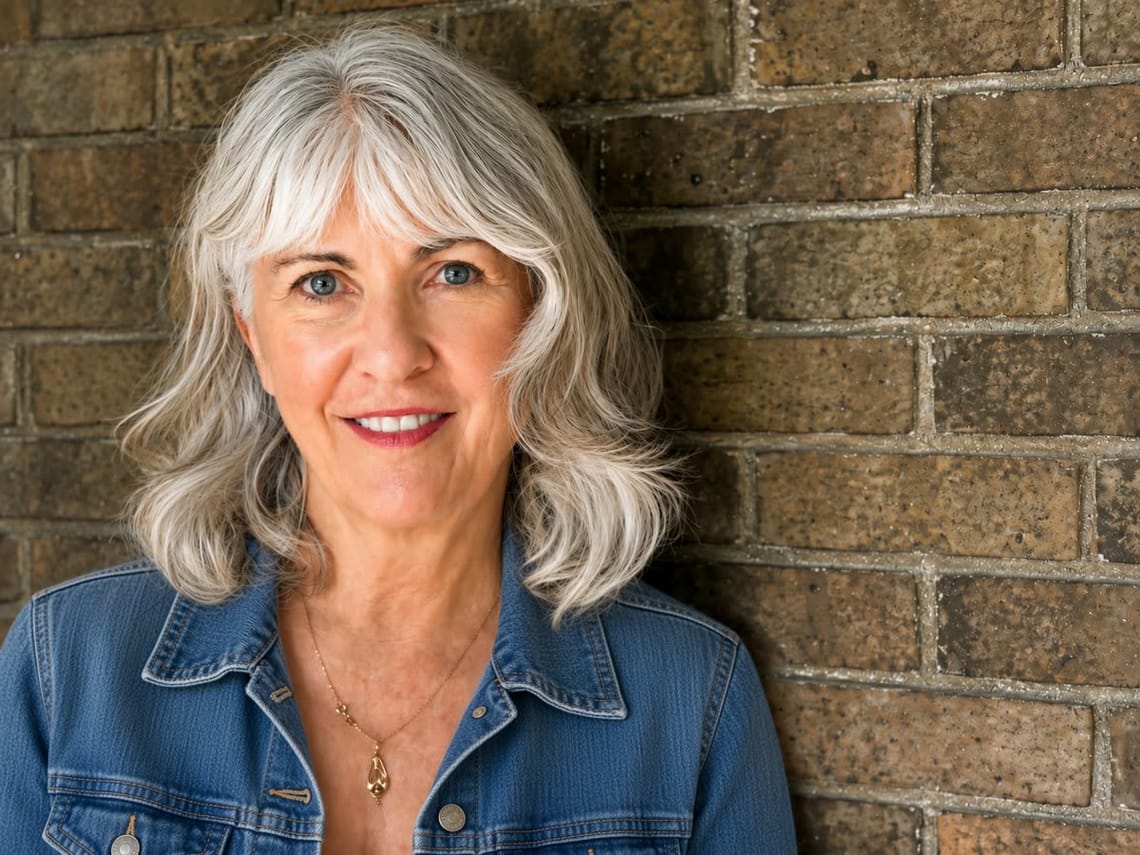
Poet and novelist Maureen McQuerry decided at age six that she would be a writer. She was in her forties before her first novels came out. In between, she was the neighborhood kid called "question box," a closet poet in high school, and a teacher who chose the classroom because writing felt too risky.
Maureen talks with Terry Heath about the fear that kept her from long-form fiction and how she got past it. She describes the phone call when Abrams bought three books at once, and the family history behind Between Before and After: her father became a flu orphan at ten during the 1918–1919 epidemic and survived on the streets of New York. The novel came out in 2019, just before a new pandemic, and then lost its editors and publicist, leaving the book orphaned too. Soon after, her agent of twelve years left the industry and she moved across the state to Bainbridge Island, where she knew one person.
They also discuss finding two brothers she never knew she had, one at the front door and one through a DNA match. The conversation covers the green man carving that became a poem and then a middle-grade duology, why poems and novels should open questions rather than answer them, the terror of release day, what writing costs, and the question under all her work: what does it mean to live well?
Books by Maureen McQuerry
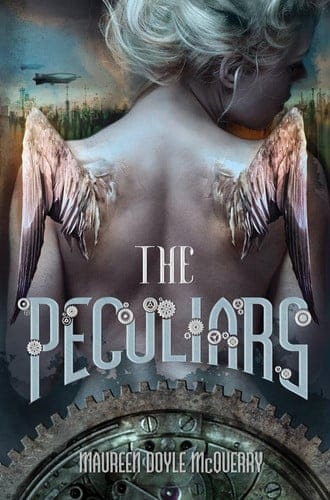
- The Peculiars (Abrams/Amulet), ISBN 9781419712067
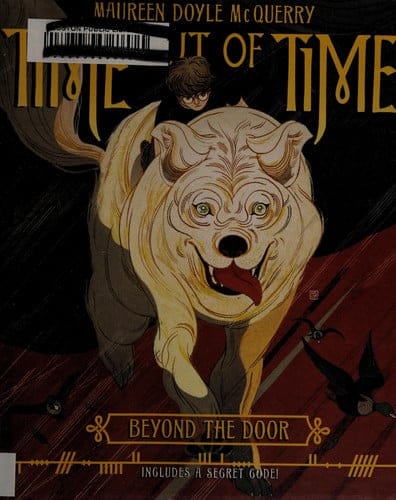
- Time Out of Time, Book One: Beyond the Door (Amulet), ISBN 9781419714931
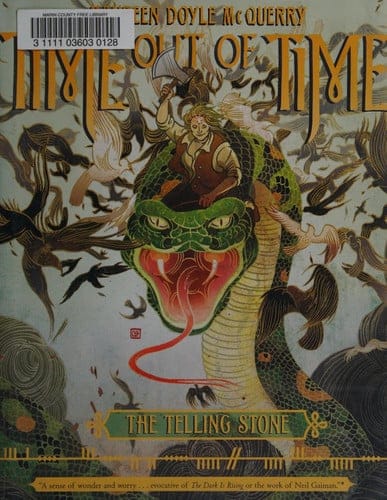
- Time Out of Time, Book Two: The Telling Stone (Abrams), ISBN 9781419719165
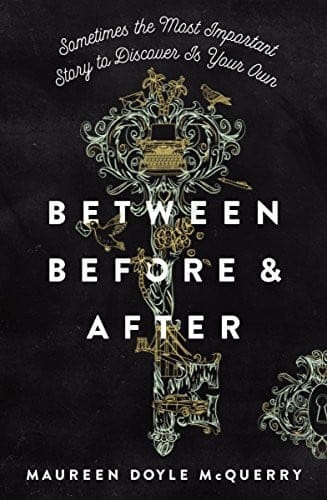
- Between Before and After (Blink/HarperCollins), ISBN 9780310767282
- Big Ideas for Little Philosophers Box Set, with Duane Armitage (G.P. Putnam's Sons), ISBN 9780593111703
- Rift (forthcoming)
Find Maureen: maureenmcquerry.com
Transcript
Terry Heath: negotiations. Do you go by Marine with Doyle in it or just Marine McC McQuery?
maureen mcquerry: Usually just Maureen McQuery, although on on the titles of my books I have my full name, but on my website and other places I just go by Maureen McQuary.
Terry Heath: Okay, so you want me to do it that way then? Okay. And then how where is it? ⁓ How do you pronounce McAuliffe fellow?
maureen mcquerry: Yeah, that's fine. ⁓ McColliffe. McColliffe. Mhm. It was named after Christoph Calliffe, who was the the astronaut.
Terry Heath: McColiff. Macoliff, okay. Yeah, yeah. I used to I I taught ⁓ public speaking at a community college and I ⁓ I would use Reagan's speech for when the when the explosion happened that he did the the the fireside talk that evening and yeah, so I very familiar with that. Okay, anyway. ⁓ did you have any questions for me before we get started?
maureen mcquerry: ⁓ huh. ⁓ no, I guess not. I mean an hour seems like a long time. But but I'm sure we'll have plenty to talk about, so
Terry Heath: Ha ha ha. Yeah. Okay. Well, you know, if if we if we end it before that that happens that happens sometimes too. Okay, so we'll get started then.
maureen mcquerry: Mm.
Terry Heath: I'm Terry Heath and I'm here with Maureen McQuery. Hello Maureen.
maureen mcquerry: Hi Terry.
Terry Heath: Thank you for coming here today. Maureen is an award-winning poet and author. Her books for children and young adults have been finalists for the Washington State Book Award, the book list Top 10 Science Fiction Fantasy for Youth, and winner of the Westchester Fiction Award. And then as an educator, She was a McAuliffe fellow for Washington State and
maureen mcquerry: Mm-hmm.
Terry Heath: Maureen, take me back to the moment you decided you were going to be a writer.
maureen mcquerry: Wow, that takes me way back because the first time I actually told that to anyone, I was six years old. and I told my mom that that's what I was going to be when I grew up. I wanted to be a writer because books were magical. And I wanted to be involved in something that made magic in the world. And of course, over the years, ⁓ that desire, ⁓ waxed and laned, but that was the very first time I ever verbalized it.
Terry Heath: Did you write stories as a child?
maureen mcquerry: I did. I wrote stories as a child and I was the kid that was always invited to a slumber party because I would tell the best ghost stories. yeah. And of course I love to read, so
Terry Heath: So I Yeah. I read somewhere that you used to carry a notebook around and spy on your neighbors looking for a mystery.
maureen mcquerry: ⁓ my gosh. Yeah, I forgot about that. I did. I had a little notebook and I was sure that our neighborhood was full of all kinds of mysteries. And so I would spy on my neighbors and and one time well one time in particular, I came home with ⁓ something that I saw that my mother told me I was never to mention again. So, ⁓ yeah.
Terry Heath: Yeah.
maureen mcquerry: yeah. I think I thought I was being a detective at the time and a writer.
Terry Heath: You also, ⁓ when a neighbor went out of town, you were convinced he had murdered his wife?
maureen mcquerry: That's that is true. There was a ⁓ I'm not sh I I'm not sure where you got all this information. there there was a large kind of swelling ⁓ under one of the trees in their backyard. And I was sure that that's where the wife was buried. Mhm.
Terry Heath: Ha ha ha. Did that story end when she came back or what happened?
maureen mcquerry: I guess it did. I really don't remember, but ⁓ I know I had a a huge imagination and I expected there to be magic or mystery or something around every corner. So
Terry Heath: And then in in high school you you started doing poetry. What what made that transition?
maureen mcquerry: You know, in high school I'm not sure how I discovered poetry, but I did. And it just opened up a whole new world to me. So I was reading ⁓ thing probably I I think in high school I s really started with T. S. Elliot. ⁓ that was one of my favorites. ⁓ E. E. Cummings. All of the kind of the modern classic poets ⁓ and then I w ⁓ went on to Rilka and then some of the ⁓ Alan Ginsburg, some of the beat poets. And anyway, ⁓ poetry just became my love in high school. And so I started writing poet poetry on my own, not showing it to anybody of course. ⁓ yeah. As I think a lot of high school kids do, right? Because we high schoolers have big emotions and they don't know what to do with them. And a lot of high schoolers are closet poets. yeah. As they're trying to figure out life and where they are in the world.
Terry Heath: Mm-hmm. What did you do with those poems?
maureen mcquerry: ⁓ well, as I say, I didn't show them to anybody. I just kept them. ⁓ and after a while I I have no idea where they are now. ⁓ I'm sure I'd be very embarrassed if I read any of them. But it did start me on a lifelong love of poetry and wanting to explore poetry more. And I came back to poetry, probably at the
Terry Heath: Yeah.
maureen mcquerry: end of college s and started writing poetry more seriously in grad school and after.
Terry Heath: Mm-hmm. Did anything trigger that return to poetry?
maureen mcquerry: I'm not sure that the desire to write ever left me. and one of the things I loved about poetry is I just love words. poetry was a smaller form than writing novels. I love language and metaphor and imagery. And so poetry has just always really sp ⁓ spoken to me on a deep level. And I think I felt like it was a risk if I said I wanted to be a writer or to be a novelist. that felt very risky. I needed to have so I pursued a a degree in education, went on to grad school and focused on gifted education. but all the time I was writing on the side. ⁓ because it's writing was something I loved and I couldn't imagine not doing.
Terry Heath: What what what ⁓ Can't think of the word I want here. Nice thing with this is we can edit. What caused you to go from short term to long term? Long excuse me, what what what inspired you to go from short form poetry to the longer form of a novel?
maureen mcquerry: Ha ha ha. ⁓ okay. ⁓ so I always wanted to write a novel, but I was afraid I'd fail. And novels take a whole lot of time. Poems you can do in a shorter amount of time. You can kind of do them on the side with the rest of your life going on. And so I pursued poetry for a while and was publishing in literary journals and won a chapbook award. And all the while I thought, but I didn't really talk about the idea that I wanted to do a novel. And it wasn't until my kids were older. ⁓ I was still working full time, I was teaching at that point. ⁓ and I think my youngest my son was in late middle school or early high school that I felt like I had enough time in my life ⁓ that I could pursue something a little bit longer than poetry. and I also felt like I was telling my kids to pursue their dreams. ⁓ and what kind of role model was I being if I didn't pursue something that I'd always wanted to do. And I actually talked to my son about that, and my daughter probably, ⁓ and said told them that I'd always wanted to be a writer and I was gonna try it, and it might not work out, but I needed to do it because it was a dream I had, and if I didn't do it now, when was I gonna do it? So ⁓ that's kind of how I did it, but interestingly most of my novels began as poems. My first I I'd say ⁓ my first three novels all started out first as poems.
Terry Heath: You decided that you were going to write a long form fiction. The fear was still there though. What what did you how did you how did you get past that? Did you set up anything for yourself to succeed or what did you do?
maureen mcquerry: Hm. Mm hmm. ⁓ yeah. I was terrified. Well Mm. I probably wasn't that systematic. ⁓ and I was right I was working full time, right? So I was w writing late at night and early in the morning and I tried to think about and dwell on just the act of writing and not what was going to happen when it was done. Because the minute I started thinking about, ⁓ am I gonna need a publisher, I'm gonna need an agent, what are people gonna think about this, then I'd get terrified and I couldn't write. But if I could just enjoy the process, the act of writing, ⁓ then I was able to to have fun and to enter that flow state and so that's really I kind of went as Anne Lamotte said, step by step, bird by bird, ⁓ and tried not to think about the ending and what was gonna happen after.
Terry Heath: Was there a point when you felt like okay this was going to work though?
maureen mcquerry: I hoped it was going to work. ⁓ yeah, it it came together. and interestingly, ⁓ those first the first books I published ⁓ got picked up in a three book deal by Abrams and those those were the books I was working on while my kids were were home. And part of me, part of what kept me going, is I wanted to be able to say to my kids, look, I pursued something that I've always wanted to do. and and it miraculously I have to say worked out. ⁓ I had no idea that it would. ⁓ the the process for me, what happened for me is I knew nothing about the publishing world. ⁓ we were living in a town in ⁓ Richland, Washington at the time, and it's a town of scientists and engineers. Very few people in the arts. I didn't know any other writers. ⁓ I was teacher, but we didn't have any author visits at our school. We had scientists come, we had engineers come, but we didn't really have writers come. And so I the little I knew about the literary world was through ⁓ poetry and literary journals. And that's a whole different world than trying to ⁓ shop a novel. So what I did initially without knowing what I was doing is I submitted to small independent presses. and two the two Two of my manuscripts got picked up by a small press that no longer exists called Idols Press. But because of that, I was able to find a literary agent. and then Idols very graciously gave her permission to shop ⁓ those manuscripts to larger publishers. And so, ⁓ and in the meantime I'd written a third ⁓ manuscript. And so that's what happened and she shopped them and Abrams took them in a three book deal. about, I don't know, six months after that.
Terry Heath: So even your decision to to write the the novels, that was still a teaching moment. You were a teacher already, but you're you approached it as this is what you need to do. You follow what you say you wanted.
maureen mcquerry: Yeah, I I really was thinking of it that way, ⁓ because I I was thinking about how my kids were gonna respond to it probably more than I was thinking about my reading audience at that point. And also for myself. I felt like I'd had this dream for so long and that I needed to do it. Life was life was going on, I was getting older and it was it was time.
Terry Heath: What can you tell me the day when you found out that these three books were picked up? What what what was that what was that day?
maureen mcquerry: I was at work and I had a phone call come in and they called me down to the office. And so I was I think I was on a break at that point 'cause I don't remember leaving my classroom. But I remember going down to the office and taking the phone call and getting the news over the phone that ⁓ they'd wanted all three books, that Abrams had wanted all three books. And I think I sh screamed in the middle of the office. Yeah.
Terry Heath: Yeah. When did you decide to to leave teaching?
maureen mcquerry: That was a that was a difficult ⁓ decision. So I had been teaching for eighteen years at that point and I taught middle school, high school, and col well college part-time, more college came after, but when I left full-time teaching I had become ⁓ the gifted coordinator for a middle school. and several things happened in my life to make that decision. one, the the books were accepted and I think the first book had already come out at that point. ⁓ the first novel. And then ⁓ my mom had was developing Alzheimer's and we moved to r to a facility that was close to where ⁓ we lived and I was an only child or I believed I was an only child. That's a whole nother story and that comes out in one of my books. but I was trying to take care of my mom and see her as frequently as I could deal with books that were coming out, being published and teaching full time and it just wasn't sustainable. So my decision was a mixture of all of those things at that point. Unfortunately, I had a husband with a job, so we weren't just dependent on my salary. ⁓ so I stepped back into part-time teaching. and even that felt unsustainable after a while as things got worse with my mom. And so I ⁓ moved to teaching at the community college level. And that gave me a very flexible schedule. And I did that for several years before finally stopping teaching and ⁓ spending more time writing. Now I didn't mention something in there and I just realized this that before I wrote the novels, I had two nonfiction books come out. One for educators, ⁓ and then the other one was a result of a project I did with students that I was teaching in students in Ukraine and it was a project that developed it looked at ⁓ Chernobyl and the Hanford site and people who had grown up in nuclear culture and had ⁓ a little bit of history about that and students were involved in writing it. Anyway, it got picked up ⁓ by an independent press and I we never thought of it as being a book project, but it turned into a book project, was very well received, won the won an independent publishers award ⁓ in two thousand. And so that happened before I wrote an before my novels ⁓ were published, but it gave me a little bit of confidence in terms of writing. Yeah.
Terry Heath: Mm. Does being a teacher carry into your fiction?
maureen mcquerry: That's an interesting question. probably when I'm writing for middle grade or young adult students, I'm thinking about students that I've had in the past, my own children at that age. I think being involved in teaching kept me in that world quite a bit longer. And so it was easy to know how students are are feeling and reacting ⁓ more than if I was an adult in a job removed from kids. Now my latest projects are adult ⁓ work and I don't know that my teaching influences that as much, although it does in terms of when I teach ⁓ writing workshops, I enjoy teaching. Teaching's always been a passion of mine and so it's it's helpful for those kinds of things, peripheral things to writing. Yeah.
Terry Heath: Did you make a a decision to go from young adult to adult, or was it a transition?
maureen mcquerry: Hmm. ⁓ a little bit of both. let's see my fur the very first book that came out, Peculiars, was definitely Young Adult Alternate History, ⁓ with a little bit of steampunk magic in there. And then the next two books, Beyond the Door and The Telling Stone, were both Celtic mythology and they were for middle grade. And then the the next book after that, ⁓ between before and after, was Young Adult, but it crossed over to adult. And it was based somewhat on my family history, a little bit about the discovering I had two brothers ⁓ after I was already an adult that I didn't know about, ⁓ and my family's ⁓ Irish immigrant past. So that book kind of moved me towards the adult market. But then I wrote two board book series after that, or nonfiction. So I've jumped genres quite a bit. And during that time the markets changed too in publishing. middle grades become a very difficult market to sell in. There were changes in the way middle grades been marketed, ⁓ so there were fewer projects being taken for quite a while. Barnes and Nobles stopped featuring middle grades pro projects. And so the the demand in publishing went down for a while and so those manuscripts weren't selling as easily. And I felt like I was getting a little bit too far from young adult in my own life and that I really thought I'd like to do more in the adult market. So it was a a number of forces all coming together.
Terry Heath: Mm-hmm. Your book Between Before and After was published in 2019, but it talks about an influenza epidemic before COVID.
maureen mcquerry: Yes. I know. Yeah.
Terry Heath: How did tell me talk about that.
maureen mcquerry: Yeah, that timing was really interesting. So my ⁓ grandmother died in the nineteen eighteen, nineteen nineteen flu epidemic in New York. And ⁓ at that point my father became a flu orphan. He was ten years old and he ⁓ his his father abandoned the family, his mom was dead. And he lived on the streets of New York, ⁓ surviving as a ten year old up until he was a through adulthood. And so I'd heard those stories my whole life. and I could see the effects of that in my dad's life. He was a a very difficult person. And so I'd always wanted to explore that more and especially because of the impact on my family. And also I knew that during that time there were number lots and lots of other children in that same position because ⁓ the social social services in nineteen eighteen and nineteen nineteen ⁓ were not what we have today. And there were lots of flu orphans and not many places for them. So that's how I started the story with my interest just in my own family history and doing some research on that and doing research on that time period and looking at the generational fallout from an experience like that. So I it's a dual ⁓ point of view two time period book set in nineteen nineteen and in nineteen nineteen nineteen New York and in nineteen fifty five, fifty six California. And it's a mother daughter story. so when I wrote that I had no idea that we would be facing our own pandemic, right after that.
Terry Heath: Did that carry the book forward?
maureen mcquerry: Yeah. The other thing What? Sorry.
Terry Heath: did that carry the book forward having the the pandemic here?
maureen mcquerry: Well, it you know, it did and it didn't. so one of the hard things about the publishing industry is that there's especially around that time there was a lot of turnover in the industry. So in terms of that book getting publicized, it probably got less support and less publicity than any of my other books. The acquiring editor resigned before we started working on the book. So she bought the book ⁓ and this was at Blink HarperCollins. ⁓ she bought the book We were about to start working on it and she resigned. The new editor who took it on was really enthusiastic. We got through the editing process, the book was ready to come out, and she left to start a distillery. Then the publicist got fired. So my book was essentially orphaned at that point. I had no editor, I had no publicist, and I had a book coming out. So out of all of my books, even though it was very timely with the pandemic, it had the least support. Yeah. So something in that book that I didn't mention, in between the the story of the mother and daughter in the two time periods, there's a retelling of Hansel and Gretel. and that Hansel and Gretel's story is kind of the it's really the story of children who make it through the dark forest and survive. You know, the the deep mythological forest that we all face at some point in our lives. But that seemed to fit with the story to me because it was really a story about abandonment and then refinding a family. And it was during that time period I also discovered that I had two brothers that I hadn't known about. And that's in the book as well. So
Terry Heath: What was that like finding out you had two brothers?
maureen mcquerry: ⁓ the first brother actually was a little bit before that book. He showed up at our door. ⁓ and I happened to be visiting my parents at the time. and ⁓ it was shocking because I was the one who answered the door and he looked exactly like my father. And I had no idea what was going on, but yeah, I it he was ⁓ fifteen years older, I think, than I am. ⁓ and it was just a shock. And then the second brother contacted me through and actually it was his wife, contacted me through Ancestry, ⁓ because we had a DNA match and he had grown up as an adopted child always wondering who his father was. His mother had given him up for adoption and she had had him in an unwed mother's home and there was no father's name on the birth certificate. So he grew up ⁓ in an adoptive family, had always wondered ⁓ about his about the paternity and then he did a a DNA ⁓ he I he used Ancestry, I think, to do a DNA search and turns out that ⁓ we had very similar DNA. We uploaded it to make sure and it lit up on the paternal side. and we met on Father's Day, which was he's only he turns out he was only two years older than me. and we're great friends. So yeah.
Terry Heath: And then you used this in your fiction, he said.
maureen mcquerry: I did. I did. Yeah. I'm yeah. I only mentioned one of the brothers in the story. And of course it's the story's fictionalized ⁓ and genders are changed around a bit, but ⁓ the truth o the truth of the story and of the emotion is there in the in the novel. Yeah.
Terry Heath: So you draw from personal experiences, you draw from fairy tales in Hansel and Gretel, and Celtic myth. Talk about that.
maureen mcquerry: Mm. Well, my family on both sides of my family ⁓ are Irish. my great grandparents are the ones who came to the United States, but even after that my family lived in a smallish Irish community in New York. And so ⁓ Irish myth was always a part of our family in terms of stories I heard and fairy tales growing up. And I think that myth tells us a lot of truths about the world ⁓ that we don't hear directly. I'm not saying that well. ⁓ I think myth is one way of approaching reality and learning truths about reality ⁓ that we can accept in ways that we can't if we just hear something factual. And so myth and fairy tales have always been something that really resonate with me and I wanted to explore a little bit about Irish mythology, c and Celtic mythology, because I include in there a little bit of ⁓ stories from England and from Scotland. And so ⁓ the books, the the two middle grade books have characters from Celtic mythology who get involved in the lives of everyday middle school kids and of course up in their world. But I tried to do as much research as I could to actually bring in the real mythology and the real stories behind the myth.
Terry Heath: you br you're bringing in these personal experiences and the mythology and you're exploring the themes. Are you do you think you think of that more as a teacher or as sorting it out for yourself?
maureen mcquerry: You know, all of my stories begin with a question that I want to explore, that I want to know more about, and that's why I really write the story. If I already knew the answer, I probably wouldn't write the story. And so in my first book, The Peculiars, I was asking, Do we become who our parents are? How much How much do we determine about our own lives and how much of it is inherited either by observation or by genetics? and each of my books have started with some kind of question I had or idea I wanted to explore that way. And so in terms of the mythology, I ended up putting a glossary at the end, which is more of a teaching kind of thing. So if kids wanted to explore more about Celtic mythology, they could do that. But I didn't start thinking of it as a teacher. I thought of it as I wanted to explore these characters. ⁓ and it actually started with a a visit to England ⁓ and seeing a green man. carving in one of the churches. And you know the Greenman carvings, they're they're common throughout all of the British Isles, but in other places in the world as well. They have vines coming out of their nose and mouth. and vines and leaves for hair and they were a pre Christian symbol of new life and of regenerative regeneration of life in the spring and they're really common and I remember looking at that green man and wondering what it would be like to all of a sudden be turned into a tree and my skin becoming like bark and leaves and vines coming out of my hair and mouth and so So I wrote about that. I just took some notes about those thoughts and it turned into a poem. And the poem was really well accepted and it ended up in several anthologies and was published widely. And I wasn't done with that character yet. I still wanted to explore that character. And so he became the first character in the Celtic mythology duology that I wrote.
Terry Heath: So you often start with a question, does working through the book give you an answer?
maureen mcquerry: it lets me explore the question more. Sometimes it gives me an answer, but sometimes it doesn't. Right now my I have a manuscript that's about to go on sub in in September. And it's ⁓ Ten Minute in the Future story for adults. And the question I had was what happens when climate refugees are not just a headline, but they're the stranger sleeping in your guest room. I taught a young woman in science program for several summers at the national lab. And one of the things that I came away convinced ⁓ of is that we are while we are grappling with climate change, the one thing that no one is prepared for are environmentally displaced people. And that's the the next tsunami that's coming. you know, ⁓ the world is already struggling with immigrants and numbers of immigrants and within their own countries and from other countries and there'll be even more. as climate change happens there are gonna be all kinds of environmentally displaced people. And so that was my question. I wanted to learn more about that and explore more, so I started doing more research and that's how ⁓ the book that's about to go out called Rift ⁓ started.
Terry Heath: You said the questions we ask as children shape the adults we become.
maureen mcquerry: Mm. Yeah, I think I said that about my about the board book series that came out and the importance of helping children ask good questions and big questions about life. So asking questions like what does it mean to be a friend? what is happiness? those kinds of questions are very different than asking questions like, how can I make a lot of money? Or what can I do to ⁓ I can't think of another one off the top of my head right now. But I think one of our jobs as adults is to help kids explore big questions but also know what kinds of big questions to explore, what kinds of questions to ask. What are really meaningful questions? And so that's something that I've thought about a lot in all of my writing for young adults and for middle grade readers. And that probably comes from teaching and the Socratic method and helping children learn by asking questions.
Terry Heath: As a child you you loved mysteries. Were you a question asked as a child?
maureen mcquerry: Yes, I was. In fact, the neighborhood kids called me question box. And I was mortified. It was awful. And they'd say, ⁓ here comes question box again. Yeah. I was also the youngest kid in the neighborhood. And so I was that that horrible little kid that tagged along and asked questions about everything. Yeah.
Terry Heath: Is that why you became a teacher?
maureen mcquerry: I don't know. You know, ⁓ I think when I was considering what I was going to do with my life, I had a much more limited view of what options were available for women than ⁓ women do now. I knew I didn't want to be a nurse, I didn't want to be an administrative assistant or a secretary But teaching sounded pretty interesting. And again, I liked asking questions. So teaching was one of the things I explored. And being a writer, of course, was way too risky. I didn't I was afraid I'd fail and wouldn't be able to support myself and I needed to have a job that was somewhat reliable. ⁓ all of those reasons led me to teaching.
Terry Heath: Was poetry another way to ask questions?
maureen mcquerry: ⁓ yes. Yeah. Poetry I think is always exploring questions. Again, coming from a place of questioning rather than coming from a place of having an answer. You're not trying to teach somebody a lesson when you write a poem. ⁓ you're trying to explore something and poems often have that turn that they take. So halfway through the poem, three-quarters of the way through the poem, there's a turn where there's a connection made that you may not have seen before. And that often leads to a larger question. And I don't think the poem answers that question. The poem opens you up to more questions, to more connections.
Terry Heath: Do your books do the same mechanic?
maureen mcquerry: I hope so. I you know, I hope that my books make readers ask questions, want to explore things more deeply. I don't think my books give answers. I do hope that my books instill hope. that's important to me. It's something I think about as I'm writing. ⁓ that they deny as I think it was Tolkien in his On Fairy Stories, that essay that ⁓ he's famous for the a truth ⁓ that denies what how does he say it denies universal defeat. I think that's what hope is, that it's something that ⁓ denies universal defeat and the pointlessness of life. So I'm hoping that my books while they open readers to questions, they still they instill hope.
Terry Heath: What is something you've learned as an adult that you wouldn't have wanted yourself to know as a child?
maureen mcquerry: Let me think. I probably wouldn't have wanted to know as a child how few answers there really are. Now I'm happy to know that actually. And I realize that as I get older, I know even less than I thought I knew. But as a kid, I don't know that I would have wanted to know that. ⁓ And you know, life is difficult and challenging in ways that we never expect. And as a kid, you can only know s I think you can only bear so much of that, right? It's it's that old question about looking at the future, right? Would you want to know the things that you were going to encounter, especially the really difficult and hard things. Even if those difficult and hard things turn out to ⁓ be beneficial in the end. I wouldn't want to know about all of the heartbreak in the world.
Terry Heath: Do you think your life would have been different without the fear of of writing, of long form writing?
maureen mcquerry: Mm-hmm. I think so. I think I would have started much earlier. I was in my forties, I think, when my first books came out. I w I would have yeah. I would have taken a risk. I would have embra embraced writing earlier in my life. I wouldn't have waited for permission. And I didn't really wait for permission, but I I had to wait till I had the courage to do it. yeah. And it might not have been successful. I I would have had to be okay, you know. Writing is full of rejection, right? Risk and rejection. things that you have to become comfortable with. and I think those things were scary for me, as a young adult. Also the unpredictability, I think about this too. you know, with most jobs there's a certain amount of predictable success. You know that if you put in this many hours or you do the these things, ⁓ you will make it to the next level or you will be somewhat successful. There's very little predictability in the arts, and you don't know. what will be successful and you don't even really know how to measure that success. It's certainly not in terms of financial success usually. so one of the things that you have to become comfortable with is that unpredictability. And that I think that for me as a young person, would have been difficult as well.
Terry Heath: When in this career have you been most afraid of
maureen mcquerry: Most afraid. I am afraid every time a book comes out, I'm terrified. I want to crawl under my bed the day before a book's released. And that's because you have no idea once you've set that book free into the world, it's no longer your book.
Terry Heath: Yeah.
maureen mcquerry: And people are going to respond as they will, and they will read into it what they will. ⁓ And it may be something very different than you intended. And so that's very scary to me. It's not just that I feel like I'm going to be judged, ⁓ and that does happen of course, because you have reviews, right? You have professional reviews, you have reviews from readers. Everybody has something to say about your work. but it's also you worry about people's interpretation of what you've written ⁓ and how that's going to be received. So instead of feeling really excited before a book comes out, I'm usually terrified.
Terry Heath: Is there a fear while you're writing it of these things that you're you don't think ahead of these these things that are how are people going to read into this or react to it?
maureen mcquerry: Not as much, no. don't really worry about that while I'm writing. Now neither of my parents are still alive. In between before and after, I did think about family members a bit ⁓ and how they would respond. But no, most of my fear comes right you know, the ⁓ the month my book's coming out, I'd say.
Terry Heath: If your parents were still alive, how would they react to you being a writer now?
maureen mcquerry: Uh-huh. ⁓ they'd be very excited. They were still alive when ⁓ my nonfiction books came out. And ⁓ yeah, I think they w they would be thrilled. And my dad, who really b was impetus for between before and after and his story of being a flu orphan in New York, ⁓ he always wanted me to tell his story. And of course, as a kid, I never wanted to do that. ⁓ and it was only as I became an adult and I got to and I understood how remarkable his story was and how heartbreaking it was and how it impacted generations of our family, that that I was willing to do that. And I think he would be thrilled that I told the story. Heart as difficult a story as it is, he would still be thrilled. Yeah.
Terry Heath: Was it difficult to write that story?
maureen mcquerry: Yeah, parts of it were. Parts of it were. It was difficult to find out about h things that my family went through in the past to bring up memories from my own childhood. but it was also fascinating. One of the things I got to do is my husband and I went back to New York, ⁓ to Brooklyn, where the story takes place, and I found a tour guide who was probably in his late 80s, early nineties, ⁓ when I met him and he was able to tell me about Brooklyn from several generations before. And we toured the streets and I was able to see where these places that I've heard about from my childhood actually were and all of that was fascinating and really informed ⁓ the story. Yeah.
Terry Heath: What's been the most difficult conversation or situation since you've been a writer?
maureen mcquerry: the most difficult conversation. Can you give me a little more context? Do you mean with readers, with myself, with
Terry Heath: I I guess any of those would would be what I'm asking. ⁓ has there been a a time when you've had to have a difficult conversation because of being a writer?
maureen mcquerry: I can't I think one of the difficult conversations, and not a lot of these come to mind, but when I met my brother, as an adult and we got to know each other, he wanted to know what his dad was like. And that was a very difficult conversation for me because he was a difficult man. having grown up on the streets as a child, he was mercurial, he had an alcohol problem, he was so it was difficult to explain the nuances of this father to a son who had never met him. To be able to talk about the very difficult things of living with this person and what he was like, but also to talk about the wonderful parts of his character and personality. and I was trying to do justice to him and explain all of those things to a brother that I didn't know well and who had always longed to know who his father was. Yeah. And that's not because I was a writer. The conversation wasn't but it but if I hadn't been a writer, I never probably would have met him and been in this position. So
Terry Heath: Did these characteristics of your father work their way into characters in your book, ⁓ between, before and after?
maureen mcquerry: ⁓ yes. Yeah. Yeah. Yes. ⁓ the the father in ⁓ the nineteen nineteen ⁓ period was based quite a bit on my my own father. Yeah.
Terry Heath: Do you do that in your other books? Go ahead.
maureen mcquerry: So I come not in my other no, not in my other books as much. Just in this particular book. Yeah. Yeah. My I come from a long line of dysfunctional Irish males.
Terry Heath: You you switched though, ⁓ you said in this in your story, you switched them to female, the main character?
maureen mcquerry: ⁓ I switched the so I do have a flu orphan character in between before and after. Molly, who is the main character from nineteen nineteen. And of course it was my dad, but in the book it's Molly who is the character, so she become so that's a female character. Mhm.
Terry Heath: Why did you switch it from male to female?
maureen mcquerry: Mm. Partly partly to protect a little of the family history, partly because it was easier for me to write a female character point of view in that time period. And she is very protective of a younger brother. And so I wanted that dynamic as well and because it was a mother-daughter story, I really wanted to focus on the relationship between Molly and then ⁓ her mother that was setting so yeah. It just seemed to work well with the story.
Terry Heath: Has being a writer shaped the way people treat you?
maureen mcquerry: ⁓ interesting question. yeah, I think so. First of all, of course it ⁓ shaped the way my students my students were thrilled because I was still teaching when my first books came out. So that was very exciting for them to have a teacher who was published. and then you have just I was thinking about the other day the dichotomy between as a writer, much of your work is done in isolation. So I could say that being a writer created more isolation, but on the other hand, the other side of that coin is it opened me up to a huge writing community. And so in terms of People reacting to me, I've been very embraced by the writing community. ⁓ first in central and eastern Washington, and now I live in Western Washington. So the community here and the friendships I've made through ⁓ writing has been tremendous. ⁓ and then worldwide I hear from readers in various countries. That's been amazing. ⁓ I've heard from students in different states. and then with if you just think outside the writing and reading community, but just people that I know in general people either think, ⁓ you're a writer, that's that's really odd or they think, ⁓ you're a writer, you must be ⁓ rich and famous, which is not the case. Or or they think that you I guess when I say a little bit odd, ⁓ they just don't see it as the standard career and are not quite sure what to make of it sometimes. Yeah.
Terry Heath: looking at the whole arc of your your development as a writer, and the arc isn't over, obviously, but what has it been about?
maureen mcquerry: Huh. What has it been about? Well, I think the arc is important that you mention that because just like in a book where a a protagonist has a narrative arc, right? And they have to change and all of the struggles and things in their life ⁓ change them. And that's why readers really read. They read to see how a character is going to change. ⁓ I think they read for that that more than they read for a plot or setting or anything else. They want to see how a character overcomes struggles and how the character changes through those. So when you ask me about my arc, that's kind of like my narrative line, my through line. How is that yeah. So you're asking how it's changed me or Yeah.
Terry Heath: Well, what what has what has that arc been? I guess you could say a character has something they want. Is there something that you've wanted that has ⁓ pushed you forward through the plot, perhaps, and ⁓ how that coming against that has changed you?
maureen mcquerry: Mm. I think it's made me more comfortable with uncertainty ⁓ because as I've mentioned before, writing is very ha does not have cer have expected or predictable outcomes. So it it's made me more able to live in the tension ⁓ between what I hope will happen and what does happen. It's given me a lot of joy, I'd have to say. part of that arc is realizing that a lot of the joy is in the process and not in the success. the milestones that we think that are going to change us and change our life. Once I get that agent, once that book gets published, once it gets this review, once it gets this many readers, those milestones, you should celebrate them. They're great. But they don't really change you. They don't change your life in the way that you think they will. what really changes you is doing the work. Asking questions, learning, being involved in the creative process. All of those things have a bigger impact and and will change your life more than the ⁓ fleeting milestones that we're all trying to get to.
Terry Heath: Have you had a dark night of the soul in your arc yet?
maureen mcquerry: ⁓ yeah. Plenty. there are times ⁓ I think one of the dark s if you look at it career-wise, the dark night of ⁓ the soul was when my ⁓ two editors left, the publicist was fired, and then I didn't add what happened right after that. I was with my agent for twelve years and she decided to leave the industry as well.
Terry Heath: Yeah.
maureen mcquerry: So all of a sudden I had no editor, the book had no publicity, and I had no agent. And that was starting from scratch again. I mean that just that just flattened me. And in the middle of that, we had a pandemic. And there were and there were some family difficulties as well at the same time. And we moved. We moved from eastern Washington, where we had been for thirty years, in a community that I was very deeply connected to. ⁓ to western Washington to Bainbridge Island where I knew exactly one person. nobody knew about my writing or writing career here. I wasn't part of the writing community like I had been in ⁓ Eastern Washington and in Central Washington. so all of those things it was like all of the things that prop you up all of a sudden were knocked out from under me. And I was having to make all new friends, right? ⁓ as well. So that was that was rough. It was a really difficult time.
Terry Heath: So you really were the the influenza orphan?
maureen mcquerry: Yeah. Yeah, I was. Yeah.
Terry Heath: How did you rebuild after that?
maureen mcquerry: You know, it's it's very interesting. ⁓ I and I would say I'm still rebuilding after that. I had to start looking for an agent again and just recently got another got a new agent. I kept writing. people were very warm and welcoming. so the one person I knew in the writing community here when I moved to Bainbridge introduced me to others. Also I did some specific things that helped. I started a back porch book club on our I had a covered back porch and if I was gonna get through the pandemic I needed to be able to talk to people about books and so we met outside ⁓ around the little fireplace ⁓ during the pandemic a group of about five women ⁓ we still get together. We can go inside now. I got involved in the community here as much as I could. family of cour we moved closer to our son and his family live in Seattle and so ⁓ that was nice to be close to them. but rebuilding rebuilding also just happens step by step bird by bird. ⁓ and I think so much of it has to do with making community that gets you through those dark times and that dark night of the soul. Yeah.
Terry Heath: What do you want now that you don't have?
maureen mcquerry: Hmm. What do I want that I don't have? Well, on a practical level, I have a ⁓ a new grandbaby, ⁓ who is eight months old now and lives in Illinois and I want her to move here. I want her to be closer. But I suspect that you are asking a larger question and you're asking ⁓ about what I want in the writing, perhaps in writing or just in life in general.
Terry Heath: Or both.
maureen mcquerry: Or both. I want to be able to keep writing. I don't I'm not chasing success ⁓ right now or financial success. but I want to be able to keep writing and that means I want my poems to be published. I want my stories to be published. And so far I I've just done traditional publishing. I think that's where I fall. I don't have the the heart or energy to do independent publishing. So that would be wonderful if I can keep doing that. If I can keep putting if I can keep putting something that I think is full of hope into the world, that to me is really fulfilling. And that's one of the things that that I I want. it would be nice every now and then you hear from a reader who says that something that you have written ⁓ has made a difference in their life. And and I think we all as writers kind of live for those moments. you get a letter, you get an email, ⁓ you hear from someone and something that you have said has resonated in their life. in a way that matters. It's made life a little more bearable, a little easier, or made them think about something in a new way. So I would love to be able to keep doing that. I would love to have that kind of an impact. and I I would love to just be able to stay adventurous and travel. writing has opened up the world to me. with connections with people all over the ⁓ the board books have been translated into six languages now. so I I look forward to connections, more connections with people, readers, writers, ⁓ and just others in my life.
Terry Heath: What does it cost you?
maureen mcquerry: Mm. You know what writing has cost me is that for everything writing has cost me, it's had it's had a dichotomy, it's had two sides of the coin. I mentioned earlier, writing is awfully isolating at times because you are just working with your imaginary friends on your computer. But it's also opened up community to me and it's opened up the world in terms of readers and other connections I've made with writers. ⁓ it's cost me my pride, certainly, right? Because you face so much rejection in writing. but then it's also ⁓ given me a sense of pride when things have when people have responded well to things that I've done. I think about time. I've put in put a lot of time into writing and set other things aside to do that, but at the same time that's fed me. So so it's a cost, but it's a cost that has fed me as well because it's fed my creativity. And if I didn't enjoy that, I wouldn't still be doing it. Even though I complain about the cost, right? ⁓ so almost all of these things are two sided. again it's given and also that the sense of security and predictability that you would have with most jobs. With writing, ⁓ you don't have that, but it's taught me to live not always comfortably but with uncertainty. and that's always still a struggle. Yeah.
Terry Heath: Is there anything that isn't two sided?
maureen mcquerry: Hmm anything that isn't two sided. Probably Time to focus on other pursuits. you know, if you're gonna be good at something, whether you're playing an instrument or you're painting or you're writing, ⁓ you really have to put almost all of your energy into that. It's very hard to be a renaissance person. and so sometimes I think There are other things I would like to pursue and I kind of dabble in them, but I can't really pursue them as much as I would like if I want to ⁓ stay sharp with my writing skills. I just can't. And so that's always a little bit sad to me. Yeah.
Terry Heath: What's the what's the biggest thing on your plate right now?
maureen mcquerry: Well, probably, I've got a couple of things going on. I've got a this new manuscript going on sub in early September. So that's a big deal. I have no idea how, of course there's that certainty thing again, right? You have no idea how it's gonna be received, how editors are gonna receive it. I'm not going to an editor I've worked with before. ⁓ a lot of my editors have left and then the other editors were in the children's market and this is a different book. ⁓ it's in the adult market. ⁓ so that's that's a big thing. I have enough poetry now that has been featured in literary journals that I'm trying to put together a book length collection of that. So I'm in the process of that right now. and that's ⁓ ordering poems in a manuscript is difficult and it's like ordering a ordering a book. You have to think about the arc and the flow and all of that. So putting that together. And then I have another project that I've been working on ⁓ with another writer. So a co-authored project that we are just finishing up and kind of going through final edits on that we haven't really shown to anybody else yet. ⁓ that's in a Totally well, very different than anything I've written before. A little bit more of a speculative thriller genre genre. and I don't know what will happen with that. So writing wise those are the things.
Terry Heath: So when this all comes to an end, what would you like to see written on your tombstone?
maureen mcquerry: ⁓ no. ⁓ my gosh. That's really hard. Mm. I think something like a life well lived. Something like that. I don't think it needs to be anything about writing. I don't think it It's much more important to me that I have lived a life that has has made a difference, that has brought hope, that has has been well lived, I guess. And I yeah, I'd really have to think about that one to come up with a pithy answer for you. I did not expect that question.
Terry Heath: That's okay. Just give me a minute here. I'm I'm trying to r tie together You were the girl who asked questions. You were the teacher who asked questions, both from your students and from yourself. You're a writer who asks questions that you explore in your books.
maureen mcquerry: Uh-huh.
Terry Heath: And I'm trying to find a way to pull all that together. I can edit. I can edit.
maureen mcquerry: ⁓ I'm glad you can edit.
Terry Heath: Is there anything that has driven those questions as a common denominator?
maureen mcquerry: You know, I don't know. ⁓ I think I've always been asking what does it mean to live well? Huh.
Terry Heath: Has your writing helped you answer that question?
maureen mcquerry: I think so. I think it has. I think it's some of the things I said, the kinds of milestones, the things that we measure our lives by. What does it mean to love the world well? And what does it mean to love other people well? Those are questions I'm always trying to answer for myself. And there there isn't one answer of course and the answers change in different parts of our lives. ⁓ but we always they're I guess they're big questions. It's like the blind man and the elephant. We always know parts of that because it's they're such enormous questions and so we're constantly learning. We never come to the end. of learning that, of what it means to to love well, to love both the world and and the people in the world well. I don't know if that helps at all.
Terry Heath: Yeah, I think that's a great answer. Yeah. And I think I think I think we're gonna stop there. We've got enough to work with. You were worried about it an hour and we're at an hour and seventeen now.
maureen mcquerry: Okay.