▶ Listen to this episode · 48 min
Allie Millington's premier middle-grade novel Olivetti debuted on the New York Times bestseller list with a glowing review from Tom Hanks, but it was after enough rejections to fill a book, which she did.
In third grade, Allie Millington was given a writing prompt — a different kind of hero — and decided the hero should be a pencil. The story took third place. Holding the certificate, she knew what she wanted to do for the rest of her life.
It took five years, several books, and more than four hundred rejections. She turned those rejections into a doodle or a poem apiece, a project she called her rejection collection, made as small acts of defiance and mailed out to other writers who wrote to say they felt the same. Near the end of that stretch, her husband bought her a 1940s Olivetti typewriter as a way of saying he believed in her. She wrote the manuscript on it. Olivetti debuted as an instant national bestseller, and Tom Hanks reviewed it in the New York Times.
Allie talks about what four hundred rejections do to a person's ability to trust their own voice, and about what success did next. Her answer to what this life has cost her is unusually specific: a little of her childlike sense.
Topics & Timestamps
(00:00) Always looking forward, never sitting still
(01:15) Third grade, and a hero who was a pencil
(02:55) Five years, several books, four hundred rejections
(03:20) The rejection collection: a doodle for every no
(04:40) The typewriter her husband bought her
(05:35) Typing the manuscript on the Olivetti itself
(06:34) The agent she almost settled for
(08:53) Finding the other writers, and mailing the pieces out
(10:30) Why the collection is becoming a book
(11:26) What rejection did to her trust in her own voice
(12:20) Why she doesn't read reviews, good or bad
(12:50) The responsibility of delivering it twice
(13:52) The protections she's built
(14:40) The "don't look back draft," taped to her computer
(15:20) Play is the process
(15:50) Leave the layers for later
(16:30) Discovery over doubt
(17:32) An instant bestseller, and Tom Hanks
(18:00) Elizabeth Gilbert's question: how do you follow that?
(19:40) You won't always have Tom Hanks writing about you
(20:10) Missing the characters, and what deadlines changed
(21:30) Imposter syndrome, and whether it needs to go
(22:40) Being afraid to think highly of your own work
(23:00) What it cost: a little of her childlike sense
(23:50) Perfectionism at war with playfulness
(24:50) Why she tells kids to write on typewriters
(25:31) Feeling like a beginner every time
(26:40) Starting from an object, and teaching empathy
(27:29) The garage, the tennis ball, months-long stories aloud
(29:00) Discovering Judy Blume did the same thing
(29:30) The long dystopian novel at the end of high school
(30:16) Her parents, and books in the trunk of the car
(30:50) A mother who never let the Tom Hanks idea go
(31:50) "Mom, guess what?"
(32:15) Her husband, standing at the back of the room
(34:28) What this life taught her about herself
(35:20) Living in the future, forced to stay present
(36:32) A ten-month-old, and what changed
(37:40) No fluff, nothing meaningless
(39:12) What she'd tell young Allie
(40:00) Characters who find friends without changing
(40:52) What she makes of her own success
(43:14) The biggest thing on her plate
(43:50) Writing in the cracks, at five in the morning
(44:40) What's next: Trunk No. 3, out in October
(45:50) Looking Down, and the books lined up behind it
(46:30) Does she like what her career has become?
Transcript
Allie Millington: I don't want to just kind of keep moving on to what's next, which is such a tricky part about being an author, because again, you're contracted for books that are coming out years in advance. So you're you're always looking forward. you're always working on the next thing, the next deal. And so you can get I especially get so caught up in the what's next of everything that I think I don't often sit and really appreciate. In the ways that I need to
Terry Heath: I'm Terry Heath and I'm here today with Allie Millington. Hello Allie. Hi.
Allie Millington: Hi there, Terry.
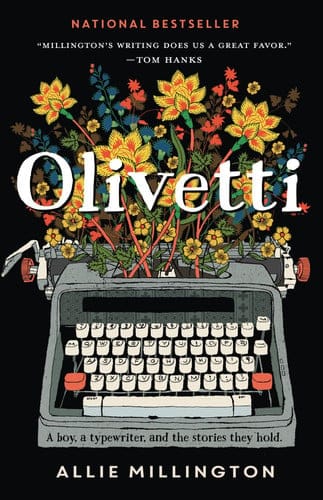
Terry Heath: Allie, so you're a New York Times USA Today and Indie bestselling middle grade author. Your first book, Olivetti, debuted as an instant national bestseller. Take me back to the moment you decided this is going to be your life.
Allie Millington: Wow, well we'll have to go way, way back. back all the way until I think around third grade. I gotten an assignment for from my teacher. she let us pick whatever subject that we wanted to write about for this writing contest. The prompt, however, was a different kind of hero. and so Immediately the idea came to me that this hero should be a pencil because I thought who could be more heroic than the tool that helps us write our stories? and it went on to win the third place in the writing contest and I got the certificate and I was holding that story in my hand and I really just had this kind of aha moment of this is what I think I want to do for the rest of my life. I want to write. Really unique stories. I wanna be able to share them with other people and I I loved that feeling of being able to try something that felt really different. Funny, you know, now looking back, realizing that that's been such a common thread throughout all of my books is writing from these unique perspectives and trying to help people see the world from a different point of view. So yeah, my my love for writing really dates back all the way back until third grade.
Terry Heath: And it was several years later, of course, before Olivetti was was
Allie Millington: No.
Terry Heath: published, there were other stories with inanimate point of views.
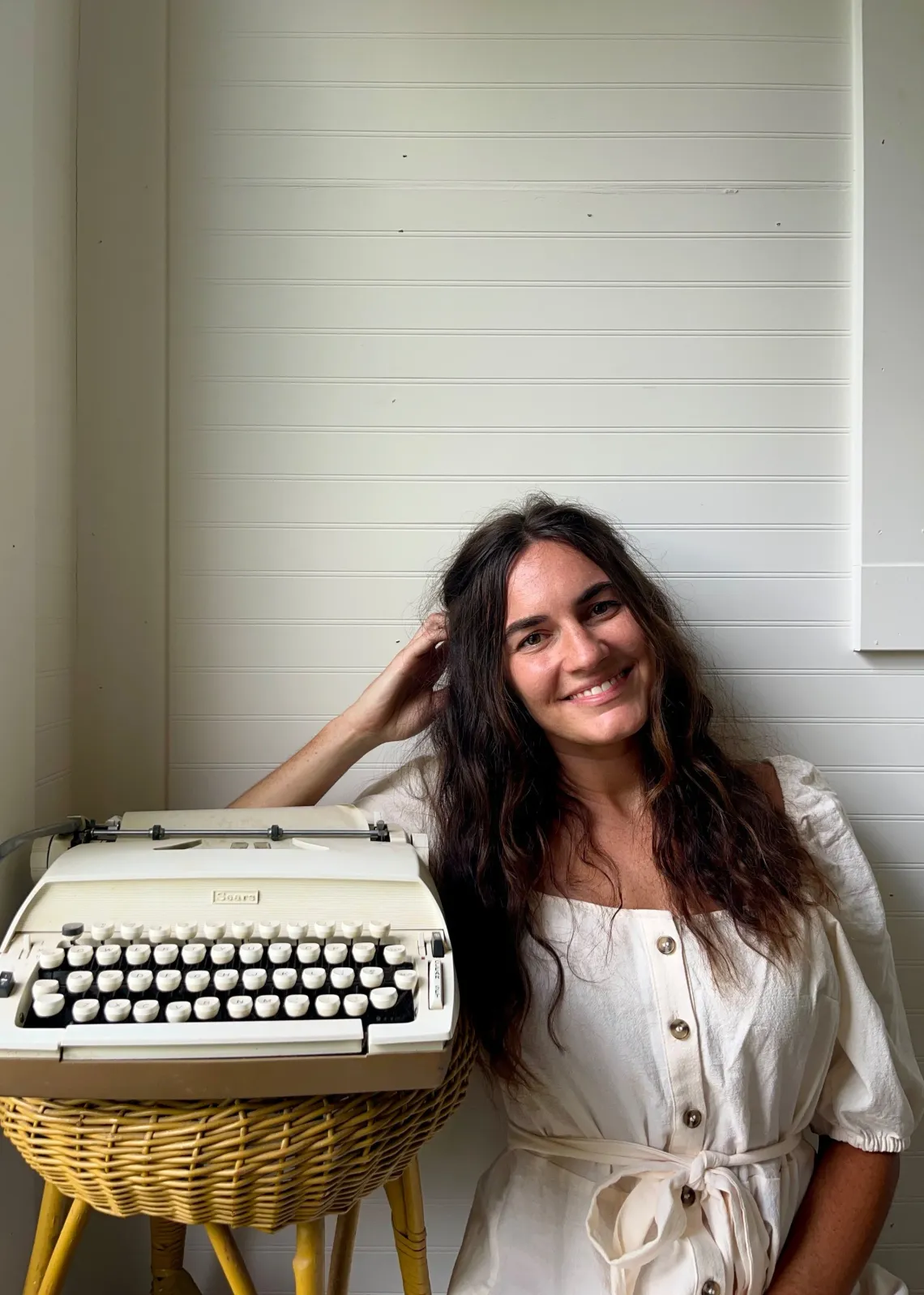
Allie Millington: Yes, yes, nothing that probably would have made it very far, but I I did have a pretty long journey to becoming published, mostly I think because I really didn't know much about writing or really the process of becoming published. even though I'd spent so much of my childhood writing and reading and I knew how stories went, I just really didn't know. I guess all the different steps that it can take to get a story published and how to make it stand out. And that rejection is just a very common part of this process. And so it ended up taking me about five years and writing several different books. And I racked up over 400 rejections along the way, which I turned into kind of a side project called my rejection collection, which is where I created a doodle or a poem for every rejection I got, kind of as a way to just keep creating my small acts of defiance to show, you know, I'm not gonna give up on this craft and this joy that it is to create. And so that was kind of something that not only got me through all the rejection, but also enabled me to connect with so many other writers and artists who. were feeling disappointed and rejected themselves because it's such a universal experience in the creative world. And so it really helped me realize that I wasn't alone. and kind of at the tail end of that long journey of trying to become published, my husband actually bought me my first typewriter, an Olivetti, just as a way to say, I believe in you, I believe in this dream, and I want you to keep writing. And as soon as I Touch this machine. It was made in the 1940s. It I just was so interested by the fact that this machine was used by different people across history and held so many words and stories and memories. kind of like the pencil that helps people write their stories down. This typewriter had done the same for who knows how many people, and the more I started typing on it. The more it almost felt like this Olivetti wanted to tell me all of its secrets and all the things it had been storing inside. And so that's really what inspired Olivetti, the book, which is about a typewriter who decides to type back in order to bring a family back together again and remind them of the things they've forgotten.
Terry Heath: And you typed the manuscript for "Olivetti" on your Olivetti.
Allie Millington: Yes, yeah. I like to say it was my very hands-on way of getting to know the character and the narrator, you know, by typing his story on him. So even when I had to switch over to my computer, I had my Olivetti next to me. I didn't want him to feel left out, of course. But also just, you know, to remain in that frame of reference and really trying to use empathy in my imagination to think what would it be like to be this old machine and how would I view the world and what kind of words and adjectives would I use and how would I feel? and how can I make kids especially see that they could have something in common with some you know, an object that is decades old.
Terry Heath: So tell me about the day you found out that well, I suppose first that that you had an agent who wanted to sell it. Tell me about that.
Allie Millington: Yes, well, it was really kind of a a divine intervention moment. I'd gotten some interest from another agent who, to be quite honest, didn't really catch my vision for Olivetti, but had some ideas of tweaking it and changing it that I wasn't exactly comfortable with. But after that many years of trying and being rejected, I thought, well, this might be my only shot. I I might just have to sign with this agent. And within the same moment that I'd pulled up that offer letter from that agent to start working with them. my old friend called me who I hadn't talked to in years, but I knew as the only other writer in my life. So I'd asked her a lot of questions and had different pieces of advice. and she called me in that moment and said, You'll never guess what happened. I just got a job as a literary agent and I would love for you to be my first client. So it was really obviously like I said Just perfect timing. And I knew that I didn't need to settle for somebody who maybe didn't fully understand my voice or the way I was trying to tell this story, but that there was somebody out there who believed in yeah, just my authentic voice and who I was and wasn't trying to change that. So it really was such a blur from then on. I, you know, polished the book with my agent and then She sent it out to publishers and it got picked up really quick, which was a really hard thing to grasp after years of being told my work, you know, didn't cut it. And then all of a sudden there were multiple people wanting it. I I think I still haven't fully grasped that people are interested in reading my stories. you know, rejections can kind of do a number on you a little bit. so yeah, it was it was such a an amazing blur. There were a lot of tears involved, a lot of phone calls, because I had so many people who'd really just cheered me on and believed in me along the way. And so that was really beautiful to get to share that with them and let them know that their their belief and their faith in me wasn't wasted.
Terry Heath: What was it like along the way? How did you connect with the writers that you shared your rejection collection with?
Allie Millington: Yeah, so that all happened primarily on social media. I at first I was a little bit hesitant and frankly embarrassed to share how many times I'd gotten rejected because it's a big number and I thought, you know, is that 400 times that I'd failed? But I kind of tried to flip it on its head and say that it was actually 400 times I tried again anyways, and I kept putting myself out there. And so I started opening up about How hard it was and how I was trying to push through that rejection by making this collection of art. And immediately so many people started reaching out online about, you know, feeling the same things or feeling like they were the only ones going through that. And it really just showed me that it's something that connects everybody. Whether or not you're in the art world or a writer, everyone goes through different disappointments or setbacks. And so It was really kind of it was such a great privilege to be able to connect with those people and make a lot of friendships along the way. and I ended up sending most of my rejection collection pieces in the mail to people who'd reached out just as a way to kind of encourage them along and they could put it by their desk and look up and think, I'm not alone in this journey that I'm going through and Kind of a a a really cool full circle moment is that I kept getting nudges from different people who'd seen my rejection collection, especially kids who I'd shared my doodles with, and they said, Well, why don't you ever turn that into a book? And I, you know, to me they're just doodles and I I don't think that much of them, but I kept feeling this nudge that I should maybe try and see if this book could become published. And long story short, it is going to be published in a book. they're gonna be putting all my different pieces of the rejection collection together and it's coming out next year as an adult gift book, meant for people who are struggling with those same feelings or they've been persevering for a while and just need a boost of encouragement. so it's a really tangible way to see how all of that time and that disappointment, there is a point to it all and there there's a purpose.
Terry Heath: Did the rejections, four hundred rejections, shape you or your writing?
Allie Millington: Yes, I've been thinking about this a lot just with the, you know, the name of your podcast and thinking about what this life in words has cost me and I definitely think on the other side of things, after being rejected all this time, it's it's can be tricky to trust your own voice. because you know what they say about however many negative comments or good comments you get, it only takes one negative comment to kind of tear those down and when you've had hundreds of negative comments, sometimes it's it's hard to see see your own potential and your own worth. So I do think that in a way they they kind of have stuck with me and just that I tend to overthink things or I I struggle with I guess I have to really put in different practices and be intentional about protecting the playful part of writing, and really trying to prioritize writing for myself rather than pleasing anyone else. even, you know, sometimes if I get good reviews, I I don't look at any of my reviews because I'm I'm a pretty sensitive person as most creatives are. so I I try to avoid all of that. But you know, things still creep in and even the the positive things that I hear in person, they mean so much to me, but they also they Are hard to tune out when it comes to writing the next book because I think if somebody experienced something in my first novel, they had this really emotional response and connection. I feel the responsibility to deliver that again. And there's just no way to recreate that same experience because it's going to be a completely different story. So it's it's definitely been a challenge trying to Tune out all the different voices, whether it's good or bad, and just go back to kind of my childlike self where I just was writing for the love and the joy of it. I still love it. It's all I want to do. it's my dream job and I'm so thankful. But now there's definitely there are extra parts that I I'm thinking of that kind of trickle into my process.
Terry Heath: What kind of protections did you put in place for your writing?
Allie Millington: That's a great question. And I'm still kind of in the midst of figuring that out because it definitely changes with each project. one I already mentioned, I really do not look at reviews. I steer clear of Goodreads. I leave that to my husband. He looks at all that for me because I just I think it would affect me too much. And no shame if you know authors do look at I think it's really impressive when they can handle that. I just know myself too well that. I would not be able to handle that. but I think it takes a lot of self-talk and being gentle with myself, reminding myself to have fun. that writing is although it can be hard at times, it's supposed to be this discovery. It's supposed to be fun and exciting and I've kind of With each draft that I write, I set really loose rules for myself and I actually have it like taped right here on my computer. I'm calling this draft that I'm working on now a don't look back draft, which is my way of not censoring myself along the way or letting those voices trickle in. that kind of slow me down and I'm picturing the different types of people who have read my books in the past or The trade reviews I've gotten that I can't avoid and all those things kind of are talking at me. So how do I just keep pushing forward? And so I've set these three rules for myself, which I'll read real fast. But one is play is the process. so again, really just not even trying to focus so much on a set way of writing, following any sort of structure, but just really allowing myself to play and not putting limitations on myself too much within this first draft. leave the layers for later, which is, you know, sometimes when I'm drafting, I feel that I have to think of everything in the first go round, and that's just not possible. So allowing myself to know, you know, first draft Allie is maybe not going to know this, but once I really know the characters more and they reveal more to my To me, I can go back and kind of layer in those deeper emotions and elements of the story that I really care about. And then the last one is just discovery over doubt, which has been really big for me just because in each of my drafts I I'm always attempting to do something new. I love to challenge myself and try something new, whether it's the way the book is formatted or the different perspective, or I'm writing in a a different genre. I love to do that, but it also causes me to doubt myself a lot. And I I have a good bit of imposter syndrome probably from all the rejection. So that's one way I try to encourage myself. Just let myself discover things along the way rather than doubt. and again, just keep returning to little Allie and in when I wrote without any other voices, I was just writing because it felt like it was what I was made to do. So trying my best to remember what that was like and how that felt. yeah, and an escape inside my younger self in a way.
Terry Heath: So you had multiple offers to publish Olivti.
Allie Millington: Mm-hmm.
Terry Heath: And then it launches and it's an instant national bestseller. And Tom Hanks gave you a glowing review in the New York Times. Wow.
Allie Millington: Mm-hmm. Yeah. Yes. That's another thing I I still can't believe. I have to I have the article printed on my wall. and every time I am just in shock that that actually happened.
Terry Heath: I'm thinking of Elizabeth Gilbert, wrote
Allie Millington: Mm, mm-hmm.
Terry Heath: Eat Pray Love, and she has a TED talk where she's talking about how do you follow up something as huge as Eat Pray Love. How how how
Allie Millington: Yeah.
Terry Heath: do you sit down and and do a second book.
Allie Millington: That is again something I'm constantly struggling with and trying to figure out. It was definitely hard to write my second book. thankfully Olivetti hadn't come out yet before I finished my second book. So it was really my third book, which is about to come out in a few weeks, where I'd gone through that kind of big splash, if you will, with my debut. So that really kind of took a toll. On me mentally just to think of, you know, becoming okay with the fact that sometimes there are just things outside of your control. You could write the same quality book, but you won't always have Tom Hanks writing articles about you. You know, there's there's so much timing and there's so many other things, factors that come into play. And so really, maybe as simple as it sounds, I just have to. keep doing my best. I have to keep showing up every day, even when I I'm unsure of myself and I don't know what I'm doing half the time. I think with every book I feel more and more like a beginner, which is a little bit frightening, but also I think is a good sign because I know with Olivetti I very much was a beginner, you know, so I don't wanna ever stray too far from that. But yeah, it was it was very challenging to kind of feel like I had my own shoes to fill and understand that not every book I write is going to be for everyone. and becoming okay with that. But I will say one of the the hardest parts, maybe it sounds silly, but I I just miss the characters. You know, I I fell in love with those characters and I got to spend so much longer with them because I wasn't writing on a deadline. You know, I had years to work with these characters and really fall in love with the idea. But since Olivetti came out, I've been on deadlines, which is great because it means I'm, you know, contracted and that's what I've been wanting, you know, at for this to become my career. But it also means writing at a quicker pace and sometimes falling in love with an idea or a book after it's already sold or as I'm writing it. And so my relationship to writing definitely changed, Especially, you know, being paid for a book for the first time. It just is a very it was a hard thing to grasp, and felt like some pressure too. You know, you want to do right by your editors and your publishing team and everyone who's believed in you. So, yeah, I think as I said, with every book it's almost like I have to return to some sort of form of therapy with myself of you know. talking myself through all these things that I I need to remember in order to feel the courage to start again and and know that it's okay if not every book hits the same way.
Terry Heath: You said you had imposter syndrome.
Allie Millington: Mm-hmm. Yes. I do.
Terry Heath: How does that feel? Where does that come from?
Allie Millington: probably somewhere deep in my childhood. Something I I need to go to therapy for. but also like I said, I I do think all those years of rejection, they they're still stuck somewhere within me and I don't know if if it'll ever go away. And I don't know if it it needs to. I think sometimes it feels scary to believe in yourself because you don't wanna be the only one who does. you don't wanna think your work is great. At least I sometimes am afraid to think highly of my work. and maybe that's some sort of defense mechanism preparing me or protecting me for, you know, bad reviews or a book that just kind of bombs or I don't know. I think there's definitely some layer of protection which is as I was thinking about your question, you know, what has a life on on words taught you? I really or cost you. I really think that it's cost me a little bit of my childlike sense. whereas, you know, before my life on words, before I was published, I I felt like I could write completely freely and you know, just without being hindered by any of these outside pressures or voices or anything like that. And of course I'm so grateful to be in this position where I get to have that kind of pressure in those voices because it means I'm getting to publish books, but I'm still constantly kind of grappling with yeah, what that what that looks like as I'm writing now and how to stay true to myself along the way when there's so many other people and opinions involved in my writing.
Terry Heath: Are you a perfectionist?
Allie Millington: Yes, sadly. Yeah. That's a part of my my yeah, my reasoning behind making this don't look back draft because in my as I'm writing a draft, in my mind it's what I'm typing is what's going to be published and printed that next day. And I having to remember, no, there's many, many rounds of drafting in revisions in edits that this is going to go through. I don't have to have Perfect line that is funny and poignant and clever and means something, like I can figure, I can layer those things in later, kind of going back to one of my other rules. So my perfectionism is kind of always at war with the playfulness that I'm trying to protect. because I don't think that they coexist very well. because I think, you know, children can be perfectionists for sure. I'm certain I was back then, but not so much when I was writing. I was just letting myself explore. I wasn't afraid of making mistakes, which is honestly one reason I tell kids to try writing on typewriters because you're bound to make so many mistakes. And especially if you're using an older one that doesn't have a delete key, your mistakes are just there on the page with you. And there's I think we're so quick to erase those and try to get rid of them when there's so much to be learned from allowing ourselves to try and mess up. And so, yeah, that's something I'm always trying to kind of push back against with my perfectionism.
Terry Heath: Has your writing process changed since you've had some success?
Allie Millington: Hmm. That's a good question. I I don't think so. I think again, I really feel like a beginner each time. I'm sure you've heard other authors say each time you start, you have no idea what you're doing, or it feels like your first book, and and that could not be more true for me, which I I'm grateful for that feeling because I I don't want to. be overly confident or think I have it figured out because then I don't think the story would maybe surprise me as much. I kind of come to the story very open-handedly and a little bit almost naive to what it needs to be. and I I'm definitely more of a I have a very loose plot, but I love to let the story kind of unfold as it will and follow the character's lead. and so I I tend to not have Too much of a process, which I guess is my process. It's just keeping it very open handed and loose. but it is all very much driven by a character. That's kind of the point that I always start at. in most times recently, you know, they've been objects that really I'm just fascinated by objects that I would love to introduce young readers to, objects that I feel hold a lot of stories and history. That's always a really great. starting point for me and I love being able to explore the opportunities to teach kids empathy through these objects and really stretch their imaginations in those ways. So that's definitely that's kind of the common thread I would say throughout my process is starting with a a really unique character or a unique way of telling the story.
Terry Heath: You said you s you started to want to be a writer when you were in third grade. What
Allie Millington: Yeah.
Terry Heath: else did you write between then and and when your books started being written?
Allie Millington: Yes, well, funny enough, a lot of my books weren't written down. And this is kind of embarrassing to share, but basically all through middle school and high school, I after school, I would go out into our garage and I would throw a tennis ball against the wall and come up with stories and I'd be out there for hours. and I would have a continuous story that would last for months. And every day when I was done, I would stop at that point in the story. And the next day I'd remember exactly where I was and I'd pick up the story. in, you know, I I'm talking out loud, I'm doing the dialogue, I'm replaying the story. my neighbors could hear me, my parents, you know, put up with the tennis ball being smacked against the wall constantly. and I do think everyone thought it was a little bit strange, of course, like it's a really weird thing to do. Thankfully my parents are very accepting and you know they knew I loved stories so they just let it slide. But kind of s a funny coincidence, years ago, right when I first got published, I had listened to a a master class by Judy Bloom and she was talking about the different quirks she had as a young writer, and one thing she did was she would go outside and throw a ball against the wall and talk, you know, share stories out loud for hours and So I immediately sent that to my family and said, see, I'm not crazy. There's there's somebody else out there who's you know, found this to be helpful. So yeah, a lot of just stories in my head. a lot of stories that I drew over the years. yeah, but then when I got, you know, closer to the end of high school, that's when I really kind of buckled down and I wrote a just kind of ridiculously long dystopian novel. It was like, you know, a hundred and fifty thousand words and just it was something all right. But it it's what I I love to do. It it's all I wanted to do. And so really looking back, it's comforting to know that that was so consistent in my life. It's always been there. It's always been something that I've been drawn to and I've had a deep desire to do. And so it really makes me feel Like I'm in the right place now.
Terry Heath: You said your parents were supportive when you were doing that. How do your parents talk
Allie Millington: Mm-hmm.
Terry Heath: about what you do now?
Allie Millington: gosh, I could cry talking about it. they are they're just so proud. They have a whole bookshelf in their house that's just full fully stocked with my books and they have them in the trunks of their car and are just always passing them out to people. And kind of to go back to the the Tom Hanks article, w years ago when I just started writing Olivetti my family and I had watched the documentary that Tom made that is about typewriters. And we'd all kind of talked about, you know, wouldn't it be so cool if one day Tom Hanks read this book that I'm working on? But it felt like such a, you know, that's a a crazy thing to to say. It was such a a pipe dream. but my mom got really hooked on that idea and she just never let it go. She was just so confident it was gonna happen. And this was before the book was hardly even written, you know, like In the midst of all my rejection, she was like, Nope, he's gonna read it one day. And I'm just like, Mom, is this just crazy of you to think? But it sort of became an inside joke to where my mom had already like planned what dessert she would make for Tom if he ever came over for dinner and all this stuff. It wa it was a running joke. And so you know, fast forward to a few days before my book came out and I heard from my publicist that he'd read Olivetti and wrote the review in the New York Times and I had no idea this was happening at all. And so it came as just the biggest surprise and I I called my mom that second and I said, Mom, guess what? And she just said, Tom Hanks. She just she just knew without any context. She just it was such a testament to how my parents really have never doubted me. Even the things that felt so far-fetched and impossible.
Terry Heath: How's your husband been with it?
Allie Millington: gosh. I could also cry with the ans this answer. it's just been the best thing ever to be able to kind of share this dream with someone. And again, he's he's the one who bought me my first typewriter. I mean, he's the one that could get a lot of the credit for helping the story come into being, but he Honestly, I kinda joke that he has become my manager in a way. he will look on my good reads and kind of keep tabs on different things that pop up, articles and interviews, whatnot, things that I I avoid just because I don't want to see what anyone's saying about me online. But he'll share the highlights with me and he's just he's very invested and you know, he'll say things like, Hey, it's International Reading Day. You should probably post something and you know, things that I I'm just not even thinking about that he's he's very much aware of. and he's always he's coming to all my book events. He carries my typewriters for me and makes sure they're all working. But I'll never forget my first my book launch for Olivetti, my first ever event. He was just standing in the back. I told him he couldn't sit up front because I would start crying if I looked at him, but He was just standing in the back and had this kind of overwhelming feeling of this is where I'm supposed to be. Like I'm I'm supposed to be here in the back supporting Ally. like he felt just kind of like a a a piece or this assurance that this was his role was to to be there for me. And he's never wavered from that. I I've talked I've talked his ear off about everything under the sun that has to do with books and we go a lot of walks where I'm having some sort of crisis about what's going on in my stories and he very patiently listens and then tries to offer different solutions or just as really a sounding board for me. So yeah, I I don't think I could do all of this without him.
Terry Heath: What has this life taught you about yourself that nothing else could have?
Allie Millington: I think this life in words has really taught me many things about myself, but I think just how I interact with the world, how I I experience the world and how I'm so drawn to finding meaning in everything. I think authors have just a really unique job in kind of trying to make sense of life. in real time and then sort of translating that onto a page and helping other people make sense of life in their own ways. And so I think it's really just taught me how much I I love I love connection. I love important moments. I love small moments too that maybe no one else would notice. But it's something that still is very significant. I think It's just taught me how much I love to pay attention in how much beauty there is that often goes unnoticed if we don't slow down to kind of recognize it and not skim over things that feel inconsequential, but just really sit in them and and reflect. so I think it's kind of been a an interesting juxtaposition of Being an author, you're sort of living in the future in a way. You know, what I'm working on now won't be shared with the world for a year or two. and by that point, I'll have moved on to the next book. But at the same time, it forces you to be very present wherever you are because you are paying attention, you're being observant, and you're trying to sort of absorb so many different instances of of meaning and make sense of them.
Terry Heath: If you were to reflect on your own life at this point, what would be the meaning of it?
Allie Millington: wow. Well, it's definitely shifted recently. I have a 10-month-old, so life has kind of been a big a big 360, it's done a 360 change for me. but yeah, I think right now, in light of having, you know, a a a child of my own, it really makes me want to. write stories that have even more of an impact on things that are important to me, like being true to yourself and finding that source of connection and belonging, all the things that I really want for my son, those are kind of translating into the things I'm writing about now. and and especially now that I'm what I'm writing I know is contracted. So I I I'm not in that weird kind of gray area of not knowing if what I'm writing is ever gonna see the light of day. which that definitely kinda changes how I go about writing too, because I know I have this amazing opportunity. I know that I have a a wide range of children readers and then readers who are all the way up until their 80s, you know? so I that feels like a a really big privilege and an opportunity to I guess I I don't want to take it lightly. I I see that it's a a responsibility and I care so much about it. I don't I don't want to write fluff or something meaningless. I really want to just be a good steward, I guess, of this opportunity that I've been given. And so that's where I feel a lot of meaning. I feel so much purpose in in what I do, not only as a mom for my son and thinking about him reading my books later on in life, but just thinking about all the other people who will hopefully read my books as well. The the the values and the things I care about that I wanna share with them and the ways I want them to feel seen and understood and just that they they have someone who values them. Those are things that really mean so much to me now as I'm writing.
Terry Heath: What would you say to yourself, to Allie as a child, that that you could put into your books right now?
Allie Millington: well, a big thing that I kind of n needed help embracing as a a younger kid was being okay with who I was. You know, obviously I didn't care a ton if I was speaking out loud in in the garage and people could hear me just babbling all these stories. But I do think when I was around my peers or in school, I I just wanted to fit in and I sometimes kind of shape shifted and bent myself into different ways to feel like I belonged. and so that's honestly why I do write about a lot of quirky or eccentric characters who find friends not by having to change, but rather just by embracing who they are and finding other people who have their own quirks and their own their own traits that are are special. And so I think that's what I would I would want to tell my younger self, as cliche as it sounds, but just to to lean into who I am, not trying to run from it or hide it, because it's what has got me to this place, I think, is just fully embracing the meanness, you know, the stuff that only I could write, or the stuff that just feels very true to me. not trying to dim that down or hide that, but have confidence in that.
Terry Heath: What do you make of your own success?
Allie Millington: I don't do a great job as seeing it acts as success. and maybe it's because I don't think about it often or I sometimes tend to compare myself to other people, and so what I'm seeing in my life doesn't always seem like success. I think too it it might be going back to that sort of self-protection or the imposter syndrome of being afraid to to see myself as something that I don't know that maybe I'm afraid I'm not. so yeah, I sometimes I I'm I guess I I do want to grow in my gratitude in that way, of realizing, you know, not skimming over certain accomplishments, which I I think I I do out of that protection. I I don't want to sometimes get too comfortable in a place or just assume that it's always going to be the case for me because I I just wanna continue working harder in pushing myself and stretching myself. but sometimes that comes with the cost of skimming over certain accomplishments and not fully realizing what they mean or remembering, you know, this is all I've wanted, this is what I've worked for, and I I don't want to just kind of keep moving on to what's next, which is such a tricky part about being an author, because again, you're contracted for books that are coming out years in advance. So you're you're always looking forward. you're always working on the next thing, the next deal. And so you can get I especially get so caught up in the what's next of everything that I think I don't often sit and really appreciate. In the ways that I need to where I'm at, which again I think is slightly out of that protection, but I do think there's there's so much to be learned too from sitting and and letting myself kind of reflect on that rather than just keeping my head down and and pushing forward.
Terry Heath: What's the biggest thing on your plate right now?
Allie Millington: Well, my ten month old, I think, is
Terry Heath: Yeah.
Allie Millington: he's a big thing. But I would say balancing being a a new mom and then still wanting to write, finding time to do both and not let them, you know, tug too much at each other. I think to finding ways where before I had my son I could spend all day writing because it was my full time job and I could be more of a perfectionist. but now that I'm having to write in the cracks of time, I'm I'm learning, you know, you can't wait for inspiration to strike or creativity to hit you. You kind of have to just grab hold of it and make it work for you at five AM in the morning when is the only time you can write, you know. So I think that that juggle has definitely been the biggest thing on my plate. and with that, you know, really wanting to make my books something that my son would be proud of one day. that that's something that feels very important to me.
Terry Heath: What's next? What's next for you?
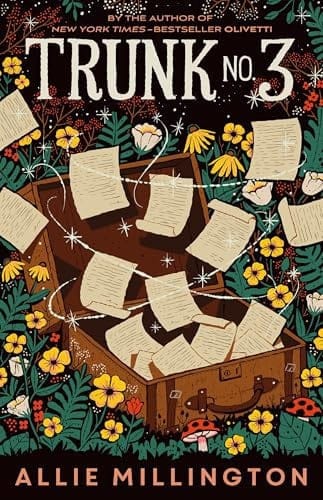
Allie Millington: I have a book that comes out in a few weeks in October. It's called Trunk Number Three, which is partially told from the perspective of a an old traveling trunk that of course looks ordinary on the outside, but when you open it up you can actually pass different objects, things like letters or you know, snacks, all different sorts of things to its matching trunk. and so it's kind of the story of these two kids who each come into possession of these different magical trunks. two kids who could not be more different from each other. begin to see that they have something in common with someone who feels just very the complete opposite of who they are. And so it's a book that is all about empathy. it's about connecting to people who seem different from you on the outside. and it's half of it is epistolary too so it's kind of a love letter to the the lost art of letter writing. because I love introducing or reminding kids of things like that that feel outdated like writing letters or you know things that really cause us to slow down and reflect. So that is my upcoming book. but then next year I've got my rejection collection book coming out which is called Looking Down. and that's kind of a compilation of all those poems and drawings that I made over those years of rejection and then got some some middle grade books kind of lined up for the next few years. So yeah, that's that's what's next for me in the writing world.
Terry Heath: Do you like what your career has become?
Allie Millington: Yes, I really do. I'm I'm very grateful, even though I said earlier, you know, I I sometimes I struggle to sit to be slow enough to be grateful. but I I'm just so glad that the timing worked out with my my debut. You know, I'm grateful that that was my first book rather than all the different books I'd tried getting published in the past because it just obviously wouldn't have been the same scenario and getting to start off already having made so many connections within the book world and within readers specifically across so many demographics. I'm I'm grateful that that was my launching point. I'm I've just been able to really make so many relationships and friendships that I never would have if maybe I I got published earlier on or I'd gone a different route. so yeah, I I'm I'm really thankful for how my career has turned out and I'm I'm excited to see where it goes for sure.