▶ Listen to this episode · 45 min
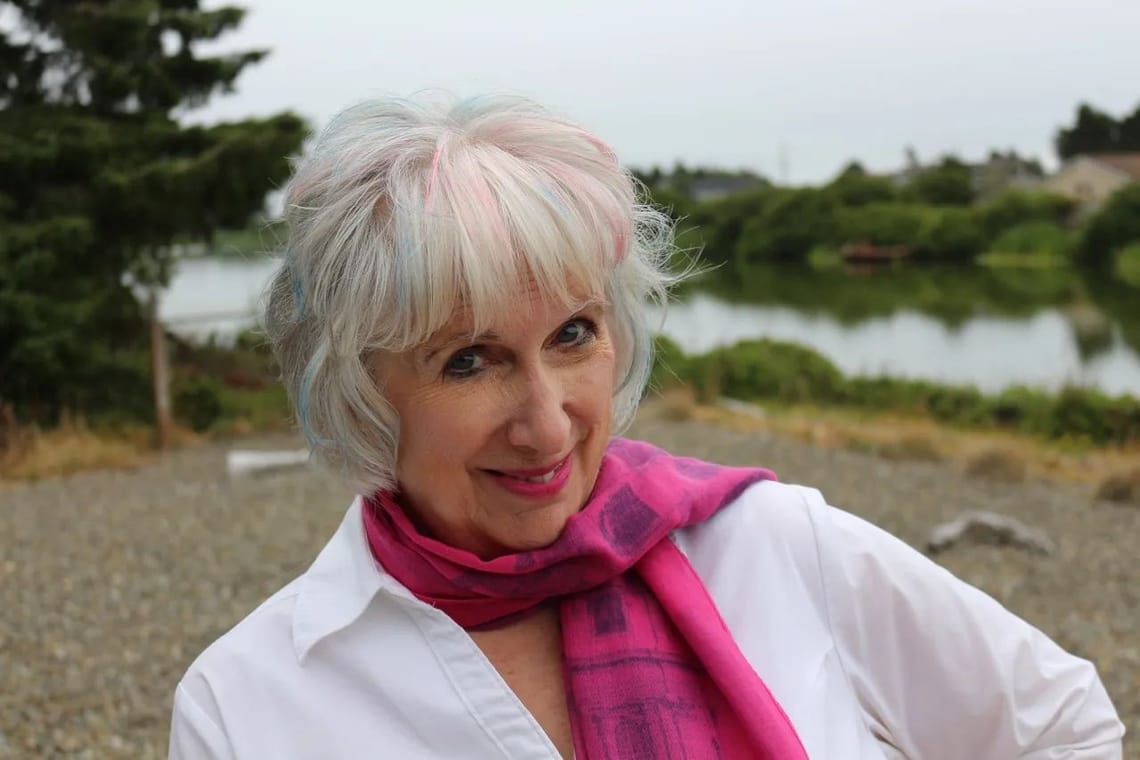
Sheila Roberts wanted to be a songwriter. Sixty books later — with movies on Lifetime, Hallmark, and Great American Family — she says the writing life has cost her nothing at all.
That answer is worth sitting with, because it doesn't come from an easy career. Sheila talks about crashing twice: once over a research error in a Regency romance that nobody caught until the reviewer did, and once when a box of influencer copies never went out, her editor stopped taking her calls, and her agent let her go. She calls the second one a dark night of the soul, and describes the friends who showed up with champagne and chocolate and told her the only writers who fail are the ones who quit.
Along the way: the purple gaucho outfit, the Dancing with the Stars audition, a mother who hid the naughty book face-to-the-wall, and the New York Times list she has decided to stop wanting.
Topics & Timestamps
(01:05) Stumbling into a career, and a book sold on the first try
(03:19) Paying your dues: beginning, middle, or end
(04:21) The purple gauchos, and a friend who said "you look like a cliché"
(05:14) Auditioning for Dancing with the Stars
(06:37) The résumé — and roughly sixty books
(07:09) What it cost: nothing
(08:54) Crash #1: the Regency error four sets of eyes missed
(10:25) Crash #2: copies that never shipped, an agent who let her go
(11:21) The dark night of the soul
(11:49) Champagne, chocolate, and Susan Wiggs
(13:18) "No problem, no story"
(14:28) Nashville, and an ambition that became an idol
(15:27) Songwriting success or the marriage
(16:26) The movies, and bribing a film crew with cookies
(18:15) What an extrovert knows about loneliness
(19:50) Why isolation starves the idea machine
(20:21) Not fear exactly — not knowing who she was
(21:20) Did success change how people see her?
(22:09) How it changed how she sees herself
(22:50) Two older brothers and no pedestal
(23:31) The naughty book, and a discovery after the funeral
(25:47) Once it's in print, it's there forever
(26:32) The hardest conversation: being dropped
(27:24) Brain baby versus product
(28:20) Letting go of the New York Times list
(29:34) A cat on his last life, and an agent who laughed
(30:39) Muses, wiring, and ideas circulating in the air
(32:06) The Man Next Door: Rear Window with two nosy women
(33:20) Killing darlings, fool's gold, and the ideas still waiting
(34:57) How you know it's gold (you don't)
(36:04) Tennis, ping pong, and a husband who'd rather pretend
(37:11) Writing every day but Sunday
(38:18) Miss one boat, be ready for the next
(39:16) What it gave her that outsiders never see
(39:57) Genre fiction, humor, and the layer underneath
(41:20) Giftings, and becoming who she's meant to be
(42:36) Unexpected Journey, and the copies she still sends to strangers
(43:43) Why books — "because songs didn't work"
Transcript
speaker-1: I guess the bottom line, it's just been about using the gifts that I think I've been given and just becoming who I'm meant to be. I think it's important to follow those giftings and not be afraid to follow them, because I think we all have certain gifts and things that we should be doing, talents we should be exploring and developing. And I would hope that much of my life has been about well two things improving as a writer and improving as a person.
speaker-0: I'm Terry Heath and I'm here with Sheila Roberts today. Hello Sheila.
speaker-1: Hi. Thanks for having me, Terry.
speaker-0: Course. Thanks for coming. We'll jump right in. Take me back to the moment you decided this was going to be your life.
speaker-1: Wow, isn't that an interesting question? you know, I I stumbled into my writing career. I really did. I was always creative. I was always writing little stories as a kid, and I have a feeling a lot of the authors you interview will tell you that same thing. We were creating masterpieces, you know, at the age of eight. but I never realized that that would be a career. and I I did magazine articles and odds and ends of things when we were first married. I was actually a music major. I was a music major. The first D's I ever got in my life were in my major, so that should have told me something. Music notation was not my gifting. Anyway, so but what I really wanted to do was be a songwriter. And so I just stumbled into the writing. Of course, I always loved reading. And we had some kind of lean years when our kids were young, and I remember Coming up with an idea for a book that I thought would be really fun. It was about a lady, an uppercro upper class lady who considered herself a bit of a Robin Hood and she was pilfering from her friends to support an orphanage. I thought this is a fun idea. And I had a friend who was a writer. I said, I think I'll tell Sharon about this. And then went, wait a minute. I could use money, maybe I'll write this. And that was my actually that was my second attempt. Before that I thought I should write the story of my mother-in-law's life. She was an Aussie war bride and she had quite the history and quite the story to tell. But that one kind of fizzled. And then I got this idea, I thought, well, you know what? I think I'll just write this on a whim. And so this friend of mine kind of had me look around, poke around, and yeah, those were the days before the internet. So they had I can't remember the name you remember that big book that you would get that would have all the publishers And editors and agents in it. Anyway, a big stop. I looked in and I went ity meeny miny mo and she said, think I've heard of this agent. And so I just sent this idea off to her and she said, I'd like to represent you. And then we sold a book. And it was bing bing bing, super easy. And I thought, well, isn't that's fun. I'm just gonna skip through my writing life and as I learned over many years that this is a business, as with most businesses, you will pay your dues. And you will either pay your dues at the beginning. of your career, the middle of the career or the end of your career. Somewhere along the way, you will pay your dues. And so I did pay my dues in about the middle of my career. I managed to crash it a couple of different times and just kept reinventing myself. I thought, hey, if Cher can do it, so can I. And so I that was that was kind of how it came about. It wasn't like I had this moment of I'm going to become a writer. It was like I just kind of stumbled, bumbled my way into it and thought, well I like doing this. And that stuck. And then I realized I just I just I have to do this. And I I think that's the case with many writers. It's just you're compelled. You want to tell a story. You have a message you want to get across, and you just get kind of addicted to this whole writing thing. And maybe that's why for so many of us, it's kind of hard to quit because you just think, gosh, I think I still have more to say. So I think I'm in that phase of life. I think I have a few more things to say before I turn myself out to pasture.
speaker-0: What did you think your life would be like as a writer?
speaker-1: I somehow thought it would be very glamorous. And my my gosh, Terry, you would have laughed. I I really do need to dig out some of those pictures of some of my early book signing ensembles. I had my purple gaucho outfit with the cute little bolero with the sequins and the big purple gaucho hat. And I had my my dynasty look, lemon yellow jacket with the polka dot skirt, and again, big hat, big yellow wide brim hat. That I just thought I was just hot stuff, man. And one of my friends finally said, You look like a cliche. Would you stop it? You're embarrassing all the rest of us. Can you just tone it down? So I thought So I did as you can tell I I've toned it down a little since then. But I really did somehow think I was going to be the next, gosh, I don't know. Danielle Steele. You know, I was gonna have this wonderful glamorous Life and live in a mansion and I was gonna get on Dancing with the Stars. I was very disappointed when that did not happen. I auditioned, I'll have you know I did audition. But I still remember this was after my book, I think it was yeah, after On Strike for Christmas became a Christmas movie or I found out was going to be and I I I really did want to go. I loved that show. I asked my agent, I said, Can I now can I get me on can we get me on Dancing with the Stars?
speaker-0: Sheila you will
speaker-1: Always be a star to me, but no offense, don't you have to be famous to get on that show? I mean Well,
speaker-0: What's
speaker-1: I I think I'm f authors are famous, aren't they? But needless to say, that did not happen. I was never quite famous enough. And I tell people now that, my gosh, you know, sometimes really things work out for the best. If I went down for the splits on that show, I would never come up again. I would be in the hospital. So, you know, I think things have a way of working out. And I think careers have a way of working out. And you know, if there we end up with someone listening to this who's just beginning their writing career or maybe is having a tough time. And publishing is tough right now for writers. We've got all kinds of challenges that we didn't have twenty years ago. but I would say don't don't give up. Just, you know, keep writing because if that's meant what you're meant to do, if that's your gifting, you want to honor that gifting. And so just keep doing it. And well, maybe someday you'll get on Dancing with the Stars Who knows?
speaker-0: On Strike for Christmas was a lifetime network movie. You had the Nine Lives of Christmas on the Hallmark Channel You've been a USA Today and Publisher's Weekly bestseller. You've written somewhere around 50 books,
speaker-1: Yeah, we've actually edged over that. We're up cl I think it's up to sixty now. So I think that's I think that's a pretty good accomplishment.
speaker-0: What does your life in books cost you?
speaker-1: You know what? I don't think it has cost me anything. I feel like I have benefited from this life that I've chosen. It's been a great adventure. We the the whole movie thing, getting to visit different movie sets. We even had a little cameo role on on the Nine Lives of Christmas. Gosh, we got this was years ago. One of the most fun things I ever did. We made a music video to go with one of my classic books, Merry Ex-mas And it's still up there on YouTube. If you look for Merry Christmas Mama, you'll see me getting hauled off by Santa Claus. We're in the bar, and this the basis of that book was the one of the characters. These characters are they're gonna get a divorce, they're stuck living in the same house, and he's written a tacky song about her mother which gets him in great trouble and we thought wouldn't that be fun to do a song about that? So we've got our little our little singer there with his band singing and in comes comes the the wife, the soon to be ex and the mother-in-law. And I got to play the mother-in-law and that and make lots of faces and it was so much fun. So I just really feel like and then gosh, don't even get me started, all the great people that I've been able to meet through writing. You know, writers and readers, we just have that you just get that connection. You know, and that has been so special. I feel like I've made a lot of friends over the years thanks to the career I've chosen. So I just feel like it for me, it was where I was supposed to be. And I just I don't feel like other than those couple of stumbles with the career where that cost me some sleepless nights, I feel like overall I'm very happy with the career that I've chosen. I feel like I've really, really been blessed being able to do this.
speaker-0: What what were the stumbles?
speaker-1: Gosh, well the first one, I started out, a different name, writing Regency romances. And it's so embarrassing. I really do try to do my research well. And even sometimes now with modern books where can actually call and interview people, I still manage to goober up something once in a while. But with this, I had made a bad research mistake in this book, and it kind of affected the plot of the book. And it was very interesting because it just didn't enter my brain it should have, but it didn't. And I'll tell you the deal because Sheila tells all. Except for her wait. But anyway, so I I had decided it was going to be about this woman. She's an adventurous. And she gets married to the Earl. And all of a sudden it looks like somebody's trying to bump him off. All these things are happening. It looks like somebody's poisoning him. And of course she's the prime suspect because she is an adventuress But it turned out, no, it was not her. It was his evil stepbrother. And you might be able to I if you know anything about England, you probably can guess what was wrong with that because Titles and lands go from blood relative to blood relative, not from stepbrother to step brother. And I didn't catch that. My critique partner didn't catch that. My editor didn't catch that. The copy editor didn't catch that. Nobody caught that except for the reviewer for the magazine Romantic Times. And she yeah, she was she tried to be nice, but you know, what could she do? And then my publisher was not happy and everything just kind of tumbled down from there, you know, and so there went you know, career crash number one. who am I now? And so I had to reinvent myself. And then career crash number two was just kind of a perfect storm of things. this was now I was switched to writing more contemporary novels. And this one book was supposed to go to all kinds of influencers and and I got these two big cartons of these books with have these little letters. we you're gonna love Sheila. And it turned out those were supposed to go to important influencers in the industry, and somehow that didn't happen. And so news of the fabulous book did not get out, and it just sort of died on the vine. And all of a sudden it's like I'd call to talk those are the days you actually just call and call and check in with your editor and I would call and conveniently she'd be out of the office every time I called. Yeah. And then pretty soon my agent's like, Sheila, I really like you, but we're not making any money here. And I'm like, don't leave me. And so boom, boom, boom, down the stairs we went on that. And that was that was very hard. And I will say that was a that was a kind of a dark night of the soul. I because I had now become so into the writing and my identity was so into the writing, like this is who I am. I'm what
speaker-0: I'm a writer by
speaker-1: am I now? And it was a really good glimpse into what men go through when they're laid off. You know, I just never realized how devastating that can feel when all of a sudden, you know, the rug's pulled out from under you and you're just going, my gosh, I'm here on the floor and I don't know how to get up. And it was it was hard. So I went through a a period of time where I really I kind of blamed myself, you know, and I I was And I'm so I am definitely an extrovert. So for me this was really something I kind of pulled out of all my different writing organizations and kinda hid out to lick my wounds. And when two of my good friends, Jo Barnett and Susan Wiggs, who I believe you've interviewed, took took me under their wing and remember being at Susan's and her giving me their giving me champagne and chocolate to console me and say but I remember Susan saying, you know what, do not give up. She said, The writers I know Who end up failing and going nowhere are the ones who quit. And that just really resonated with me. And that helped me pick myself up and get going and go, okay, who am I now? And so that was hugely helpful. And I think it's really important to remember, well, a couple of things. You know, we just because things aren't going well doesn't mean you're not a writer. And also, you we're all more than that one thing we do. You know, I thought, my goodness, I'm a friend, I'm a wife, I'm a mother. I am a child of God. I have got friends. I have got other things going on in my life. This is not going to be the end of the world, and this is not going to be the end of me. And I just feel like that really helped kind of turn the ship and got me going in the right direction. And so I just kind of started, okay, well, why write now? And I I wrote a couple books and then I sold On Strike for Christmas. And that just put me back on the path I needed to be on. And I have been, I got airborne and I've been been up in the air ever since. So I just think sometimes even when you're going through the hard times, it doesn't mean it's the end of your story. It means that maybe your story is taking a new direction. And I heard the most interesting thing on a podcast the other day. And they weren't talking about writing, but it still resonated. They were talking about life in general. And the one guy said, no problem, no story. And I thought, isn't that interesting? Because Our characters need to have a problem, right? And in real life, the same thing. If nothing ever happens to us, we don't learn, we don't have a story. We have nothing of interest or encouragement to say to anybody. And so I feel like even though I have had some problems in my career, that has added to my story, and hopefully that story can be encouraging to other writers, maybe if they're going through a time where they're just like, my gosh, why is this happening to me? And it's happening because life happens. Things do not always go smoothly. according to plan. Just like our characters, sometimes we need to fight and get stronger so that we can have character development and come out better in the end.
speaker-0: What would you be if you hadn't started writing or gone back to it?
speaker-1: I'd have been a songwriter. That was what I wanted to do to begin with. And again, that was kind of stumbly bumbly trips to Nashville. Fortune's been on song demos. And that was a case of you really need to be it maybe not as much now, but back when I was younger and the pterodactyls flew, you needed to be part of the community down there. They didn't want somebody waltzing in and go, I have a song. Okay, now I have to leave. And a lot of my friends had moved down. I remember I wanted to move to Nashville so badly. And by now we had three little kids, one of them handicapped. And my husband, I could not convince him that we should all move to Nashville with nobody having a job so little Sheila could become a famous songwriter. So that did not quite go according to plan. And I still dabble in songwriting on the side, just for the fun of it. But obviously that was not the turn that my life was supposed to take. That was not the career I was supposed to have.
speaker-0: Do you ever regret not going that way?
speaker-1: Well, I would l I'd love, I wish I I could have had a chance to move to Nashville. But it's just I in some ways I look back and go, that had become almost an idol in my life. I mean I had sold a kid for a song deal, you know, it was that kind of I was like, I just do anything for a song. And I remember once a while back we were watching a special, it was about Garth Brooks and his big rise. And one of my laments often over the years, I could have made it, I know it because I was very good at making connections. And I was a good songwriter. I could have made it. I could have made it. And my husband said, Yeah, but I wonder if we'd have still been married, because it's such a tough life there. And it's just very easy. It it it can be hard on marriages, you know. And so I look back and go, Yeah, okay, which will I have chosen which would I have chosen? Songwriting, success, or my marriage. I'll choose my marriage, you know. And writing so far that has not done anything to ruin our marriage. We've had a really good time working this career together. So I think that was probably a good choice.
speaker-0: What what did it feel which was which was first, On Strike for Christmas or the Nine Lives for the movies? How did it feel when you heard that was gonna happen?
speaker-1: You know, it's so interesting because On Strike for Christmas just sort of boom, boom, boom, happened. And it was all a done deal and everything was going on by the time I even found out about it. I don't even know how things happened so fast. And so sadly I didn't get a chance to finagle a cameo roll on that. Well, I didn't even get to visit the set on that. It was just a done deal. But then along came the Nine Lives of Christmas, and I'm not sure I still to this day I'm not sure if my ha publisher had sent it to a producer at Hallmark or if they just saw it or what. But that came next. That was the next one. And that was fun because we did have enough lag time that we could go visit the set and got to do a little cameo appearance and really see what was going on behind the scenes. And that was just that was great fun. And then they did a sequel after that that they just said, Surprise! Here we did a sequel. And that was that was kind of interesting and fun. And then after that, just a few years ago, we had Christmas in yeah, Christmas, no. Christmas on Candy Kane Lane. That became a movie for a Great American Family Channel. And again, there the particular day we visited, there was no chance for me to weasel in and get a cameo roll. But we went up and visited the set and hung out, and I bribed everybody to like me with Christmas cookies. And it was just so fun. Just again, the seeing everything that goes on behind behind the scenes. It was it was just a very fun adventure. So I guess that brings me back to you know, I have had so many fun. perks along the way with this business of writing that you know, no regrets that that's what I wound up doing.
speaker-0: Well, it's clear you're an extrovert from what I've what I've seen, but what do you know about loneliness?
speaker-1: I am the wrong person to ask that, I really am. I've got a great family and friends. The one thing I do know is that this is a solitary business. And even for introverts, I think it's very important to have some kind of human connection. Something along the way. You're in your own little world all the time. You're in there making up your stories. And we all need that human connection. I just Interesting because I just recently I love podcasts. I was listening to one the other day and this these two experts talking and they were talking about how depression and anxiety are on the rise in our country right now. And the one man pointed out that we have 70 percent less interpersonal reactions, just casual interactions with people than we than we used to have. And that's a lot. He said we're just kind of not doing the chit chat at the bank. Everything we do is designed to keep us isolated. We have our earbuds to listen to. We can we order we go to the the fast food place and we order on a machine. You know, we have our food delivered. We go to the bank well we don't go to the bank. You know, everything is digital. And we're losing some of those interconnections. And I think for anybody who is doing this as a business, it's very important to remember that we're part of the human race and to do something that is keeping you connected, whether you're in a critique group with other writers. Or you you do something with a neighbor once in a while, you take a friend out for coffee. I just think that's very important, not only for your mental health, but also
speaker-0: Also it
speaker-1: helps you he helps the idea machine keep going. You know, you can get inspired be out being out there in the world or you know, eavesdropping on conversations at the coffee house or talking to somebody about what's going on in their life. And if you are in this isolated bubble, you're you're depriving yourself of A lot of opportunity.
speaker-0: When in this career have you been afraid? Probably I don't know if I
speaker-1: even call it afraid but just discourage that kind of that last career stumble when I thought gosh I'm just not sure where to go next or what to do next. I'm just not sure who I am right now. And that can be a little unsettling, you know, because you're thinking where do I go from here? And I think like I said, I think what got me through was actually the encouragement of friends, which kind of circles back to the importance of having people in your life. You've you just I don't think any of us were meant to live alone on a mountaintop. You know, I really do think we're meant to be interconnected. And your connections don't have to be huge and many, but I think there needs to be someone in your life who's rooting for you and can help you figure out whatever you're dealing with and figure out where to go next.
speaker-0: has being a writer and having some success changed the way that p people view you
speaker-1: I don't think so because the people that I hang out with are the people who have been with me for the whole journey. You know, my other writing friends. We've all you know, there was a ti gosh, this one critique group we've all scattered to the wind. We we used to meet all the time, but we all got so busy that we couldn't find a time for everybody to get together, you know, and it's a and so it's just life has gotten a little bit crazy that way. But again that's That's that's the way life goes, isn't it? You things things are always in flux and I guess you have to be open to that.
speaker-0: What about the way you view yourself? I think I've
speaker-1: Okay, I would like to say, I think I'm a little more humble. I think there have been occasions once in a while in my career when I thought it was pretty hot stuff, and then all you need is to do something stupid or have something happen to you like you're not as hot as you think you are you know, so I would like to say, you know, that that I'm maybe a little more humble than I am and realizing, you know, you just even though b baby in the family, the only girl, doesn't mean you're the star of the world, Sheila. so, you know, I I would like to think that I've changed for the better, but knows.
speaker-0: Who knows?
speaker-1: I guess we'll have to ask my husband about that.
speaker-0: you mentioned your your family. How how do they talk about what you do?
speaker-1: My family are just are great. They're very supportive. And the funny thing is, of course, like with having two older brothers and one of them has since passed, but and I really was the baby. They were like 17 and 13 when I was born. And so they were always harassing me and teasing me. And you know, once the baby of the family, always the baby of the family. And there's nothing like your siblings to put you in your place and remind you where you stand. So my family are all very down to earth and very fun. and and very loving, but I don't think anybody has got me up on a pedestal, that's for sure.
speaker-0: What about your your parents and your naughty books?
speaker-1: Haw you had to bring that up, didn't you?
speaker-0: What?
speaker-1: Yeah, this is this really is a funny story. So okay, so anyone who reads me knows I'm I'm not a a spicy girl and I'm kind of a closed door. Okay, you guys just go off there now. I'm not gonna follow you into the bedroom. But I did my my mother and my mother was my parents were quite a bit older. It was a later in life surprise. And my mother was kind of the last of the ladies, you know, where you always dressed up to go downtown and you never said a bad word. And you know, and therefore I had better not ever say a bad word. And I was a very good girl. growing up. I have to say somewhere along the way I got a little less good. And I I had you know I I to I could never write, you know, and if I wrote anything even remotely racy, I was in in big trouble with my mom. And I did have this one, the book that, and I think there were like two swear words in it. And but it was like it was like the it was the naughty book. I was like, my mom's gonna shoot me. my gosh, don't let mom see this book. And so my at the time my mom was living with my brother. We all lived on our own little family compound, and somehow mom got wind of the book. And so she sends my brother off to the local bookstore to buy the book. I'm like, what are you doing? Why did you buy that book? He said well she asked me to. I'm thinking if she asked you to jump off a cliff, would you do that? Anyway, but too late. She has a book, but she never said anything. And so later after she had passed, we were we were cleaning up her the little area, her room in my brother's house. And a couple of my older books were there. And so well I may as well take these. Nobody's gonna be interested in those. And my sister-in-law goes, well what's this? And I turned around and there's the naughty book. And she had turned it with its face to the wall. Ha ha It's kind of like mom's final revenge and like, golly, getting coming after me from the grave, even. Mom always got the last word, and even then she got the last word. So, you know, she was always determined to make a lady out of me. And I think she is still up there in heaven looking down and hoping that I will do better. So I am I am trying to curb my naughtiness. But once in a while a naughty word does slip into my character's mouths because we are all human and I always say, gosh, if I hit my finger with Hammer, I'm not gonna say shucky darn, you know. So, but I do try to keep things pretty darn clean just to because once something's in print, there it is forever to embarrass you. So I do keep that in mind, you know. It's like once it's out there, you can't take it back. And I remember my son, he was went through a phase where he was gonna become a writer and he had gotten some language in his book. And I did say the same thing to him. I said, Look, just remember, you know, once it's there. It is there and you can't take it back once it's out in the world. So think before you speak, think before you write. And I probably could think before my s before I speak a lot more than I do. But I'm definitely trying to make sure I think a little bit more before I write.
speaker-0: What's the hardest conversation that you've had to have in your career?
speaker-1: Probably the hardest conversations have been like, well, I think really when my my agent Before my fabulous Asian I've had now for years had to let me go. It was, that was very hard to hear. I was like, do you remember those old, I don't know, movies or cartoons and the person's trying to leave and the other person's got their arm wrapped around the leg, don't leave me. And that was that was kind of like me. I'm going, whoa, don't dump me, please don't dump me. And that was, that was, I remember that being very, very hard. And of course now, with hindsight being twenty, twenty, I've had the same agent for I've even lost track of how many years we've been together. Twenty, twenty-five, a long time. And that all turned out to be for the best. So, you know, sometimes those things in life that don't seem to be working out turn out to lead you down a whole new path and be a good thing. But that probably if I have to say hard conversations, that probably was the hardest one. I know sometimes authors struggle with editors giving them input on their books that that can be hard to take, you know, because our books are our brain babies. But I always try to take a step back from my book and tell myself, yes, this is your brain baby, but it's also a product. And the goal of my publisher, my editor, my agent, everybody, we want to make a good product that readers are gonna like. And I have to take my ego out of that and don't get hurt if somebody said, this stinks. Well I'd go back to the drawing board. I have to unstink it. You know, or they don't like this character or they don't like this plot. And I think I I think that's of that's really that that's guidance. That's not someone trying to make you feel badly about what you've done. But that is we're all in it together and we're all trying to make this a better book.
speaker-0: Is there anything about your career that you haven't had that you would like?
speaker-1: Okay, well Dancing with the Stars is now off the list. We're not gonna worry about that. But you know what? I've made a lot of bestseller lists, but I've never made the New York Times in all these years. And I would love to do that while I'm still alive. I'm not sure that's going to happen. And so I have actually I thought, okay, we're gonna let go of that because The goal here is to write, to enjoy what you do, and keep going in that way. And if accolades come, that's great. But you know what? In the bottom line, very few remember who was. You know, could you tell me who was a New York Times bestseller in 2001? and you know what? And it it doesn't matter. It you know, it's the big thing that matters is if readers enjoy your book and you're able to connect with readers. There's just the bottom line. So I I've let go of some of those markers of success because they can be fleeting. And the main thing is concentrating on your body of work and what's the next book and you know, am I gonna have a good time with this book? Who's gonna like it? And just leave it at that and enjoy the ride.
speaker-0: How do you decide what the next book is?
speaker-1: Yeah. Next book is whatever pops into my head. And usually something does manage to pop in there. And often that can be from something I've observed in life, or maybe just something just falls into my brain. with with Nine Lives of Christmas, I just got this idea. I could envision my favorite movie, It's a Wonderful Life. And I envisioned, remember that scene, George Bailey is on the bridge, and he's going, Please God, I want to live again. And I thought, gosh, what if that was a cat on his last life? What if he was like, no, I don't. I didn't give up my ninth life yet. I thought, what if that became a book? And it did. And I remember my agent laughingly thought, who who thought anybody would want a story about a cat on his last life? You know, it's just it was just such a funny thing that that book did so well. And so many people enjoyed it and enjoyed the movie. And it still plays all the time on Hallmark. Somebody I'll always hear from one of my readers, it's playing on Hallmark right now. Or I'm like, my goodness. So it's kind of fun though that it's still out there.
speaker-0: Wh where do you feel like those ideas come from? Back in the day they they talked about people having a genie or a muse or where w where d what do you listen to? I don't
speaker-1: Golly, I don't you know, I don't know, Terry. I just think some of us are wired with imagination and just things just really do just i it's how we're wired. We can just think up all kinds of goofy stuff. I was sort of laugh as a kid, not only writing stories, I would t put myself to sleep. Telling me bedtime stories. I was always the hero of my story. Usually I was a lady pirate. But you know, I mean, where does that come from? Who even knows? Sometimes you you read something or you see something and you think, wow, that'd make a great story. But sometimes, like I said, they come and I don't know if that's from a muse or what. I do think often the same ideas can be out there in the air, just kind of circulating around. Cause and I can't remember the instant just a while back and I don't remember what the book was now, but I had seen a book that somebody wrote and I thought, my gosh, I had that idea. I should have followed through on that idea. So they're just ideas are just out there. It's like a harvest waiting to waiting to happen. So and again, I think if you're out there looking for ideas as a writer, well just kind of get out in the world a bit. Hang around on social media, eavesdrop on some conversations, see what's going on in the world, and you'll probably get some kind of a something that will inspire you.
speaker-0: Have any of your ideas surprised you?
speaker-1: I don't know. No, maybe not. That's a that's a hard question to answer because there they are and you just go, okay, here's the idea. Like when I wrote The Man Next Door. I don't even know that just popped into my head again. I thought, maybe it was after watching. We one of I love old movies and Hitchcock movies, I love those. And we had watched Rear Window a while back. And I remember thinking, wow.
speaker-0: What if
speaker-1: I wrote like a Rear Window and what if what if we had to have these ladies and kind of make it a little more humorous and and we put plop this guy in next door that and then mom and daughter end up spying on him. He looks like a great candidate for husband number three for the daughter. And now we think, my gosh, but yeah, is there a girlfriend? my gosh, she disappeared. Did he murder her? Did he bury her in the flower bed? And it just was fun. I thought this will be fun. So I think that's part of the creative brain. An idea comes there and you just start playing. Playing with it and kicking it around and it sort of grows like if you're making a snowman. You know, you start out with this little snowball and you roll it some more and you roll it some more and it gets bigger and bigger and bigger. And I think that's how it works for me. That was a very long winded answer, wasn't it? Sorry.
speaker-0: No, not at all. So have there been any ideas where you've had to for one reason or another you've had to kill your darlings? You couldn't write it
speaker-1: Yeah, and I can't even remember the book. That's how unimportant it was. But I do remember a couple of times that I come up with a book idea and me just like, No, this is not gonna fly. I've just read that I do can think of one recently there's an idea that someday I still wanna write, but it was like, Well no, that's how it's day, don't write that and I'm going, Yeah, but this is such a fun idea. And it just you know, sometimes it's like It's like you're in in the mine there mining for gold and sometimes you think you've found gold and everybody else says, no, that's fool's gold. Go back to the mine. And you have to be willing to do that. You have to be willing to pivot. And not so much, of course, if you're an indie writer these days, because indie writers have the freedom to do whatever they want. If you're traditionally published, that's a bit of a different animal. You're kind of dancing to someone else's tune a little bit. And But I I don't have a problem with that because I feel like, you know, all the publishers publishers and agents have seen a lot and they kind of know what's popular and what's played out. And so if I have an idea that's not flying with everyone, then I have to let go of that. And come to the g yeah, I did have another idea that I really, really, really wanted to do. And it just, you know, I tried several different times to slip that by different people.
speaker-0: Nobody liked.
speaker-1: It's like, okay, fine. You gotta let that go. Maybe someday you can write that on your own. I have probably have a list of about two or three things that maybe I'll write it someday that fall under that category.
speaker-0: Other than that that feedback you get, w how do you know it's it's gold? How do you know when the story is right?
speaker-1: boy, that is a really good point because I think everything I write I think is gold. And sometimes it takes an outside an expert to look at it and go, no, that was fool's gold. when a book really is popular and hits, of course, that's also an indication that that you wrote something good, you know, and when people really like a story, you're like, I was right, that was a good story. But you never know. Writing is just it is a gamble. It really is a crapshoot. Because you can think you've written something people are gonna love and it can just you know, it can just die. And so y you never know. So you gotta okay, I'm gonna move on, write something new. But that's That's that's the writing world. You know, not every idea is going to be fabulous. And I think it's important to realize that. If your idea, if that thing is falling flat, then just move on. There will be more ideas waiting for you.
speaker-0: What do you do when you're not writing?
speaker-1: I play. I really do. I just I have a lot of fun. We've got like I said, I've got a great family. We do things together. My husband and I like to travel. We're currently down at the beach here hanging out. And when I'm at the beach, I am either doing beach walks or playing tennis. I love to play tennis, tennis, ping pong I used to play volleyball, but I finally hung up my knee pads on that. So, and I'm reading, of course, and entertaining. We just love to have I love having company over and playing games, playing cards. my husband is is the shyer of the two of us. We is as often as the case, opposites attract, so the poor man, you know, I'm always dragging him off to this or that or the other and wanting to have more company. Let's have a party. and he's like, let's just pretend we did. But he's a pretty good sport, goes along with everything. But so yeah, my when I'm not writing I my life is pretty full and pretty happy. And so that might I have to keep that in mind if I do reach the point where it's time to retire that I think I'll be able to fill the days just fine.
speaker-0: What's a day in your life like? What's your a normal Tuesday when you're not recording a podcast with someone?
speaker-1: Tuesdays are usually that is a writing day. Every after every day is a writing day. I do write every day except for Sundays, day of rest, I take a day off. And but that usually gets kind of scheduled around my social life. So Monday, Wednesday and Friday's mornings are tennis and Tuesday afternoons are ping pong and usually somewhere in the week there will be a afternoon party with the girls. And so that the week goes by pretty fast. That's for when I'm on the beach. When we're at home maybe not not so much of the tennis, but there will be walking and line dancing and I have a ladies' Bible study I do during fall and winter and spring. And and book clubs. I'm in two different book clubs. So life is definitely life is definitely busy. But again, like I said, writing always has to get fit in there. If if you want to be a writer, obviously you have to write. So I c always carve out time to do that.
speaker-0: What has this life taught you about yourself that nothing else would have?
speaker-1: you know maybe to be persistent don't give up because obviously earlier we talked about the many ups and downs of this business and I think one thing I have learned is that the old if you miss that boat another boat's gonna come along so be ready to jump into it yeah Think I think that's an important life lesson in general. It's very easy to look at our circumstances and think I'll always be here. You know, I will always never have any money. I will always have well fill in the blank. And always is a big word and it's not always an accurate word. So I think it's important to remember that life changes, things change, we change. Hopefully we are always changing. And the more we change and improve, often the more our life changes and improves.
speaker-0: Is there anything that this life has given you that outsiders never see?
speaker-1: Gosh, that is a really good question. Other than persistence, I d it's it's embarrassing how open a book I am.
speaker-0: That's
speaker-1: I don't know. That I d that is really a hard question to answer because again this life has been so much a part of my life. I've always written. And so to imagine not writing, I'm sure there'll come a point when I'm not, but right now I can't envision that. So it it's it's hard to separate that. You know what I'm saying? It's hard to separate the writing from the rest of my life because everything is so inter intertwined.
speaker-0: Do you feel like there's anything you're trying to prove by your writing
speaker-1: That's a good point.
speaker-0: You know
speaker-1: I do think and my writing is changing just a little. I'm writing a little bit more nonfiction. And maybe under that is a proof trying to prove that I have something to say. I think often as fiction writers, and especially if there's some humor in there, it doesn't get taken as seriously, especially if you're writing genre as the more literary books, like, there's, you know There's that's just you know, that's just a comedy, or that's just a rom com, or that's just a light hearted women's fiction. And I think it's I think it it would be nice if people look below the level. And I I I can think that can be said about a lot of writers. I I have a lot of friends who kind of write in that genre. And I sometimes wonder if they're taken as seriously as they could be, because there's usually another layer of depth if you look if you look below the surface. So maybe it would be it would be good to to feel like I can validate. this talent just a little bit more and make sure I'm having something to say that's helpful to someone else that really does contribute to to the world, to my culture, to my corner of them
speaker-0: Looking at the whole arc of your writing career and your life, what what has it been about?
speaker-1: I guess the bottom line, it's just been about using the gifts that I think I've been given and just becoming who I'm meant to be. I think it's important to follow those giftings and not be afraid to follow them, because I think we all have certain gifts and things that we should be doing, talents we should be exploring and developing. And I would hope that much of my life has been about well two things improving as a writer and improving as a person. And my goal is is to by the time it's time for my funeral, I would hope that there are people who can say good things about me and say, well, you know, I really appreciated when Sheila did, you know, fill in the blank. I appreciated that she was there for me. I appreciate the things that she shared. I appreciate some of the experiences that she shared. One thing that I wro have written that I I'm actually I don't want to say proud of because that might not be the quite the right terminology, but one thing I'm glad I wrote. I Several years ago I wrote a memoir about based on my battle with uterine cancer. And I feel like that had a that had a lot of thoughts, experiences, advice, which is hopefully helpful that would be helpful to other women who are maybe battling cancer. And when I'm online doing anything, if anybody mentions that they're battling that, I always try to send them a copy of that in the hopes it'll encourage them. So that's one thing I look at and go, I'm really happy. I did that because I'm hoping my battle will help somebody else with their battle. And I think that's an important thing of life. We all go through things. The goal after you've gone through something is did you learn from that? What did you learn? And can you share it to help somebody else? And I think that's something, you know, when I'm dead and gone, I would hope that maybe there'd be something somebody out there saying, Yeah, she you know, she helped me at that time of my life or something she said helped to made a difference. And I think if anybody can say that about me when I'm gone, I will feel like that was a life well lived.
speaker-0: Why books?
speaker-1: Well, 'cause songs didn't work.
speaker-0: I don't it's just
speaker-1: It's just you know, that just was what I did. It just became who I was. I'm not, you know, I'm I could not be a finance expert because that's I understand the high of the big concepts, but no way could I be a financial advisor, you know, although I've always gotten great advice whether people want to hear it or not. But so that was out. I I would love to be a fabulous athlete, but I'm really rather a klutz. It takes me years to master a sport. So pro sports was out. you know, there were a lot of things that were just not gonna happen. And again. It's where's your gifting? You know, if your gifting is is music, go for that. If your gifting is writing, go for that. If you are a fabulous manager, businesses are gonna love you. If you are an imaginative entrepreneur, boy, I mean you have got an important place in this world. We all have something we're good at. And I just feel like that was turned out to be my thing. You know, that was the thing that I excelled at and that I felt like I needed to develop. And and I've been like I said, I've I've enjoyed it. I'm I'm happy I've been able to. do this for a living and be able to be a writer and it's just been a it's been a great journey so far. I've loved being able to do it, make stuff up. Look you get paid for making stuff up. How cool is that? And meeting all kinds of fabulous people, including you Terry, it's just been really a lovely adventure. I it's it, you know, I just feel like I have been given a very good life. Not that it's been problem free, but it's still been a very good life.


