▶ Listen to this episode · 53 min
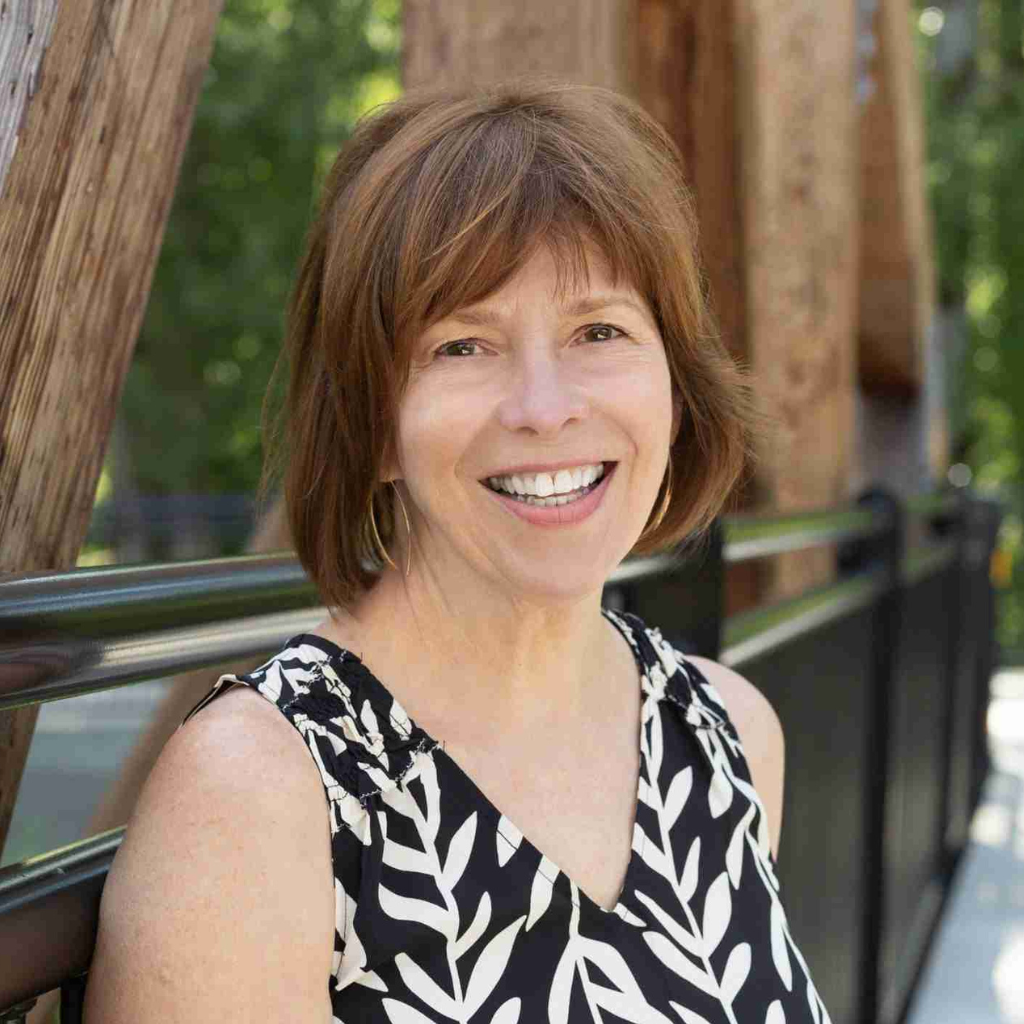
After 250 rejection letters, Kirby Larson's work produced Hattie Big Sky, a Newbery Honor book, and a shelf of historical novels about the slices of American history most of us were never taught. But she had learned that words have power at age seven, standing on a playground where the popular girls always got to be Dorothy. She told them her mother was in the hospital — leaving out that she was there having a baby — and got to be Dorothy that day.
Kirby talks about what a silver sticker costs you: the innocence of writing purely for love, the privacy that disappears when strangers call you by your first name. About the manuscript she rewrote entirely on a trusted reader's advice, then threw out and restored, because her writer's gut wouldn't budge. About the novel she started in 2011 and only sold this year. And about book banning, and what it's doing to the middle grade market and to writers with less privilege than she has.
Topics & Timestamps
(00:43) The playground, the Wizard of Oz, and a seven-year-old's discovery that stories change people
(02:18) From broadcast journalism to picture books — and the library trip that flipped the switch
(04:16) 250 rejection letters, and learning that revision is 95% of the job
(05:33) What she imagined the life would look like, and how little she let herself dream
(07:01) The bookstore event with two toddlers — and how that "disaster" launched a career
(09:01) Publishing is a relationship industry
(09:37) The Newbery Honor: "like winning an Oscar"
(10:08) What it cost — ghostwriting, working on spec, losing the freedom of anonymity
(12:27) Giving up privacy: presentations, vulnerability, and strangers who feel they know you
(13:56) What loneliness taught her — the observer's advantage, and mining old cruelties for characters
(16:11) A quieter Newbery, before social media — and building a circle of fellow creatives
(18:29) Her own definition of success (hint: it happens at the desk)
(19:25) Fan mail: Duke, Dogs for Defense, and readers convinced her invented characters were real
(21:37) Turning down a respected editor because the story didn't touch her heart
(23:32) Killing darlings, abandoned projects, and the novel she started in 2011
(25:06) How she knows a story is right — overlooked women, forgotten history, and why there are so many dogs
(26:36) C.S. Lewis on children's books, and why adults write her as often as kids do
(27:39) The hardest lesson: learning to ask for help
(29:05) A typical work day — and the research assistant asleep under the desk
(30:20) What people get wrong: the fame, the money, the second job most writers have
(31:08) The hardest conversation — rewriting Liberty in one POV, then trusting her gut and going back
(34:04) Book banning inside publishing houses: editors asking writers to second-guess themselves
(34:58) Where the inner voice comes from
(36:10) Self-discipline, and what her son taught her about it
(37:50) Violet the contemptible cow, stubbornness, and the folded love notes she leaves on her laptop
(39:35) What she'd be doing instead
(42:23) The price right now — the middle grade market and fear
(43:24) The stories she isn't blocked from telling, and who is
(44:46) What she's afraid of: the blank page, and writing the terrible
(45:53) The charming literary note practice that made her closest friends
(49:17) What the life gave her that outsiders never see: confidence, and a passport that stays current
(50:38) What the whole arc has been about
(51:30) What made it worth it — the awards kids vote on themselves
(52:10) The metaphorical headstone
Transcript
Terry Heath: It's recording now? Okay. I'm Terry Heath and I'm here today with Kirby Larson. Kirby is a author of children's books. Hello Kirby. Welcome.
Kirby: Hi Terry, thank you for having me.
Terry Heath: ⁓ of course. Thank you for being here. Let's jump right in. So take me back to the moment you decided this is going to be your life.
Kirby: Well, I discovered my passion for storytelling when I was about in second grade, I think it was. ⁓ I was a new kid at school. ⁓ my family moved a lot. I was almost always the new kid at school, which I actually think was great preparation for being a writer because I was on the outside a lot. But ⁓ the the popular girls, and now remind you we're seven. This popular girls all played Wizard of Oz at recess. And I don't even remember what what it was, but I wanted to be Dorothy. Like the the Queen Bee always got to be Dorothy. And all I wanted to do is be Dorothy. And so one day I was sort of ⁓ looking a little sad, I think, and one of the girls came over and said, Are you okay? And I said, Well, you know, my mom is in the hospital. And they were like, ⁓ my gosh, come play with us and you can be Dorothy today.
Terry Heath: Ha ha ha. Ha ha.
Kirby: And it was such a thrill. And ⁓ I realized that words really have power. What I didn't tell them that yes, my mom was in the hospital, but she was having my baby brother, so it wasn't like, you know, an end of the world thing. But I decided that omitting that fact really helped my story with them. And that was really my first powerful realization that, you know, stories can change people's actions and opinions and their hearts. ⁓
Terry Heath: Ha ha ha ha. Ha ha ha.
Kirby: And so I wrote all through all through my growing up, all through grade school and junior high and high school. ⁓ back in the day, I never got to hear an author speak or, you know, the internet did not exist, so I couldn't Google authors. And so the only way I knew you could make a living as a writer was to be a reporter, a news a journalist. And so I actually went to Western Washington University and graduated in broadcast communications. I guess it's a program that's no longer there, neither here nor there, but ⁓ but I found after working in the field for a while that I the stories that really touched me were the ⁓ feature stories and the human interest stories that were stories. And I felt a bit constrained by always sticking to, you know, the facts. And so I realized that was not my actual passion. And ⁓ as life often happens, I met My husband, we married really young, he started a business, and so I helped him get that business off the ground. And so it wasn't until we had two little ones of our own that and I was reading books to them all the time because I was a bookworm ever since I could remember. And we I I remember the exact day we had been to the library and we brought home a stack of picture books, and one of the books was Arnold Lobel's Ming Lo Moves the Mountain. And when we finished that book, it honestly, Terry, it was like this little light switch went off inside me. And I thought, ⁓ my gosh, I want to do this. I want to write a book that will engage families, kids and families. And I actually started that very day. I wrote down a story that I had been telling my kids like at bedtime. I I'm sure a lot of us have done that. I typed it up perfectly without any mistakes, and I mailed it off to New York. And that's because that's where most of the publishers were. And in those days, everything went by mail. And I waited impatiently by my mailbox for a letter to come saying that my story had been accepted and it was going to be published as a book. And of course, that letter never came. ⁓ all in all, I think I collected 250 rejection letters before I stopped counting, but I didn't give up. And I realized clearly I had a lot to learn. ⁓ the main thing was that revision is like 95% of the whole writing process. And that was something, you know, I I would just put a story down, I typed it up, it looked great, I sent it off, and I thought that was all you needed to do. So that really that experience of being a mom, sharing a really special book with my kids, ⁓ renewed my passion for writing. I've always loved books, and it just seemed like, okay, I'm gonna go for it. And from the day I decided I wanted to write books for children to the day my first book was published was three years. So it was three years of trying, learning, taking classes, and many more rejection letters before I finally figured out how to how to do it. I don't know if you ever completely cracked the nut, but how to do it to get published. So
Terry Heath: Ha ha During those three years when you were reading the rejection letters and but pushing on What what did you think the life would look like when you got there?
Kirby: ⁓ my gosh, I thought if only I get a book published, it will it will all be great. Like that I couldn't see beyond that because all I wanted was to get a a book published. And then of course you're gonna be speaking with many other writers who will tell you, yes, the minute you get that one book published, you want another one published, you know, because you have a connection with people you haven't even met who who look at the words you've put on a page and bring their own selves and imagination to it and and make some true meaning for themselves from it. So it's it's very addictive. but I think I didn't I just at first all I wanted was that first book published. And I didn't exactly know, you know, honestly, ⁓ I it was hard to find role models, people who had been successfully published at that time. though I do live in the Seattle area, which has a great writer's community, I just wasn't making those connections. ⁓ that I was able to make ⁓ after I had that first pub book published. So but no, I didn't even I like I didn't even let myself dream of what it might look like. It was just getting that one book published. That was it.
Terry Heath: Yeah. Well, so you didn't dream, but how did it turn out? What did it look like when it when it started?
Kirby: ⁓ my gosh. So it it's a lesson in humility, of course. ⁓ the first book ⁓ was a a a chapter book, and those are book by my n definition, a chapter book is books for the kids who are making that transition to being truly independent readers. So they're moving from being read read to picture books and then they're so they're very there may be like six to ten thousand words.
Terry Heath: Mm.
Kirby: ⁓ the font is very large. There's a lot of white space. So it's very inviting for the, you know, for a tentative kid. It's like training wheels. They're like training wheels for readers. And so those are not the kinds of books that get big attention. And I had a there used to be a fabulous bookstore in ⁓ the Seattle area called All For Kids Books and Music, with the most marvelous owner, Shawnee Hazlitt. And she invited me to do an event at her bookstore. Now, mind you, my books were geared to her like first and second grade readers. ⁓ two kids came to the event. They were both toddlers, not reading. And so, you know, I was sweating bullets trying to figure out how I could engage these little kids. and I just thought it was a total disaster. I I walked away feeling like a failure, little, you know. I did not know that Shawnee really admired my stepping up and trying to make ⁓ lemonade out of lemons. And coincidentally, when the Seattle Times called her a few weeks later and asked her to recommend some books for younger readers, she recommended that book. And honestly, that sort of launched a lot of different things happening for me. So I one thing I have learned is you can never like you don't know what's gonna come out of a situation. ⁓ so give it your best shot and you know you might be genuinely surprised by how by the end result.
Terry Heath: So since then ⁓ go ahead. Yeah.
Kirby: I think a lot of people don't realize. I was just gonna add one thing. A lot of people don't realize but writing books and publishing industry is really about relationships. It's the writer making relationships. Yes, obviously with the reader. That that one's a no-brainer, but with booksellers, independent booksellers, with librarians, and then also in the publishing industry with editors, assistant editors, publicists, and ⁓ It really is a relationship industry. And I I did not realize that myself when I started out, but that is it's a key component of ⁓ staying in this field.
Terry Heath: Since you since your first book, you've done a few things. You've had a Oppenheim Toy Portfolio Platinum Award with The Magic Kerchief. Hattie Big Sky was a finalist for the S is it Scandiuzzi Book Award? Yeah, Washington St. I was that was next on my list. Yeah.
Kirby: For the Washington Award, yes. ⁓ more importantly, it won a Newberry honor, which is like winning an Oscar.
Terry Heath: What does it cost you?
Kirby: So ⁓ before Hattie Big Sky got that recognition, I was really writing for myself because there wasn't you know, I was always submitting manuscripts on spec, which means you don't have a contract for them. Well, okay, I have to that isn't exactly true. In order to make some money at the time, I was doing s what's called ghostwriting. So it's when you write for someone else. ⁓ and in the adult industry it's often memoirs or autobiographies. ⁓ what I was doing was writing for established series that some other person had come up with the idea and started the series, and then there would be a variety of authors. ⁓ we'd all had a a Bible that you followed. And so I did some ghostwriting. So that that was under contract. But my own unique work ⁓ was not being sought after. And so I was basically free to do what I wanted to do. and so when the when I heard the little snippet of family story that inspired me to research ⁓ homesteading in eastern Montana during the First World War or the Great War as as it was called then, I was free to, you know, take as long as I wanted to to explore as much as I wanted. And I just did not have any pressure on me. Once that book got the little silver sticker on it, ⁓ there was pressure. ⁓ immediately people were asking for a sequel and I felt like I had finished that story. I just did not see where I could go with that. And ⁓ my editor finally convinced me I needed to write a sequel, but it did take me a few years. I just I just really ⁓ I just had felt I'd completed that character's story. And then then there was a lot of pressure on myself. Like I will never write anything again that will have that magic of being so naive and taking on a story that just for pure love. so that was something that I gave up. Kind of that innocence. yeah, ⁓ so there were definitely pressures that I had not experienced before.
Terry Heath: You said you gave up that that innocence or maybe that naivety. what what else in the old you before you had that sort of success did you have to give up?
Kirby: ⁓ boy, that's such a great question, Terry. I've never thought about that. ⁓ well, obviously, ⁓ most writers, even though they can be extroverts when they need to be, we tend to be introverts because we're alone with our thoughts and our characters and our plots. And so I kind of gave up a bit of my private private life because I was doing presentations and when you go to a school, you know. Teachers wanna know, librarians wanna know, kids wanna know like what something about you, you know, some little nugget that nobody else knows. And so you're, you know, you're you're really having to be much more open and vulnerable. That was definitely my privacy was definitely something that ⁓ I think I had I had a true mentor at that point, I would have maybe made some different decisions. I'm I I'm grateful for every opportunity, every kid giving me a hug, every librarian wanting to know some little detail. But you know, you you do become like you're not just yourself. ⁓ people feel feel free to like call you Kirby when they've never really even met you because they feel like they know you through your writing, you know. So I I think privacy is another thing. Yeah.
Terry Heath: That little girl in the playground who ⁓ maybe wasn't one of the popular girls, as and you say you were you're an introvert, what has that that loneliness taught you that you've brought to your writing?
Kirby: Again, I think it makes you an observer. You're when you're on the outside, you have to watch carefully, like what are the rules? Who are, you know, who who could I possibly be friends with? And I and now I'm being back that seven year old child again. But or even when I was in high school, you know, you watch like what who are in the clicks? Where might I fit in? you're just always watching because you're you you just don't you haven't ⁓ I happen to finished my senior year at high school at a small high school where the kids had been together s literally most of them since kindergarten and they had these long histories and, you know, inside jokes and ⁓ even c I will say customs that I i it's like I was an anthropologist trying to dig up what where my role could be in in that society, in that culture. Yeah, so I think ⁓ I mean it's just it it really made me observe. Also, honestly, I grew up with a very unusual name for the time period I lived in. I had dorky glasses and I was the new kid every year. And so I was a target for bullies and had some very cruel things happen to me. And I can use those memories and emotions in the books that I'm writing. Not Not those actual events, but I certainly remember what it feels like to find a really cruel note on my desk or ⁓ and remember that and and give those feelings to my characters.
Terry Heath: The the cruelty and the loneliness have changed, I'm sure, since you've been put out in the public. What else you you've said that people feel free to call you Kirby when they don't know you? What else has changed in the way people treat you now that you've had some success?
Kirby: Well, ⁓ Terry, honestly, like my the Newberry came at a time before social media was such a big thing. And so I I watch the Newberry people now, winners now, they're facing different pressures than I face because I d you know, I was known in the library community, the school community, some in tuned independent bookstores, but it wasn't like splashed all over the internet like things are now. So definitely I had a quieter ⁓ experience than folks are experiencing now. So I could, you know, once I got over myself a bit after winning the Newberry honor, I could kind of go back into my hole and keep working. ⁓ yeah, I I don't know if this is the point best point to share this, but I will say One thing that has kept me going is I I did realize after I published my first book that I really needed to draw ⁓ a community of fellow creatives around me. And I've done that, it's you know, those groups have sort of ebbed and flowed. But as much as my family loves me and supports me, they don't get it, what it's like to get a rejection letter or to be in a critique group and get criticism that feels really painful and hard to process. But But your fellow creatives who are going through the same thing, they totally get it. And I even when I'm visiting schools, I even tell kids, you know, no ma no matter what, if you want to go into the creative field, you need to find other people who have that shared interest, whether it's dance or music or ⁓ drama or or writing. We we need that. because it is lonely. We're alone a lot. And I I really couldn't have kept going without my ⁓ assorted circles of really lovely, supportive fellow creatives. And I so that's my advice to anyone who wants to enjoy the creative life is to make sure you have you you might have to build it yourself or join if you you happen to luck into that situation, but you really need to be around other creatives.
Terry Heath: Going to pause here for a second. I'm going to refresh my screen because your your video is locked on my side here. I don't think it will record from your side, but I I want to see what you're doing. So I'm going to just if if it bumps me out, ⁓ I'll be right back. Well, of course, we'll cut this part out. Reload.
Kirby: Okay. ⁓ no. I Okay.
Terry Heath: Alright, it says it's recording, so let me make sure yes. Okay, perfect. All right.
Kirby: I see the red.
Terry Heath: What do you think of your own success? What do you make of it?
Kirby: ⁓ honestly, I I don't feel successful in that way. What makes me feel honestly, what makes me s feel successful is working on a book. I feel successful when I'm working on a book because that is my heart's passion. ⁓ of course awards are lovely, of course recognition is lovely, but I'm doing this because I love, especially historical fiction, I love Recreating a time and place that folks living now aren't familiar with and then putting it in a story form that they can really appreciate and understand. And that feels successful to me when I have finished a really good day of writing or research. So it you know, that's not the customary definition of dis of success, but that's my definition of success.
Terry Heath: Have you had any you you talk about readers putting themselves in your book. Have you had any feedback of people saying that how how they saw themselves in your characters or anything like that?
Kirby: I I've I what I love is getting fan mail and now most of it tends to be by email, but people respond in all kinds of different ways. Like ⁓ with Hattie Big Sky, for example, I was just astonished at how many adults I heard from whose grandparents had homesteading stories or who had lived through tough times. I mean, all the time I'm getting emails from kids who can really relate to, for example, in I have a novel called Duke, which is about a young boy who loans his beloved German Shepherd to an organization called Dogs for Defense during World War II. And that actually happened. 25,000 American families loaned their pets to the Marines, to the army, what have you, for different roles. And this young boy made the tough decision to loan his wonderful dog ⁓ to Dogs for Defense. And I'll get kids write in saying, I can't imagine how, you know, Hobie could do that or or saying I can imagine a situation where I would do that. So all those ⁓ connections are it is sort of amazing and surprising how people connect. most of my historical novels are historical fictions, so they are based in actual events. There are often real people. people from history in them, but the main character is typically an invented character. And I remember getting several letters from young readers wanting to know what happened to I have a book called The Fences Between Us and what happened to the characters after the war was over. And like, ⁓ I hate to break it to you, but like, you know, I made them up. What do you think happened to them, you know? But they were so real to the these kid readers that They were sure there was a story after the story.
Terry Heath: When you're writing these stories, there are probably times when you feel like, Okay, this one's this one's going to resonate or this one isn't going to what are those situations like and how do you handle them?
Kirby: Okay, I have to be really honest with you. I n I I would not stay with a story if I don't feel like it's gonna resonate with someone. And first of all, I I'm the first reader, like so if it doesn't resonate with me, I know it's not gonna I'm I it's not worth spending my time. I had a editor approach me, a a r a very risk highly respected editor, someone I I would have loved to work with to ask me to take on a project. ⁓ and it was just I I did I spent a few days doing some research and I realized this was just not a story that touched my heart. ⁓ she, you know, sh it clearly touched her heart. I gave her the research I had done and and just said, I hope you can find someone who will tell this story, but I I'm just not the right person. So I I have to be the one that b has to be happy. And I'm I'm sorry if this sounds rude, but I don't really think about my reader when I'm writing. ⁓ What I'm thinking about is how do I tell this character story in the most believable way possible? How do I move them on the stage of the world that they live in within the, you know, ⁓ constraints that they might have had? are you are we still there? It said re-establish. I'm so Okay. anyway.
Terry Heath: It yeah, it it locked up for a second there. No, you're good.
Kirby: ⁓ I just I I know that sounds very selfish, but I just don't it has to resonate for me and that's what really matters. ⁓ I've been lucky that I've I've had editors who also resonated with the stories and were willing to, you know, take a chance and bring them out. But I I've never written an I would not spend the time on something that I felt like, ⁓ no, this isn't this isn't right. This isn't gonna go places. That ⁓ that would feel I I would just f I don't know, that w just go against everything I f I believe about being a writer.
Terry Heath: Have there been times though when it's been difficult for you to give up an idea 'cause you weren't gonna be able to do it the way you wanted or or as they say, kill your darlings?
Kirby: Well, it's always difficult to kill the darlings, right? That's why we have trusted first readers who go through and point out to you that, you know, it might be actually good to have a plot in this book. But ⁓ yeah, I ⁓ gosh, I just lost the train of thought. ⁓ have I given up on idea? I I just sold a novel that I started in 2011. And I have been working on it not
Terry Heath: Ha ha.
Kirby: Constantly. I've had other projects in between. But I have been working on it since two thousand and eleven and I for probably the first ten years could not I knew this was a story I wanted to tell. I could not find the right way to tell it. So I would set it aside and work on something else and always come back to it. And f finally about two or three years ago I figured it out. I it took me a long time. But if a story draws me enough for me to do a substantial amount of research, I'm pretty much gonna stick with it. Early in my career I did abandon a few projects. one because I just sort of talked about it too much to other people. And so I talked out all my energy for it. I I didn't care about it anymore. And another one because it would just really ⁓ I was trying to do a mystery and though I love reading mysteries, ⁓ my gosh, are they hard to write? And I just wasn't
Terry Heath: ⁓
Kirby: pulling it together in what I felt was a believable way. So I did abandon that project. But mostly if something catches my heart and my imagination, I s I stick with it.
Terry Heath: How do you know it's right? How do you know when it's right?
Kirby: ⁓ when it's ready to I'll go off to the editor. You mean or?
Terry Heath: Anywhere in the process. Anywhere in the process. Yeah.
Kirby: Well, I know it's right for me if it's pretty much a story about women or young girls, ⁓ because they t ha tend to have been overlooked in history. ⁓ so I know pretty much that it's gonna be right if it's a story that is is not familiar to readers. ⁓ for example, I have a novel ⁓ called Dash, which won the Scott O'Dell Historical Fiction Prize. It is about the Japanese ⁓ incarceration camps and a young girl who she and her family are sent to Minadoka. And I have ⁓ talked about that book all over the country. And Terry, I I don't know where you're situated is, but I grew up in the Seattle area and it wasn't until I was in college that I heard about the incarceration of the Japanese in the Seattle area, from the Seattle area. And I've gone aro all over the country and it it boggles my mind people do not know about these certain slices of history. And so I also feel like almost like a missionary, if you will, or ⁓ an evangelist that you know, there are s slices of American history that we really all need to know about. And of course I tell it in a way that kids can accept and understand, which is why there are a lot of animals, especially dogs in my stories, because that's sort of a way to focus ⁓ attention without making something seem overly sad or oppressing, but I just feel ⁓ my calling to bring out stories that folks are unfamiliar with. And I do want to say one thing. I I get as many, if not more, letters from adults reading my books as I do kids. And I have a f ⁓ a favorite quote from C.S. Lewis and I'm probably not going to get exactly right, but it's something like a children's book that can only be enjoyed by children. is not a very good children's book. And so I feel it's really important for me to tell a story that anyone of any age can appreciate. At some level, of course, adults are gonna get something up here, or kids may only get this part down here. And that's just fine. We all take what we need from a book. But I am that's why I say I like I am a my first audience if if I'm excited or sad or whatever about the book. I'm fairly confident some other reader will be too.
Terry Heath: Yeah, in the beginning of The Lion, the Witch in the Wardrobe, which I think he wrote for his niece, whose name I think was Lucy, ⁓ he said, This is for when you're old enough to read children's books again.
Kirby: Yes, exactly.
Terry Heath: What has this life taught you about yourself that nothing else could have?
Kirby: that it was is very difficult for me to ask for help. That was very hard for me at the beginning of my career. I felt like I should know everything. Ridiculous, I know. But ⁓ like I'd been writing since I was eight years old, tell making up stories before that, what was wrong with me, that I still didn't know things. And when I finally realized that there are people out there who are not only capable of helping me but willing to help me. ⁓ you know, I I I gingerly asked for that help and support. But I that was something that was really an awakening for me, that it was very difficult for me to ask for help. And I felt like I should know how to do it. ⁓ but simply because we can write or can read doesn't mean we know how to tell a story in a way that you know that it can be universally appreciated. So I that was a hard lesson to learn. ⁓ what else have I I mean, I I learned something new every day. I learned that I learn enough about how to write to write this particular book and then the next book will be like a whole new learning process all over again. It's not like you know it it's and that's what's exciting about it. It's different every day. it's a challenge every day, it's a puzzle every day, and I I love coming to work.
Terry Heath: Yeah. What is a typical work day like for you?
Kirby: So ⁓ my reach research assistant is actually asleep under my desk right now. But when he's awake, ⁓ he and I go for a walk and he's so well trained. Like if I have had my coffee and I'm not at my desk, he's he's a spaniel, but he's not a herding dog, but he will try to herd me into my office. It's hysterical because he knows the routine. So pretty much I'm I'm working all day. Now working for me can include research. It can include reading, you know, other people's books, like ⁓ there's a few people I really love to go to for how to weave in information rather than just chunk it all in. I just admire how they handle adding description and detail. And so I'll if I have a place where I feel like I'm being a bit clunky, I'll go reread ⁓ those authors just kinda like, okay, th yes, okay, you can do it, you can do it, and this is how one way it can be done. ⁓ revising, whatever it is, I you know, all of that for me. thinking, writing in my journal, all of that counts as writing time for me. But pretty much it's my job. I'm I'm I'm at my desk almost every day.
Terry Heath: Is there anything that people get wrong about what your life really is like?
Kirby: I think people think you're, you know, you must be famous or you're recognized everywhere or something like that, or that you make a lot of money. ⁓ I I know this not is not a talk about the business of writing, but honestly, most people have a second job ⁓ in order to be writers. I'm I'm sure you've heard that from other writers as well. yeah, so they're probably surprised about that. And they're probably also surprised at how, even though it's a sort of a solitary job, how much relationships are part of the work. So ⁓ and not just relationships with your editor or the copy editor or the art director, d ⁓ more broadly, how relationships are important.
Terry Heath: In those relationships, what's the hardest conversation that you've had to have with somebody about your work?
Kirby: ⁓ that is a fabulous question. Well Okay, so I have a deep belief that there is something that's always telling me what belongs in a story. And not that I'm not open to cr criticism and critique, but I have a book called Liberty, and it it takes place in New Orleans where ⁓ in World War II. I have there's quite a series of books set in World War Two. ⁓ and I did not realize this, but there was a POW camp, German POWs were were being held in New Orleans. directly across the canal from Andrew Jackson's Higgins boat yard where the have you heard of Higgins boat they were used in the D-Day landings. So I just that that boggled my mind that these prisoners are right across, could probably swim over and you know, if they could escape, sabotage this boat yard that's directly across the canal. So this this was in my head. And so from the beginning of writing that story, I knew I wanted to tell it in two points of view from a a young kid and from a young POW because some of those POWs, especially toward the end of the war, they were like 17, you know, the German soldiers, I mean. And so always from the beginning, I just like I just knew that that had to be told from two points of view. And so I did a draft and I took it to my trusted reader who said, you know, I feel like this is This is the wrong approach. I feel like you should just have one point of view. And this is a person I really respect. And I thought about that and I thought, okay. So I rewrote the entire manuscript from one point of view and I finished it and I thought, I this no. I mean, I did a good job. I'm I I certainly brought my heart and soul into it, but I knew it was the wrong thing. And so I went back to my two points of view, my dual points of view, and I polish and revise that and and that was the manuscript that ended up being published. But I just knew from the get go. And so having those dis like I I trust and value you, my trusted reader, but this does not feel right for my writer's gut. And I I and those are hard things because you've asked someone to take time out of their their own writing to read your work. A novel. It's not a small thing. And then you essentially ignore their ⁓ their their efforts or their comments, but I just like I gave it a try and I just knew deep down that was not. ⁓ I've had difficult discussions with people about choices I made in Hattie Big Sky that were upsetting to some people. However, I felt they were the very true and r ⁓ correct things to write because they reflected ⁓ the society and actual history, things that were actually happening at that time. I've had some recently some difficult discussions because I'm sure you're aware of all the efforts to for book banning, especially in the kids' world. There's just it's it's just relentless. And so I've had editors ask me to consider changing certain things, and I've had to really wrestle with myself whether that would be a good decision or not. ⁓ in one instance I opted not to change anything. In another instance, I ⁓ came up with a solution that actually felt even better that that addressed her concerns. So I since I felt better about it, I felt like it even made s a stronger point. I was fine with it. But ⁓ you know, people may not be aware those those conversations are now happening in publishing houses that writers are being asked to like second guess themselves about telling a story.
Terry Heath: So back in the day people thought that there were these genie that would would whisper in your ear, or these muses that would tell you what to put. And that kind of sounds like your inner voice. Where does your inner voice come from?
Kirby: Ooh, I think it comes from that little seven year old girl who was watching all those people on the playground and figured out a way to get their attention. Like, what is it in this historical event? And I keep going back to that, though I do have some contemporary stories. My biggest passion is is historical fiction. What is it in this event that's gathering my attention that I think would gather other people's attention? so I think that's part of that inner voice. Yeah, I I think that's really it. I and there is no magic, no fairy dust. I've had people write me like okay, if I use this kind of computer or this kind of, you know, or should I use a typewriter or you know, blah blah blah. It's like I mean, honestly, the story doesn't care if you use crayon or pencil or whatever. It's you know, it's getting it down. And that's the part a lot of people they don't want to hear it. They don't realize it is not easy. you don't just spit something onto the paper and it yay, ready to go. So it's it is hard work. It's very hard work. I ⁓ I have two kids, a a son and a daughter. And ⁓ my daughter is a visual artist, amazing visual artist. My son was more of the writer and I actually, you know, kept encouraging him to write. And finally one day we were on the phone and he said, Mom, I do not have the self discipline. Like it takes Extremes I've watched you. It takes self discipline. And I that's not where I am able to apply self discipline is in writing. And it was I mean, I just thought everyone was like me and felt this compulsion to get sit down and get a story right, especially if you had kind kind of an interest in that area. And that was very ⁓ eye opening for me. Because that he was exactly right. It takes an extreme amount of self discipline.
Terry Heath: Is there anything that seven year old girl is still trying to prove that keeps you going?
Kirby: I don't think she's trying to prove anything, but she has a strong desire. I have a strong desire to tell the biggest story I can. And I don't mean like a blockbuster, but I mean like a story that like this st novel that I just finished that will really push me and challenge me, that takes me out of my comfort zone. ⁓ that makes me so frustrated, I just have to like sometimes just close up my laptop and walk away. ⁓ that's what I want. I want I like I'm hungry for this chal you know. to be continue to be challenged. I I because I think that's what's so rewarding about the writing process.
Terry Heath: What what is it that keeps you going when you say you close your laptop and walk away and and you have to apply the discipline of of writing all the time? What what motivates you? What keeps you?
Kirby: Well, okay, so here this is a little bit of a funny story, but in Hattie Big Sky there is a a contemptible cow named Violet. And people all often ask me wh which character in the book I am most like. And I say I am most like Violet because I'm stubborn. I I am too stubborn to quit, you know, or too too stupid. I don't know, but I'm too stubborn to quit. I so I know, you know, I'll walk away at the end of a hard writing session session, but I will come back. I actually learned a trick. From Sarah Sentilles. And sometimes when I've had a hard writing day I will write myself a little love note and say one thing I'm proud of that I accomplished during that writing session. And then I'll fold it into thirds like a letter and I'll leave it on my laptop. And I won't look at it. And then I come into my session the next morning. And it's just and there it is, a reminder, okay, Kirby, you you got that one scene that was so tough. You finally got it right. So I you know, I know you can get this next big problem solved. So that's a trick I use, you know. ⁓ but I I I have friends who ⁓ who have been successful writers and now they're they're choosing to retire and I don't understand that. I don't understand how you retire from something that's so wonderful and energizing and creative and marvelous. I just don't understand that. So I guess Until they wheel until I stop making sense and they have to wheel me off somewhere, I'm gonna keep at it.
Terry Heath: What would you be doing now if you didn't write?
Kirby: Well, when I was a kid, after reading the Encyclopedia Brown books, I always wanted to be a detective. And I feel like I accomplished that by because I write historical fiction. So I'm always searching for clues and facts and evidence, but it's much safer than being a real detective. I think I probably would have been a teacher because I genuinely love to be with people and ⁓ help them find out, you know, help them learn for themselves. One of the best experiences I had, ⁓ was teaching at a community college. So had students ranging literally from 18 to 80. ⁓ it was a writing class, and many of them had been told that they could not write, somewhere along the line. And they they believed that about themselves because some authority figure told them. And it was one of the most rewarding things for me to help them see that they all had stories only they could tell. Now they weren't necessarily going to be stories that would be published. I c you know, I couldn't promise that for anyone, but they all had stories they could tell. And by the end of each semester, I would just see such growth. And I mean, there would be tears when people would be reading their final drafts. ⁓ because we I we got to see someone actually find a safe place and be given permission to tell their own story. And so I would probably doing be doing that still if I wasn't writing full time.
Terry Heath: Why is it books or
Kirby: As opposed to
Terry Heath: Being a stand up comedian, being
Kirby: I don't know how to tell a joke, Terry. I couldn't do it. ⁓ okay, I will tell you. So I told you already know I moved around a lot as a kid and it was really lonely. It was a lonely life. But I quickly discovered that no matter where I went, I could find a friend between the covers of a book. And I say that books saved me growing up, and that is really the truth. I ⁓ I think C. S. Lewis also says we read to know we're not alone. And in books I got to, you know, ride wild horses or or travel to the wizard, you know, to the land of Oz or go on a spaceship. I I got to go places or apartments in New York City. I mean, I grew up my whole life in Washington State mostly. ⁓ I got to see that there was a bigger world out there and that I wasn't the only one feeling lonely sometimes. So I for me there there's no other better better thing than a book. ⁓ and I'm one of those people that if I absolutely love the book, I cannot see the movie. I just ⁓ I know that's that's a whole different version of the story and that's important and okay, but I can't I just can't do it. So
Terry Heath: Has there been a price in choosing books?
Kirby: recently definitely, yeah. I mean the the book banning has just pressured especially the middle grade novel market, it's it's not doing very well. I think people are trying to figure out how to navigate ⁓ this insanity. ⁓ publishers are trying you know, they're they're business people. ⁓ they're they're not doing this out of charity. It they're businesses and they're trying to figure out how to navigate this. And I'm just gonna have to say this, you know, insane world that somehow is fearful of Of ideas, of books. ⁓ so it right now it is very hard. It's ex extremely difficult. ⁓ it's not hard enough that I will stop or give up, but it's a reality. It's just a much more difficult market than it has ever been in my in my career.
Terry Heath: Are there any stories right now that you're not being allowed to tell that you would like to?
Kirby: you know, I'm gonna say no. There are stories, ⁓ no. I mean the story that's coming out, it it felt like it was a story for me to tell. I'm revising another historical novel. No, I I I can't say that personally, but but I'm not a person of color. I I'm ⁓ not in the LGBTQI community. I'm not I'm I'm not Muslim or Sikh or any I mean you can just I have advantages, right? I and people in those communities are ha being told that they're not to tell certain stories. Not not by publishers, but by the pe the gatekeepers, the people who would buy the books for libraries and whatever. And so that is really putting a lot of pressure. And it's it's it's terrible because How do we learn empathy unless we understand someone else's story? It just boggles my mind. So. That's a whole nother discussion for perhaps over an adult beverage another time.
Terry Heath: ⁓ it's When in this career have you been most afraid of
Kirby: I'm afraid every time I face like the blank page, I've done my research and it's time to like, okay, Kirby, what you know, start telling a story. I I won't say like terrified, but you know, it's gonna be terrible. I have this idea in my head that's beautiful, and what I put down on paper is gonna be terrible. And I have learned that it is gonna be terrible, and just keep writing the terrible because keep be Keeping after the terrible will get you to the good. If you don't start, you know, what did they say? Perfection is the enemy of progress. I you you just have to acknowledge it's gonna be bad and just pray that no one sees this in this first draft. And ⁓ yeah, I I find creating a first draft is very scary. I love revising, I love fixing up a story, but I revising I'm excuse me, creating first draft is very difficult for me.
Terry Heath: What do you want that you don't have?
Kirby: ⁓ peace, world peace. For myself, I I I feel so incredibly lucky. I get to do what I want to do with my stories. I have you know I have health. I have a wonderful family. I I I really am very grateful. ⁓ again I'm back on the relationship thing, but early, early in my career I read a fabulous book by Carolyn See. She has a famous writing daughter named Lisa See, who is just has a brand new book out. And I I would I can't give you the title because I'll mess it up. But ⁓ but Carolyn wrote a book on ⁓ called, I think it's called Creating the Literary Life or or Making the Literary Life. I should have looked up the title to be accurate. In her book, it which was like she encourages setting word counts for each work session. I don't work that way, but I I know a lot of people do, like they have to hit their fifteen hundred words and then they can be done for the day. That that particular piece of advice doesn't work well for me. But my favorite piece of advice that I have employed from the moment I read it is she said, you should always write a charming literary note. Now it's a little harder write to write a note these days because it's a little more difficult to get people's personal addresses. But whenever I read a book that I especially admire or ⁓ illustrations I admire, or I see an editor doing a series of really wonderful, courageous, brave books, I write them and I let them know because t we get too many like negative things, right? bad reviews or or critical readers or something. And so I have just made that my practice over the years and I have made the dearest friends from s ⁓ reaching out that way And ⁓ so and I'm grateful for that. Just and I had no expectations. You're you're not asking for favors in these charming literary notes. You're not asking for anything. You're simply telling another person in this creative world, like I saw what you did and it moved me in some way or or made me laugh or inspired me, what whatever it is you feel. I have a dear friend Barbara O'Connor and I wrote her, and now I can't even remember which book it was of hers, but I wrote her after I read one of her novels. I didn't know her at the time, and she still has me in her contacts as the writer who wrote me a fan letter. And ⁓ and when and we've been friends for like 20 years now, so it's ⁓ but that has been really rewarding because I just I I want to shine the spotlight on something that deserves. attention and unfortunately children's books are often relegated to the you know like the the redheaded stepchildren of ch of literature. You know, if if a newspaper still does do book reviews, they're not kids' books. They're never kids books. And so w we kind of ⁓ It's like we don't value teachers because they work with children. We also there's less value for writers of books, creators of books for children, writers and illustrators. And I I wanna make sure people know they're appreciated because I do appreciate them. I know how hard it is.
Terry Heath: What is this life giving you that outsiders never see?
Kirby: Hmm. Confidence, probably. ⁓ I mean if you didn't know me at the beginning, I you know, that wouldn't mean anything to you, but definitely confidence. Confidence to take a risk, to write ⁓ a story from two points of view when I've been advised not to, or so definitely confidence. world travels. My books have taken me literally all over the world. I think I have visited thirty-eight or forty states talking to kids around the country. And then I've been to Germany to talk to Department of Defense Schools. I've been to ⁓ Doha Qatar to speak to international schools as well as an all-girl Muslim school there. I've been to ⁓ the territory of Guam, where I spoke to, I think in the course of a week, I spoke to I think 15,000 students. ⁓ given keynote addresses. I I've been able to travel all over because. People connected with my stories and they wanted me to come share it in a more personal personal way. So so I've definitely had to keep my passport current for this this which I would never have expected and people from the outside probably might not know either.
Terry Heath: Yeah. Yeah. Looking at the whole arc of your career, what what has it been about?
Kirby: So I I mentioned earlier that I have quite a series of books that are set on World War II, and kids often ask me, why do you write stories about war? And I say, I don't write stories about war. I really write stories about what it means to try to be a good human being. And that is what my career has been about. Every single book I've written has explored at some level what does it mean to be a decent, caring person in this world? And and the backdrops change, the time the eras change, but That theme, if you read my work, will come through loud and clear in every single book. Not in a didactic manner, but it's that's just what I mean, I used my work to help me figure out what does it mean? So definitely that.
Terry Heath: What? sorry I lost my place here. What what's made it worth it?
Kirby: ⁓ I won't say that I'm motivated by awards, but my books have won many state young readers' choice awards and what those mean ⁓ is are that kids themselves read the books and vote on them and select them. And that means a lot to me that that that kids are saying, Kirby, your books are are showing me something they're or changing me in some way, or I'm connecting with a story in some way. So it's not really the words themselves, but a fact that that is a representation of of ⁓ kids connecting with with the books. Yeah.
Terry Heath: Some someday we'll all have a a headstone. what would you like to see written on yours?
Kirby: Okay, first of all, I'm not gonna have a headstone because I don't want one, but ⁓
Terry Heath: Metaphorically.
Kirby: Metaphorically Okay, do you remember that old play or movie Harvey with the movie had J Jimmy Stewart, James Stewart in it? You might not have seen it, but there's a line in there, and I again I'm gonna get it wrong, but essentially the his friend the Puka, who now I forget what his name is, ⁓ says or he tells Harvey that Harvey is the ⁓ gosh, what a yes. He ⁓ he tells Harvey that he has been smart.
Terry Heath: Harvey
Kirby: And he has been kind and he highly recommends kind. And that's what I hope my headstone would say is that she was kind. Or she tried to be kind. Maybe I I don't always succeed, but she tried to be kind.
Terry Heath: That's where we're gonna stop on that line. That's a good line.
Kirby: Thanks, Terry. Thanks for your patience with the network glicks. I'm sorry. That was
Terry Heath: ⁓ no, that that's I don't I don't think it'll come out in the recording because I think it records on your side and then down downloads into the program from there. At least that's what I read, so we'll find out on this one I guess. ⁓ I really appreciate your time. It was fun hearing your answers.
Kirby: ⁓ Okay. Okay. Okay, all right. And I'm grateful to you too. And if you ⁓ I mean we I I for you're in Gig Harbor, right? Or Port Orchard. So you know we do have a terrific writing community here in the Northwest. So if you or and I have connections elsew elsewhere, other places. So if you want any ⁓ suggestions for good in for people to interview, just let me know. I'd be happy to share some names. So yeah.
Terry Heath: Port Orchard, Port Orchard. Cr yeah. Yeah. ⁓ please, yes. Yes. I I I lie awake at night wondering what am I gonna do when I run out of people?
Kirby: Yeah, no, I I'm happy to offer some suggestions to you. So I will do that as a follow-up. Give me a moment to think. So okay. Thank you. Thank you so much. And I really can't wait to see the rest of the did you say tomorrow's going to be the first posting? Okay. I'll look I'll look for it. Okay. Thanks a lot. Take care. Bye.
Terry Heath: Great, great. ⁓ yeah, of course. All right. Well thank Yes, yes, they'll be out tomorrow morning. All right. Thank you, YouTube. Bye.


