▶ Listen to this episode · 50 min
Alan Katz has written more than 50 books and spent five years writing for The Rosie O'Donnell Show. He grew up in a family of shoe-store owners and teachers and announced early that he'd be a writer — his father's response was that as a writer, you are your own merchandise. We talk about what that life has cost, the bullies who taught him to write on deadline, and why he tells kids a joke at someone else's expense is never worth it.
Topics & Timestamps
- "You are your own merchandise": the cost of a career where next year is never guaranteed
- Comedy writing in advertising — Pepsi, McDonald's, and a musical about Sperry computers starring Kirk Douglas
- Writing song parodies on the 5am train for a show that aired at 10
- How his daughter's dinner-table question became Take Me Out of the Bathtub
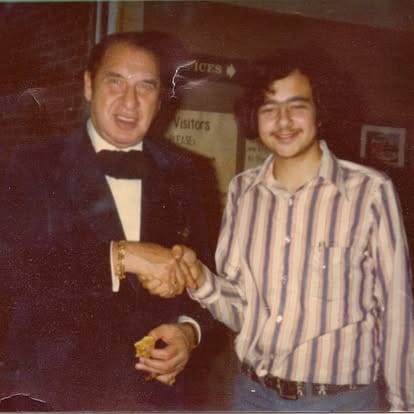
- Writing jokes for Henny Youngman at $7 apiece, in high school
- The agent who said write only for television, and why he refused
- What happened to the sitcom
- Kids who say they don't read for pleasure
Timestamps
01:25 A family of retail and teachers, and a kid who wanted to write
02:12 The costs: a best seller one year, no idea the next
03:17 How the Rosie O'Donnell Show job happened
04:19 Broadway, comedy, sitcoms — why their sensibilities lined up
05:15 Comedy writing in advertising, and a musical about computers
06:22 The Scholastic joke books
07:01 Writing parodies on the 5:30am train
08:03 Simone's question at dinner
08:26 Simon & Schuster was across the street
09:28 What he'd be doing if none of it had worked
10:40 Got Your Nose, and the packages kids send him
11:30 Two Sides to Everything, with his wife Rose
13:12 A typical Tuesday, and Jerry the ventriloquist dummy
13:50 "Turn the Tub Around," and what his kids are proudest of
14:52 What people get wrong about a comedy writer's life
16:00 The text chain with Dan Gutman and Peter Lerangis
16:51 Whether his kids thought he was funny
18:02 Keeping a notebook — writers observe
19:15 Awesome Achievers, and never joking at anyone's expense
20:56 A funny kid, and the bullies who demanded jokes
22:04 Writing for Henny Youngman at $7 a joke
22:38 How live TV taught him to write under pressure
24:24 What he wouldn't tell his younger self
25:26 Mildred Feinsilver, and three years chasing a sitcom in LA
26:56 Is he a good boss to himself?
27:53 Soupy Sales, and why jealousy isn't the word
28:48 The part luck played, and the advice he gives his son
30:00 The most unglamorous thing he did this week
31:29 Advice for someone starting out — and stay away from AI
33:31 What happened to the sitcom
35:15 Lie-ographies: laughing your way into the facts
38:17 Two stories about his name
41:56 What's next, and 27 ways to tell a Barbie story
45:07 Has it been worth it?
46:29 Kids who don't read for pleasure
49:14 Keep reading, keep writing, keep being kind
Transcript
Alan Katz: kids used to bully me and say, give me a joke or I'm going to hitch it. And it made no sense that that would be the currency, that a joke would be the currency to stop the bullying. And in fact, my father, who had children's shoe stores, started selling Puma Clyde sneakers at cost to the bullies if they'd leave me alone. And I only realized a few years ago that what that was doing was giving them better footwear with which to chase me.
Terry Heath: I'm Terry Heath and I'm here today with Alan Katz. Welcome Alan.
Alan Katz: How are you? Thank you.
Terry Heath: I'm doing well, thank you. How are you?
Alan Katz: Good, good to be here.
Terry Heath: Okay, well good to have you. You've been a print and television comedy writer for more than twenty years. In addition to being a what was that? Forty years, well.
Alan Katz: 40 years. More than 40 years. Yeah.
Terry Heath: my goodness. In addition in addition to being a multiple Emmy nominee for your work in the Rosie O'Donnell Show and Disney's Raw Tunage. You've written for children's programming on Nickelodeon, ABC Television, Warner Brothers Animations Tasmania, and many others.
Alan Katz: Mm-hmm.
Terry Heath: What was your path to get there? How did that happen?
Alan Katz: Well, it's funny, know, I come from a family where everybody was either in retail or they were teachers. And as a child, I said, my job is going to be writing. I'm going to write something and people are going to pay me to read it. And my parents like, that doesn't work. My father was in the children's shoe business and kids are always going to need shoes and you buy them for $10 and you sell them for 20 and there's a profit and it keeps going. But as a writer, you are your own merchandise, your own retail store. And it took a little bit of confidence, a little bit of nerve, and I guess a whole lot of luck to do what I've done, as you described just now.
Terry Heath: What have been the costs?
Alan Katz: The cost, well, you know what? There are times, I mean, I have four kids, we'll talk about them, I'm sure, and my daughter is a speech pathologist and there is no question that she's gonna be helping children as long as she wants to in a school setting. Being a writer, you can have a best seller or be nominated for an Emmy one year and the next year, you don't know what's gonna happen. What I like most about my career is the phone could ring at any time. And it could be somebody saying, you want to do this incredible project? And my answer is always yes, because there's always something new to do and something new people to meet and new people to collaborate with. And I've done so many different things that all involve those 26 letters of the alphabet.
Terry Heath: What was the so h you y you w re wrote for the Rosie O'Donnell show? How did how did that come about?
Alan Katz: I did. Well, I was a comedy writer in advertising and marketing and promotion for a long time. And as you mentioned, I'd done some work with Nickelodeon and some other kids shows and game shows, did a lot of game shows. And someone told me about an opening at the Rosie O'Donnell show. And as you do with most things, I put together a package of samples, was called in and spent five years on her original show and then later went to Chicago when she did a show there too about 10 years after that. So it was just being ready to take advantage of an opportunity which is what anybody does you know when somebody says can you write this if I can't or I wouldn't be the person for it. I'm not going to go for it, but in this case. Rosie sensibilities and my sensibilities were were very much aligned and it was a joy to be there.
Terry Heath: You said you were ready when the opportunity came along. How did you get ready? What what was your path to that?
Alan Katz: Well, for example, Rosie was known for her love of For her love of Broadway, that's right in my wheelhouse. She was known for her love of humor, and I am a comedy writer.
Terry Heath: Mm-hmm.
Alan Katz: She was known for her sitcom fandom, and I fit in there too. And there were so many times where she was talking about something on the show, there was exactly what I knew best. I could not have written, probably couldn't have written for Oprah Winfrey or for The View or a show where I don't have those sensibilities, but Rosie and I were very much aligned. And I guess I'd been studying for that my whole career until I got to her.
Terry Heath: So you were a a comedy writer in advertising. I that's
Alan Katz: Mm-hmm.
Terry Heath: not something I'd ever even realize happened. So you wrote commercials or
Alan Katz: Well, there are times where Pepsi, for example, will do a very large, it happened more 20, 30 years ago than it does now, but they would do a large entertainment show for their bottlers or for their truck drivers. Everybody would fly in. I wrote an original musical that played in Paradise Island for the Sperry Corporation when they were an entity. This is 40 years ago already. And Kirk Douglas was in it and there was a Broadway cast of eight performers singing and dancing about Sparrow Computers. And they would fly in all their representatives from around the country, all their sales representatives. I wrote for Pepsi. I wrote for McDonald's. I did a national sales meeting for McDonald's. And you would never see it. You would never know it exists. But the budgets are huge. The talent that they bring together are huge. And It was a joy to do that, it really was.
Terry Heath: Okay, so what are you working on today?
Alan Katz: Today I'm working on my fourth joke book for Scholastic. did, The funniest joke book ever for kids. the funniest animal joke book. And this February is the funniest school joke book. And I'm now working on one for December of 27, the holiday joke book. Funny jokes about the holiday and... games to play and they've been very, very popular and I'm very happy to do that. So I'm about 80 % done with that book. I should have it done within the week.
Terry Heath: How did you get into books from television?
Alan Katz: Well, honestly, I was writing a lot of the song parodies for the Rosie O'Donnell show. She would sing about Tom Cruise. She would sing about her bunions. She would sing about most anything in her life. And, you know, there were times I would, I would take a train ride in. live in Connecticut, an hour outside of New York. I would take a train ride in at five o'clock in the morning, read seven newspapers, find out what's going on in the world. If there was going to be a new flavor of Oreos. Right there on the train at 5.30, six o'clock in the morning, I'd write a funny song about it to a parody song that she already knew. And she'd sing it on the show at 10 a.m. And the next day we'd do it again and again and again. Probably wrote or co-wrote hundreds of songs for the show in addition to doing games and other things for her daily show. After having written a lot of song parodies, my daughter, Simone, who... is expecting our first grandchild within a couple of months. have to mention her. She's a speech pathologist. At a
Terry Heath: Congratulations.
Alan Katz: dinner one night, she was in third grade. said, Dad, you write all these funny songs for TV shows. Why don't you write some songs for kids? And I did. And that became Take Me Out of the Bath Tub and other silly dilly songs, which turned
Terry Heath: Mm-hmm.
Alan Katz: 25 in May. It's 14 song parodies to the tune of songs you already know, like I was writing for the Rosie O'Donnell Show my extreme naiveness, I
Terry Heath: Ha ha ha.
Alan Katz: said, wait a minute, I have this book proposal right across the street from NBC where we were doing the Rosie show is Simon and Schuster. I'll send them the proposal. They called, they said, let's do it. This was the first of nine silly dilly song books. There's songs about manners, songs about potty training, songs about the holidays. And there are like 5 million copies in print. We actually turned the song books into a musical. And we've done about 35 performances here in Connecticut. And we're actually playing at the West Point Playhouse in a few weeks. My son, David, who is a musical theater performer, is the star and he helps direct the show. So it came about simply because I was across the street from Simon & Schuster. That's what I said before about making your own luck and your own opportunities. That was so naive of me to say, they're across the street. That'll be easy, but it worked out.
Terry Heath: you've had a lot of success, what if what if you hadn't? What what would you be doing today? What would your life look like? Would you be
Alan Katz: Well, I visit a lot of schools around the country talking about the joys of reading and writing, the fact that we all use the same 26 letters of the alphabet, and I do it to make people laugh. Other people can take those letters of the alphabet and turn it into something that's serious or sad or scary or informational. And kids say, wait a minute. I can do that. If he can do it, I can do it. And that's my message. So I think that's kind of the teacher in me. And I think I admire teachers so much and I would be a teacher. Incidentally, you probably know that every book gets dedicated to people that the author and illustrator care about. And many of my books are dedicated to my teachers because they're the people they're the most special, magical people of all. I have a book. called Got Your Nose. And it came about because my son Andrew was working in Washington, D.C. and he reached out on the train platform and said, Dad, before I go, got your nose. And I said, don't take my nose to Washington, D.C. Well,
Terry Heath: Yeah.
Alan Katz: that turned into a book. I wasn't thinking about writing a book, but I did a book called Got Your Nose where grandpa plays got your nose, actually takes her nose and the chase is on. I'm so proud that when I visit schools, They then send me packages of Got Your Ear. There are many, many books and these are actual works of art and creative storytelling that kids have come up with because my message is, hey, I can do it, you can do it too. We use the same letters of the alphabet. We all have imaginations. So the answer, the long answer to that question is I would want to be a teacher and join the ranks of those who... make the difference in so many lives?
Terry Heath: Yeah.
Alan Katz: It was a good answer.
Terry Heath: I thought so. I thought so.
Alan Katz: Yeah, I like that answer. By the way, I mentioned that words can be serious or silly. My next book, as I mentioned, is the school joke book. But next spring into summer, there's a book coming out. My Life is a Pulitzer nominated serious journalist and wonderful lyrical poet who writes poems that make you feel really deep thoughts. And we did a book. It's being illustrated also now for Simon & Schuster, being illustrated by Leanne Cho, and it's called Two Sides to Everything. Rose has written 40 poems about kid-friendly topics, such as the school bus or homework or siblings. And I wrote a companion poem, Hers Are More Serious, Mine Are Silly, to show kids that there are ways to look at things, different ways. It goes from serious to silly on the same topic. And at the end of the book, she has some poems that don't have a companion story from me. And I have some poems that don't have a companion poem from her and we invite kids to write their own. So you'll be able to look at, you know, her humor of the beauty of the beach and the resurgence of life through the recurring waves. And I talk about sand in my butt. So there's two different
Terry Heath: Yeah.
Alan Katz: ways to look at the beach. Can I say butt? I'm not, okay. I did, okay.
Terry Heath: You did. Yeah. And you may.
Alan Katz: And I will I may say it again.
Terry Heath: So today's a Tuesday when we're we're recording this. What is a normal Tuesday like for you?
Alan Katz: I don't have a normal Tuesday.
Terry Heath: Ha ha.
Alan Katz: I'm right now in my office. You can see some of my books back there. Over my shoulder is Jerry. He's a ventriloquist dummy that I got when I was four. You might be able to see he's wearing a sweater that my mother made him and she made me a matching sweater, but of course his still fits. But I told you I'm working on the new joke book. I'm just as likely to get a call after we finish this chat. from somebody saying, you write a song parody for a commercial or for a sales meeting? I still do some of those or for corporate America. I get calls sometimes from TV networks saying, can you name our shows or can you give us taglines for shows? You may have seen a commercial 20 years ago for I can't believe it's not butter with Megan Mullally from and Grace singing, turn the tub around. to the tune of Turn the Beat Around, the Vicki Sue Robinson disco hit. And it's a song where she's singing and dancing in the supermarket. It was a million dollar production. You can actually find it on YouTube. And she sings Turn the Tub Around, and every line gives you a reason why you should turn the tub of margarine around and see it's more nutritional, it has more vitamins, it has less fat. And it was a national ad campaign. It also had a longer version. And I think my kids are more proud that I wrote that than anything I've ever written.
Terry Heath: what do people get wrong then about your life when they imagine how you live?
Alan Katz: Well, I don't know if they get it wrong about me, so many people upon meeting my wife say, you must laugh all the time. And, you know, I take life seriously. certainly hope I was a good father in terms of safety and in terms of teaching values and good lessons. But, you know, I guess it's a skill to look at things with a humorous... I, as much as it is to be able to sing, I can't sing. I've hundreds and hundreds of parody songs. I used to sing a song to Rosie, nine o'clock in the morning before she had to do it at 10 a.m. She'd say, how does that part of the song go? I'm not familiar with the bridge. And I'd sing it, she'd say, yeah, I still don't know how that goes.
Terry Heath: Yeah.
Alan Katz: I don't have the ability to sing, whereas my son David, as I mentioned, is a musical theater performer. He spent a year playing Peter in the off-Broadway musical Pinkalicious. and he is a wildly talented producer, director, and performer. So we all do things differently. So many people will walk up to me and say, give me a joke, you got a joke? And my friends, I'm sure you're familiar with Dan Gutman, children's author Dan Gutman from the My Weird School series, and Peter Larranges, who is just an incredible writer. He's got books. He just did a babysitter's club book. He's done the 39 clues. He's got a series called Throwback. We have an ongoing text chain where we make each other laugh. And I just love that because humor is finding a way to take something that I see in one way that you might see in a different way. And we build on each other's laughter. And I just love that.
Terry Heath: When your kids were growing up, did they think you were funny?
Alan Katz: I hope so. They are all funny in their own way. My son Nathan, who works in Chicago for Capital One, is not in a creative field, but he's hilarious. I said to him recently, because he does resemble what my father looked like tremendously, very similar. And I just said to him, we were sitting on the couch and I said, you look like my father. And he turned to me in an instant and said, you look like my father, which is just
Terry Heath: Ha ha ha.
Alan Katz: a great, a great line. we all laugh. all, you know, I mentioned Nathan, I mentioned David, I mentioned Simone, my oldest son, Andrew is a speech writer. He worked in politics for a long time. He is very gifted in turning phrases that I could never write. He gets that from Rose and he's also quite funny. So we had a left field household, I'm pretty sure.
Terry Heath: when you're going through your day, do you do you take a notebook and jot down things that you think would be funny somewhere, or do you just keep in your head?
Alan Katz: You know, I always tell kids I keep a notebook handy and I do. have a notebook. Sometimes I'll just dictate it right into the phone. But I will. I do. Writers observe. That's what we do. You know, so many people said to me, my play got your nose here my whole life. But it was hearing Andrew say got your nose and me saying, don't take my nose to Washington, D.C. that led to the book. So maybe writers listen with a different, I don't know, I'm not that smart to know why, but somebody will say something to me and I'll say, that's a good idea for a book. And not everything I write becomes a book. Not everything I write is successful, but it's a joy to be able to take a blank piece of paper or a blank computer screen and turn it into something that only I can write. Even if we're both gonna write about a squirrel. your squirrel is gonna have different abilities and different sensibilities than mine does.
Terry Heath: What would be the hallmark of what you do write? Is there a style you can pin down?
Alan Katz: Well, I think I would say all of my books, the book with Rose will be my 53rd book. I did a couple of books. These are my only, this is one of my only two books that is not fiction silliness. It's called Awesome Achievers in Science and there's also Awesome Achievers in Technology. There are real life profiles of people who have invented things that kids use every day. like the remote control, like Siri on the iPhone, like windshield wipers, Velcro. And I tell you the actual story of the gentleman who invented Velcro. And then there's some humor that not to make fun of their their inventions, but to have fun with how their inventions improve my life. The person who invented the microwave oven, look at all the time he saved me. Look at all the things I can do with that time. So I tell you the story and then. I have some fun with it. By the way, I want to make that distinction. I tell kids and it's certainly there's an essay in each of my joke books that say it's really good to make people laugh, but it's never okay to make a joke at anybody else's expense. I don't care if it's the funniest joke ever. Don't tell a joke that's going to hurt anybody's feelings. If a thousand people are laughing, but one person feels bad because you made fun of their backpack with their jacket or the way they throw a ball, not going to hear it from me. not gonna see it from me. And I think kids are getting that, kindness comes first.
Terry Heath: what was your life like when you were a kid? Were you a funny kid at school or a shy kid or
Alan Katz: I was a funny kid and it was interesting. I was funny, but I wasn't unpopular. Jerry and I did shows every day after lunch, extemporaneous silly shows. But kids used to bully me and say, give me a joke or I'm going to hitch it. And it made no sense that that would be the currency, that a joke would be the currency to stop the bullying. And in fact, my father, who had children's shoe stores, started selling Puma Clyde sneakers at cost to the bullies if they'd leave me alone. And I only realized a few years ago that what that was doing was giving them better footwear with which to chase me.
Terry Heath: Yeah.
Alan Katz: But I wasn't popular, I wasn't unpopular, I was just one of the kids. you know, whereas some would say I'm going to be an athlete, I'm going to be a scientist, I'm going to be a doctor, and indeed, many of them grew up to be that. I knew I wanted to make humor my career. I really did. I wrote for the comedian, Henny Youngman, who you may or may not be aware of, but I wrote
Terry Heath: Yeah.
Alan Katz: jokes for him when I was in high school. $7 a joke. I would send him 20 jokes. He would circle three of them and send me a check for $21. I actually have an incredible picture of the two of us when I was in high school. I can send you. And my parents would say, how do you know he's not using all 20 jokes? And I'd say, he's not going to rip me off. But creating humor is something I've done my whole life.
Terry Heath: And the bullies who threatened to hit you if you didn't come up with a joke taught you how to write for a deadline.
Alan Katz: That's really true. See, the Rosie O'Donnell show was an incredible, incredible deadline filled assignment. And when I got there, there had been 15 writers for five spots on the show and every 13 weeks they would leave because they couldn't write under pressure. Many of them were wonderful standup comics who just didn't know what it was like to sit at a computer at seven in the morning. or eight in the morning and turnout material that had to be live on network TV or national TV at 10 a.m. When I got there, soon after, two of us did the whole show the rest of the way. Rosie was kind enough to realize that the two of us, another writer by the name of Casey St. Ange, she and I did the bulk of the work for the bulk of the five years. And it was pressure, but it was the kind of fun pressure And you know, when you write a book, I mean, the book that Rose and I did, my wife Rose and I did, we wrote it last year. It's coming out next year. That's a two year wait. When you write a Saturday morning cartoon or I've written for the Pinkalicious cartoon series, two years to make a cartoon. When you write for a live television show like the Rosie O'Donnell show, or I later worked for the Tony Danza show, daytime talk show, you write at 8 a.m. it's live and being laughed at and being covered in the news two hours later. What better feedback is there than that?
Terry Heath: Looking back at you as a child, is there anything you would not want to tell yourself as a child that you've learned now?
Alan Katz: That's an interesting question. No, think I had a, I'm going to do this attitude. I mean, I'd say to my parents, I'm going to write. I'm going to be a writer and writers get paid and writers have families and writer. And they, they kind of say, you'll end up in the shoe business or you'll end up being a teacher. There is nothing wrong with the shoe business. is nothing, certainly nothing wrong with being a teacher. But I knew I had the confidence as a 8, 10, 12 year old. I mean, I won writing awards in high school and was writing for Henny Youngman and other comics when I was 17, 18, 19 years old. I knew I carved out a path and looking back now, that's a long time ago, looking back, there are jobs I wouldn't have taken or jobs I would have taken that I didn't. But what a joy to be able to make people laugh and that's how I pay my bills.
Terry Heath: Was there anybody who believed in you when you were a child? You said you believed in yourself, but was there anyone else?
Alan Katz: Yes, my high school English teacher, Mildred Feinsilver, I have dedicated some books to her, several books to her. She's the one who said, take it seriously and you'll do it. Now, it's funny to say, take being a comedy writer seriously, but that's what I had to do. You know, there were shows that I tried to get, Rose and I moved to LA for three years in the 90s and desperately tried to get on a sitcom, couldn't do it. My sample scripts weren't good enough or I wasn't tall enough or I don't know what the reason was. It hasn't been a straight trajectory, you know, to, to fame and or fortune, but I zig and I zag, you know, it's interesting. I had an agent when I was in LA and he said, only write for television. Don't do animation, which is television, but only write for sitcoms is what he meant. Don't do books. Don't do animation. don't do game shows, don't write for corporate America. And I said, no, no, that's what I want to do because when I don't have a job in television, hey, there are books. When my books aren't as popular, I take an animation job or a sales promotion job, you know, and it's all good. Writers can do many different things.
Terry Heath: You're self employed, are you a good boss?
Alan Katz: Well, I'm... I'm not the biggest self proponent of getting it done right now. I have never learned that if it's due next Monday, I could finish it today and be done. I will finish it Sunday. And I think some of it is creating pressure that leads to better work because certainly I can work under pressure. proved that on the Rosie O'Donnell show and the Tony Danza show and some other shows, but There are people who just get it done. And I'm sort of never been that way, but that's okay. I don't miss deadlines, but I make them by the skin of my teeth.
Terry Heath: Is there anybody whose career you tried to emulate or maybe somebody that you're jealous of that you would secretly like their career?
Alan Katz: No, listen, you I was a very, very, very big Suppy Sales fan. He was a childhood comedic god to me. And late in my career, or late in his life, I should say, I got to meet him and work with him a little bit. I actually booked him on the Rosie O'Donnell Show as a guest when he had a book come out. But, you know, I don't think jealous is the right word. I so admire people who do what I do. and do it well. Other authors I mentioned, Dan Gutman, he's a superstar. He really is. I just admire people who do what they do well.
Terry Heath: Tell me a story about when luck really moved you forward in your career.
Alan Katz: I think my whole career is luck. It's just, you know, it's funny. My son David is a freelancer and I tell him my advice as a freelancer because he's the only one of my kids who's relying on the phone to ring. And I always say, say yes to everything you can do and do well. I have turned down work because I wouldn't be the right person for it or I wouldn't have enough time to do it. But he's 26 and when somebody says, could you perform this or could you produce this? I say, you never know what room you're going to be in that's going to lead to your next room and your next thing. So I think it's a luck of being good enough to do a good job when I'm smart enough to say yes.
Terry Heath: What's the most unglamorous thing that you've done this week? People think of writers and and celebrities as having these glamorous lives and we know it's work, but what's the what's the most down in the ditches thing you've had to do?
Alan Katz: See, I don't, I mean, it's called life. I mean, if I tell you I got an oil change, does that make me anything different than
Terry Heath: Ha ha.
Alan Katz: everybody else who drives a car? I'm not particularly handy. I don't mow my own lawn. I don't know how to. I'm fortunate enough that I have a, Very supportive family. show my kids and my wife everything I write. And they're very perceptive in what stays and what goes. They're not always right, but neither am I. I don't have, nope, I don't have a glamorous life. I'm not famous. You know, one of the things I do when I visit a school and they all want my autograph, I want their autographs. I say, your writers too. I'm not the only writer. If I were an astronaut, And I've been on a lunar mission. I'd be the only one in this building who has completed a lunar mission. That's not the case. I use the same letters of the alphabet that you do. We're all writers. And if you're not writing every day, what are you wasting your time? You you should be doing that. This piece of paper could either be my next book or it could be my shopping list. But either way, it's going to involve thinking. It's going to involve writing. That makes me sound much smarter than I am, by the way.
Terry Heath: Yeah. What would you tell somebody who wants to get into comedy writing?
Alan Katz: I'd say we don't need them. We have enough.
Terry Heath: Ha ha
Alan Katz: I don't need the competition. No, mean, listen, comedy writing has changed over the years. When I started, you wrote something, someone performed it, someone produced it, someone printed it. These days, anybody with an iPhone can make a movie or a podcast or print a book. know, stay away from AI. Use your own creativity, I beg you. But everybody who wants a shot can take their best shot these days. And I would encourage everybody, you think you're funny, get out there and be a standup or write a funny book or make a funny movie. We can do it.
Terry Heath: What do you think of writers today?
Alan Katz: I meet so many writers. visit a lot of schools, as I mentioned. There are other writers there. I speak at conventions, book festivals. There's a book festival coming up in late September. The Chappaqua Children's Book Festival in Chappaqua, New York. 150 authors and illustrators. And by the way, a salute to all the illustrators who have brought my books to life. Because very few of my books are just words. They all have pictures. Writers are doing some incredible things. You know, I see books and nobody's jealous of each other. I root for my friend's success and for other people's success. If somebody says to me, I wish I thought of that, that's a compliment. We're not competing. There's enough paper out there for each to print a book.
Terry Heath: It it seems like there aren't a lot of sitcoms being written anymore. What what happened?
Alan Katz: It really aren't.
Terry Heath: What happened to the sitcom?
Alan Katz: Well, I suppose what happened is the internet and YouTube and attention spans. I look at all the daytime talk shows there were back with Rosie and Ellen and Tony Danza and Howie Mandel had one. And so many people had daytime talk shows. Kelly Clarkson just went off. Jennifer Hudson is going away. I guess it's just simpler to pick up the phone and Look at who you want to. Rosie said something the other day in an interview. She said if she ever did a show again, I'm paraphrasing, but if she ever did a show again, it wouldn't be a celebrity show because if Tom Hanks wants to promote his movie, he can do it online. He can do it in so many ways that wasn't possible back when we did five shows a week, 195 shows a year for five years. She did it for six years. I was there for five. So things have changed. I sitcoms are wildly expensive and reality programming is much cheaper and you don't have to invest. mean, Friends wouldn't happen now. Everybody loves Raymond, probably couldn't happen now. The markets are changing. know, Kimmel is hanging on by a thread. Jimmy Fallon's hanging on by a thread. Colbert was sent away. Entertainment has changed so much.
Terry Heath: Do you have a picture of where you think it's going to be in five years or maybe ten years?
Alan Katz: Boy, I sure don't know him, but I can't wait to find out.
Terry Heath: Yeah.
Alan Katz: You know, as I said, I did some books that it was a very small publisher and they did an awesome job with them. You've seen the books like Who Was, where it's like who was Mozart or who was John Kennedy. Taking a humorous look at it, I said, who wasn't that person? And I did lyographies, the lyography. of Thomas Edison, the absolutely untrue, totally made up, 100 % fake life story of the world's greatest inventor. There's one about Babe Ruth. There's one about Amelia Earhart. Not a shred of truth in the whole book. Hopefully kids laugh their heads off at my exploits. And then the last chapter says, okay, now that you know the biography of Thomas Edison, here's his real story, go find out more. All I'm trying to do is get the kids to enjoy reading. laugh their heads off, then they put their heads back on and learn the real story. I visited schools where kids say, can we write a biography together? And I say, sure, now these are kids who weren't thinking about writing, weren't interested in writing. We will sit down and they'll say, here's the biography of George Washington. know, George Washington was born at 8.02 AM in Memorial Hospital and he became president later that day. Whatever they write
Terry Heath: Yeah.
Alan Katz: is pure nonsense, pure imagination. I'm not saying be wrong all the time. I'm not saying skip the facts. Teachers are using these as a way to do compare and contrast. Mr. Katz said this, here's the real story. So they're laughing, they're learning, they're seeing the difference between creativity and nonsense. I mean, there's a famous meme that says, don't believe everything you read on the internet. and it's attributed to Abraham Lincoln.
Terry Heath: Mm-hmm.
Alan Katz: Just silliness. So if I can help kids find their silly bone, their funny bone, and help them say, wait a minute, I can be creative too, that's a good lesson for everybody. so what I started to say, I'm sorry, is I've thought about doing these as podcasts. Where one chapter a week kids can listen to them. There are podcasts out there like a young Benjamin Franklin. And they're like old time radio dramas. There's a person, an older voice saying, you know, I wasn't always an elder statesman. Fact is, when I was a kid, I sold newspapers on the street and you hear transitional music and you hear kids saying, get your paper, get your paper. Mr. Want to buy a paper? And it's a news story about Benjamin Franklin. I could do lyographies as weekly chapters that kids could listen to. Other ways of taking content and putting it out there in a different form.
Terry Heath: you said earlier the there's a story behind your name that you would tell me later. What's that story?
Alan Katz: Yes, I have two stories about my name. One is that on World Read-Aloud Day, which is a day in early February, where many authors and illustrators and creators visit schools virtually on a Zoom or Google Meet. And it's a volunteer thing just to spark the love of books and reading. And every year I get two or three requests when the window to invite me is open and they invite me and then I say yes. And then they write to the whole school saying, I got him. got Alan Gratz. Now Alan Gratz with a GR instead of a K is an incredible author of middle grade fiction. I am not Alan Gratz. I write, me out of the bathtub and Got your nose. And I write back to these people and say, just to be clear, I'm Alan Katz, not Alan Gratz. And they write back, I don't know who you are. Thanks
Terry Heath: Yeah.
Alan Katz: anyway. So I'm confused for Alan Gratz quite often. There are times where if you go to an online bookseller, which I don't recommend you do, you should always buy at your local independent bookstore, but keep them going. But... If you Google my name, you will come up with Alan Gratz very often in terms of online booksellers. There's also another television writer by the name of Alan Katz. Not me. He has two L's. I have one. And a few years ago, he was mailed the royalties that were meant for me to, for residuals, I should say, for my television writing, he got the check. And he wrote to me and said, I'm sorry, let me return the check. It was a common mistake and easy mistake to make. And then he told me, actually, my name isn't Alan Katz anymore. And I said, what do you mean? Turns out he made a movie called Big Man on Campus. It was kind of an Animal House type movie. And he starred in it. And it was his dream in life to bring his parents to the movie theater and have it say Big Man on Campus. And the next slide would say starring Alan Katz. And he called the screen actors, Geldens, okay, I made a movie. I would like to register my name as Alan Katz. And they said, you can't, there's already an Alan Katz who's a performer, not me, but another Alan Katz. They said, you can be Alan Michael Katz. You can be Michael Katz. You can be Alan Katz. You can be A.M. Katz, but you can't be Alan Katz. And he said, but I wanted to say starring Alan Katz. And they said, you can't. He legally changed his name. and I saw his social security card. He legally changed his name from Alan Katz, which could not appear in the movie, to starring Alan Katz. So on the movie, when it says big man on campus, and then it says starring Alan Katz, that is his name, as opposed to it saying starring Meryl Streep or starring Tom Cruise, it says starring Alan Katz and that's his legal name now. So those are my two Alan Katz stories. I'm not Alan Gratz. I'm not starring Alan Katz. I'm simply Alan Katz. And you'll find them, that name on many of my books.
Terry Heath: Okay, then what's next for Alan Katz?
Alan Katz: Well, next is the book with Rose. Well, the joke book I mentioned and the book with Rose. We're doing a musical of the Silly Dilly Musical. We'll be at the Westport Playhouse here in Connecticut coming up in a few weeks. Working on some new game show ideas. I've worked a lot in game shows. you know what? What's next is I don't know. It's a... A whole lot of things on my desk that could turn into my next book, my next TV show, a podcast. And again, that's what I love about writing. I actually, I'll show you one more thing. I worked for a trading card company in the nineties and we did 660 Elvis Presley cards. We did 220 Beatles cards and I invented these. They're called Barbie Fashion Play cards. So there's a beautiful picture of Barbie. You flip it open, she has a new hairdo. Flip it another way, she has a new skirt. There are 27 different ways to mix and match the fashions. On the back is a story about Barbie. Flip it over, it has a new ending and a new beginning. And they all still make sense, 27 different stories to tell. I visit schools, kids make their own fashion play cards. So it's spreading the creativity. That's what my goal is. If you ask me, you kind of did ask, what do I see in 10 years? More of what I do? more school visits, more ways to unearth and unlock the creative powers within young readers and writers everywhere.
Terry Heath: You knew you wanted to write comedy when you were a kid. It did it turn out the way that you thought it would? Is it does does what you live today look like what you thought it would look like as a kid?
Alan Katz: Yeah, I think so. listen, I've done hundreds of projects that you've never seen, you've never heard about, you never knew I wrote. But that's what puts the food on the table sometimes, know, writing, sales meeting game shows, sales training game shows about pharmaceuticals. That's not something that I would have aspired to. But when somebody says, can you do this? And I can do it well, and I become an expert. I've written funny films about ingredients that go into gluten-free foods, things like that. It's like, wait a minute. You need humor. You need clarity. You need attention to detail. I check all those boxes. That's OK. Has Mel Brooks ever written a gluten-free film? No. Did I want to be Mel Brooks? Maybe. But there is one of those. We already have a Mel Brooks. So I aspire to just keep doing what I do and keep doing it better, to not find new ways to make people laugh, and to encourage, as I said, to encourage young readers and writers.
Terry Heath: Has it been worth it?
Alan Katz: Well, sure, absolutely. Yeah, I mean, I'm proud of everything I've done and proud of the sensibilities that I've been able to share and pass on to our children and proud of them, proud of my wife. Yeah, of course, it's been worth it. Has anybody ever told you it wasn't worth it? They wish they hadn't done it.
Terry Heath: No, no, not yet.
Alan Katz: I mean, I did stand up twice and do I wish I had done more of that? Maybe. Do I wish I had done more radio? I'm on the radio quite a bit being interviewed about books and different projects. Do I wish I'd done more public speaking? Sure. You know, I've done keynote speeches at Literacy conferences, as I mentioned, I visit a ton of schools every year. So I'm kind of a standup comic in the sense, but I'm a standup comic with books to talk about and a love of reading and writing. So often the last few years since COVID, I'll visit a school and I'll say to kids, as the groups are coming in, I'll engage the kids in the front and I'll say, what are you reading these days? And kids are saying, I'm not reading. It's like, well, you must be reading something. It's like, I read what I have to for school. It's like, what about pleasure reading? kids, not all of them, of course, but a lot of them are saying, I don't read for pleasure. It's like, that doesn't make any sense. We got to get kids reading more. We got to get kids writing more. You know, I tell kids, you know, so many people here, I showed you these got your nose. Kids will say to me here, I wrote this. It's not very good. I don't want to hear it's not very good. You created it. You succeeded in turning a piece of paper into something that shows your ideas, your illustrations, your creativity. You know, here, after having a good checkup, the year goes to the earring store to get a present for itself. The year chooses a purple hard earring with gold trim. That's somebody's creativity. Now, the fact that I inspired it with my book, Got Your Nose, makes me feel really good. But the fact that they did it should make them feel really good. We're here to inspire each other. I sound like a much nicer person than I really am, but
Terry Heath: Ha ha.
Alan Katz: it's true. One of the things I say in schools is no matter what job you want to be when you grow up, you can achieve that. If you work hard and you put in the reading and writing now, 99 percent of the time a hand will go up and say, I'm to be a football player. I don't even know how to read. What do I need to know how to read for? And I said, fine. When they hand you the playbook and you don't know what it says, how are you going to be a football player? They go, yeah. Kid will say to me, I want to be an astronaut. That doesn't involve writing. I say, well, yes, it does. You have to be a writer to find out what you need to do to be an astronaut and to apply for, you know, you think they let you in, NASA opens the door and says, come on in. No, you've got, you know, so we're all readers. We're all writers. We all use, in fact, there are times I visit a school and I'll say, we all use the same 24 letters of the alphabet. And they go, yeah, that sounds about right. Nobody stops me. And I hate
Terry Heath: Mm.
Alan Katz: that. know, there are kids, teachers are doing such a phenomenal job bringing kids into the reading and writing that they need to do for success and math and science and all that. But it seems like since COVID, kids are not doing the work that they need to. And if they're doing it, they're doing it begrudgingly. And I say, if you haven't read a book, it's not, I'm not the first person to say this, but if you haven't read a book, that you like, you just haven't found the right book yet. And I leave them by saying, keep reading, keep writing, keep laughing, keep singing, most of all, keep being kind to each other. Those are important things. And if we all do those every day, there's success in everybody's future.
Terry Heath: Great. Well well thank you, Alan. cats, not grats. Gratz one L
Alan Katz: cats, right, not grats and Alan with one L and not starring as a future. Thank
Terry Heath: Ha ha ha ha.
Alan Katz: you. Thank you for what you're doing to unearth the wisdom behind reading and writing and all that. I don't suggest that anybody try for my career, but build their own careers. Whether it's writing for pleasure or writing as a career, it's something we can all do and it's something we should all do.


